An Lili, Li Yanming, Fan Yingjun, He Ning, Ran Fanlei, Qu Hongzhu, Wang Yanqiu, Zhao Xuetong, Ye Chen, Jiang Yuanda, Fang Xiangdong, Hang Haiying
Key Laboratory of Protein and Peptide Drugs, National Laboratory of Biomacromolecules, Institute of Biophysics, Chinese Academy of Sciences, Beijing, China.
CAS Key Laboratory of Genome Sciences and Information, Beijing Institute of Genomics, Chinese Academy of Sciences, Beijing, China.
Front Genet. 2019 Sep 6;10:768. doi: 10.3389/fgene.2019.00768. eCollection 2019.
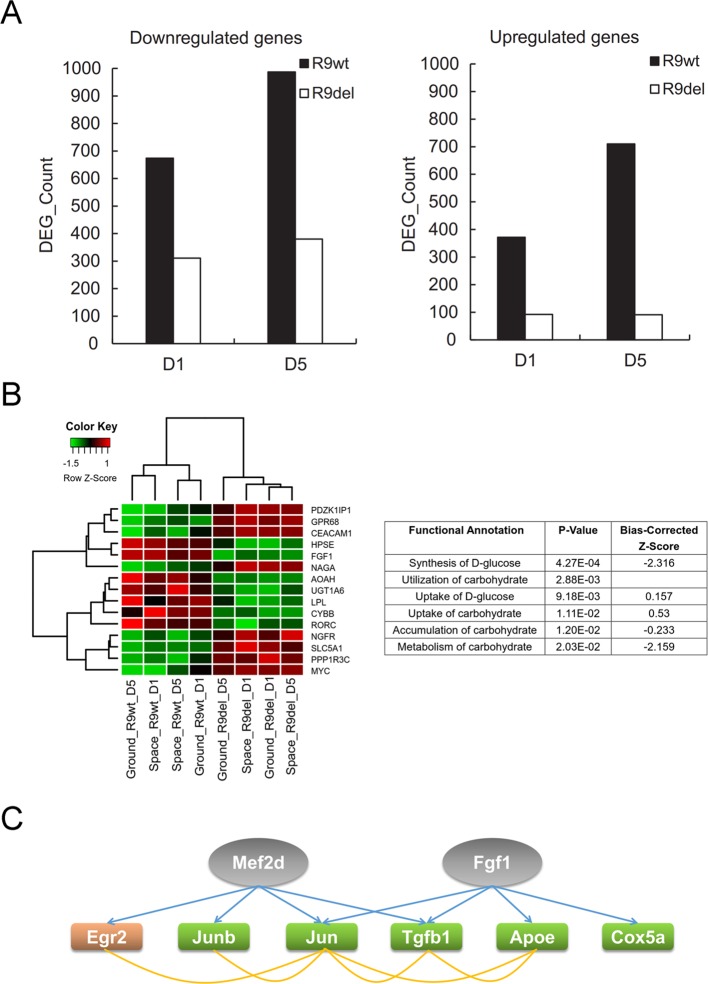
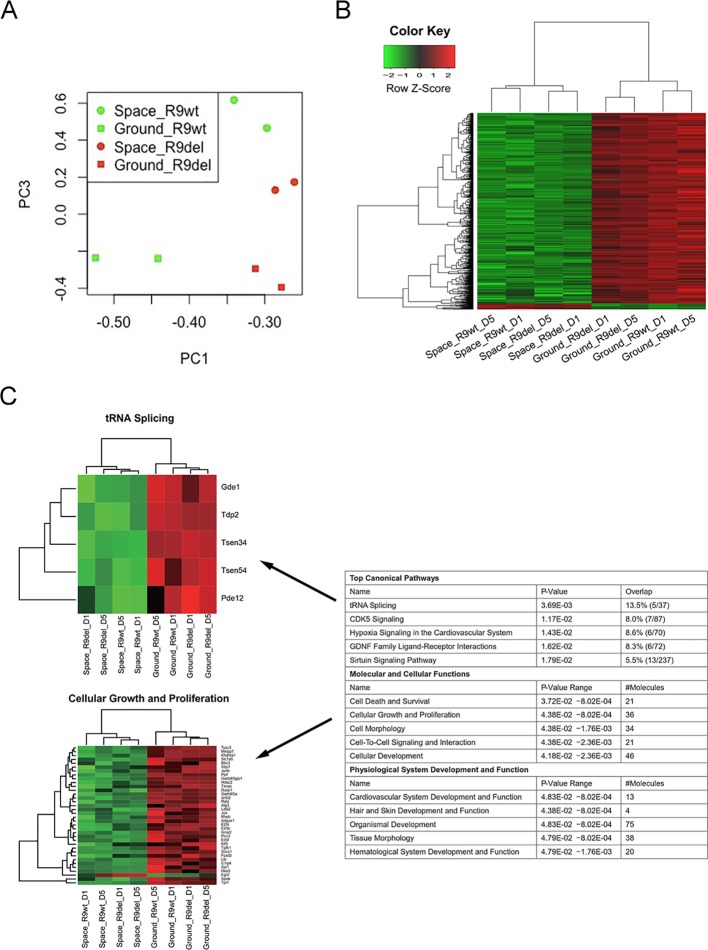
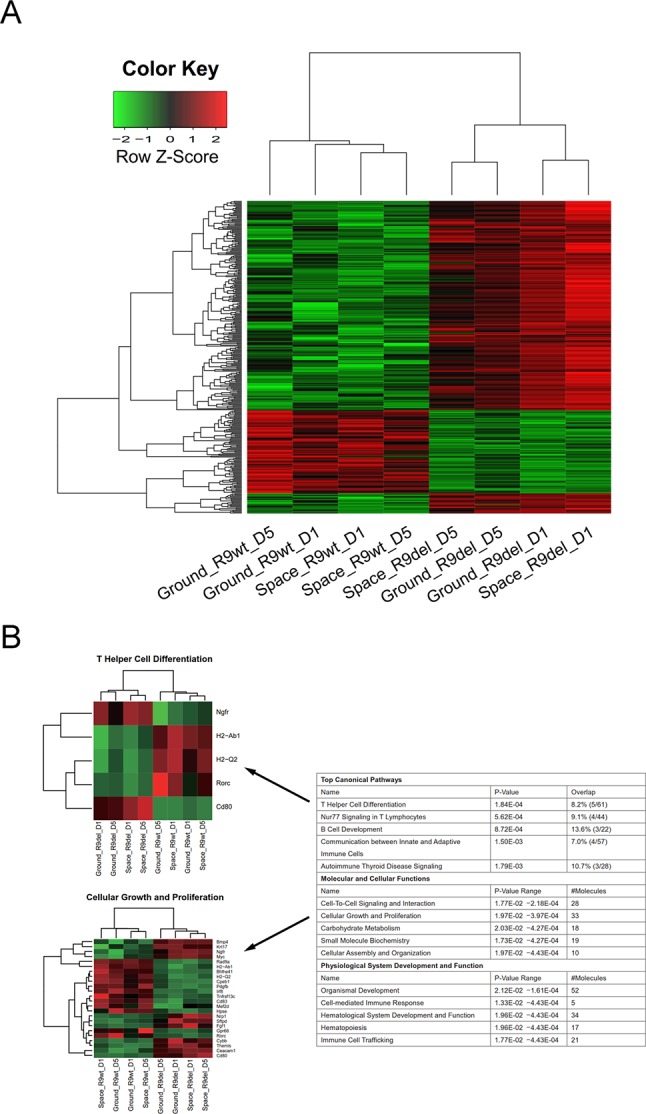
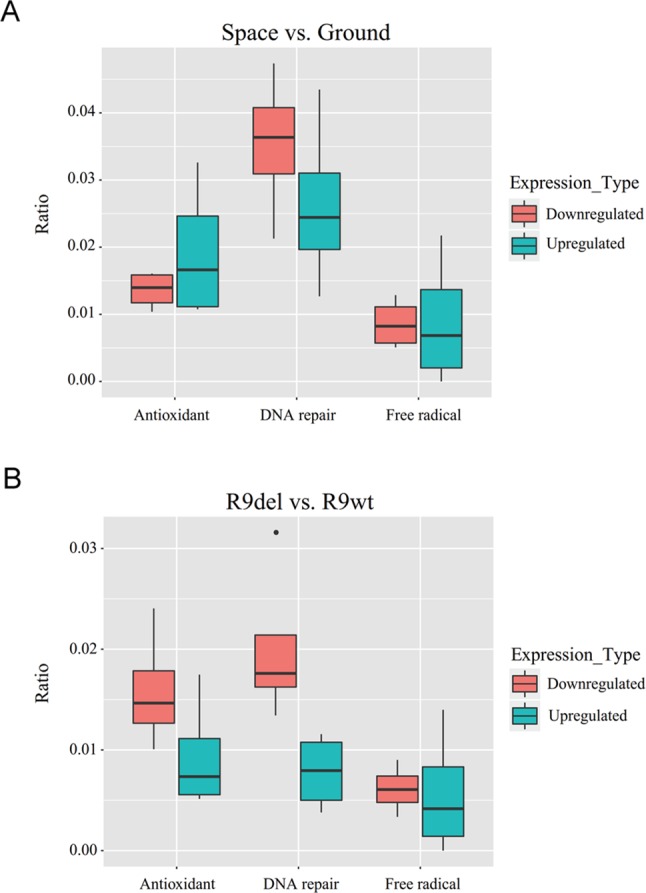
The environment in space differs greatly from the environment on the ground. Spaceflight causes a number of physiological changes in astronauts, such as bone loss and immune system dysregulation. These effects threaten astronauts' space missions, and understanding the underlying cellular and molecular mechanisms is important to manage the risks of space missions. The biological effects of spaceflight on mammalian cells, especially with regards to DNA damage, have attracted much attention. mouse embryonic stem cells (mESCs) are known to be extremely sensitive to DNA damage agents. In this study, a project of the SJ-10 satellite programme, we investigated the gene expression profiles of both mESCs and (wild-type) mESCs in space with a focus on genes critical for inducing, preventing, or repairing genomic DNA lesions. We found that spaceflight downregulated more genes than it upregulated in both wild-type and mESCs, indicating a suppressive effect of spaceflight on global gene expression. In contrast, deletion upregulated more genes than it downregulated. Of note, spaceflight mainly affected organ development and influenced a wide range of cellular functions in mESCs, while deletion mainly affected the development and function of the hematological system, especially the development, differentiation and function of immune cells. The patterns of gene expression in mouse embryonic stem cells in space is distinct from those in other types of cells. In addition, both spaceflight and deletion downregulated DNA repair genes, suggesting a possibility that spaceflight has negative effects on genome for embryonic stem cells and the effects are likely worsen when the genome maintenance mechanism is defective.
太空环境与地面环境有很大不同。太空飞行会在宇航员身上引发一系列生理变化,比如骨质流失和免疫系统失调。这些影响威胁着宇航员的太空任务,了解其潜在的细胞和分子机制对于管理太空任务风险至关重要。太空飞行对哺乳动物细胞的生物学效应,尤其是对DNA损伤方面的效应,已引起广泛关注。小鼠胚胎干细胞(mESCs)已知对DNA损伤剂极为敏感。在本研究中,作为实践十号卫星项目的一部分,我们研究了太空环境下mESCs和(野生型)mESCs的基因表达谱,重点关注诱导、预防或修复基因组DNA损伤的关键基因。我们发现,在野生型和mESCs中,太空飞行下调的基因比上调的更多,这表明太空飞行对整体基因表达具有抑制作用。相比之下,基因敲除上调的基因比下调的更多。值得注意的是,太空飞行主要影响器官发育,并影响mESCs中的多种细胞功能,而基因敲除主要影响血液系统的发育和功能,尤其是免疫细胞的发育、分化和功能。太空环境下小鼠胚胎干细胞的基因表达模式与其他类型细胞不同。此外,太空飞行和基因敲除均下调了DNA修复基因,这表明太空飞行可能对胚胎干细胞的基因组产生负面影响,并且当基因组维持机制存在缺陷时,这种影响可能会加剧。