Barclay Richie D, Burd Nicholas A, Tyler Christopher, Tillin Neale A, Mackenzie Richard W
Department of Life Sciences, University of Roehampton, London, United Kingdom.
Division of Nutritional Sciences, Department of Kinesiology and Community Health, University of Illinois, Urbana, IL, United States.
Front Nutr. 2019 Sep 10;6:146. doi: 10.3389/fnut.2019.00146. eCollection 2019.
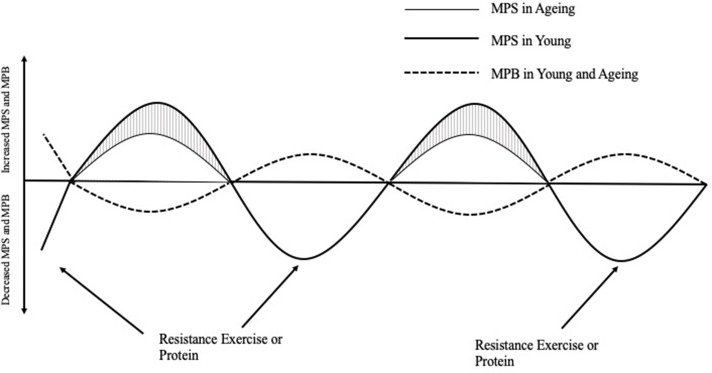
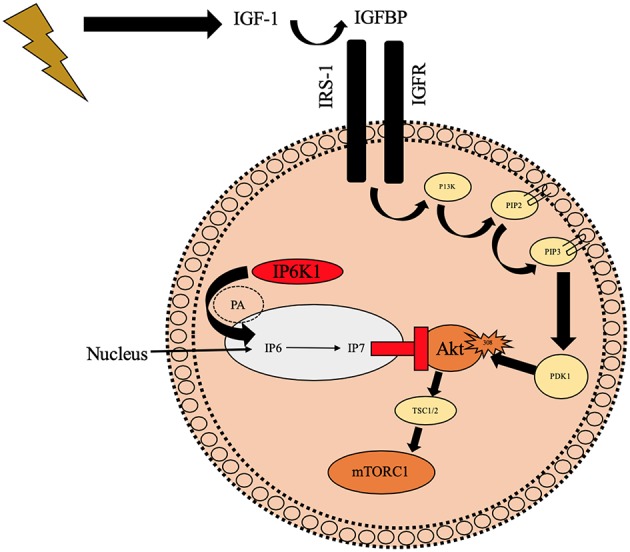
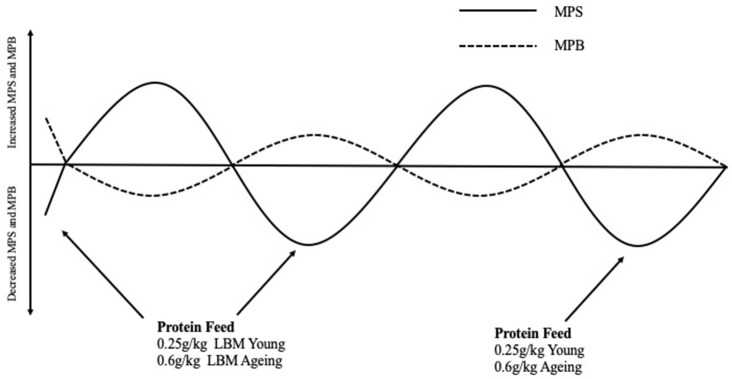
Sarcopenia is defined as the combined loss of skeletal muscle strength, function, and/or mass with aging. This degenerative loss of muscle mass is associated with poor quality of life and early mortality humans. The loss of muscle mass occurs due to acute changes in daily muscle net protein balance (NPB). It is generally believed a poor NPB occurs due to reduced muscle protein synthetic responses to exercise, dietary amino acid availability, or an insensitivity of insulin to suppress breakdown. Hence, aging muscles appear to be resistant to the anabolic action of exercise and protein (amino acids or hormonal) when compared to their younger counterparts. The mechanisms that underpin anabolic resistance to anabolic stimuli (protein and resistance exercise) are multifactorial and may be partly driven by poor lifestyle choices (increased sedentary time and reduced dietary protein intake) as well as an inherent dysregulated mechanism in old muscles irrespective of the environmental stimuli. The insulin like growth factor 1 (IGF-1), Akt /Protein Kinase B and mechanistic target of rapamycin (mTOR) pathway is the primary driver between mechanical contraction and protein synthesis and may be a site of dysregulation between old and younger people. Therefore, our review aims to describe and summarize the differences seen in older muscle in this pathway in response to resistance exercise (RE) and describe approaches that researchers have sought out to maximize the response in muscle. Furthermore, this review will present the hypothesis that inositol hexakisphosphate kinase 1 (IP6K1) may be implicated in IGF-1 signaling and thus sarcopenia, based on recent evidence that IGF-1 and insulin share some intracellular bound signaling events and that IP6K1 has been implicated in skeletal muscle insulin resistance.
肌肉减少症的定义为随着年龄增长,骨骼肌力量、功能和/或质量的综合丧失。这种肌肉质量的退行性丧失与人类生活质量差和过早死亡相关。肌肉质量的丧失是由于日常肌肉净蛋白质平衡(NPB)的急性变化所致。一般认为,NPB不佳是由于肌肉蛋白质合成对运动、膳食氨基酸可用性的反应降低,或胰岛素抑制分解的敏感性降低。因此,与年轻肌肉相比,衰老肌肉似乎对运动和蛋白质(氨基酸或激素)的合成代谢作用具有抗性。对合成代谢刺激(蛋白质和抗阻运动)产生合成代谢抗性的机制是多因素的,可能部分由不良的生活方式选择(久坐时间增加和膳食蛋白质摄入量减少)以及老年肌肉中固有的调节失调机制驱动,而与环境刺激无关。胰岛素样生长因子1(IGF-1)、Akt/蛋白激酶B和雷帕霉素作用靶点(mTOR)途径是机械收缩和蛋白质合成之间的主要驱动因素,可能是老年人和年轻人之间调节失调的部位。因此,我们的综述旨在描述和总结在该途径中衰老肌肉对抗阻运动(RE)的反应差异,并描述研究人员为使肌肉反应最大化而寻求的方法。此外,基于最近的证据,即IGF-1和胰岛素共享一些细胞内结合信号事件,且IP6K1与骨骼肌胰岛素抵抗有关,本综述将提出六磷酸肌醇激酶1(IP6K1)可能与IGF-1信号传导及肌肉减少症有关的假说。