Wetzel Michael D, Gao Ting, Venkatachalam Manjeri, Morris Sidney M, Awad Alaa S
Department of Medicine, University of Texas Health Science Center at San Antonio, San Antonio, Texas.
Department of Medicine, Penn State University College of Medicine, Hershey, Pennsylvania.
Physiol Rep. 2019 Sep;7(18):e14235. doi: 10.14814/phy2.14235.
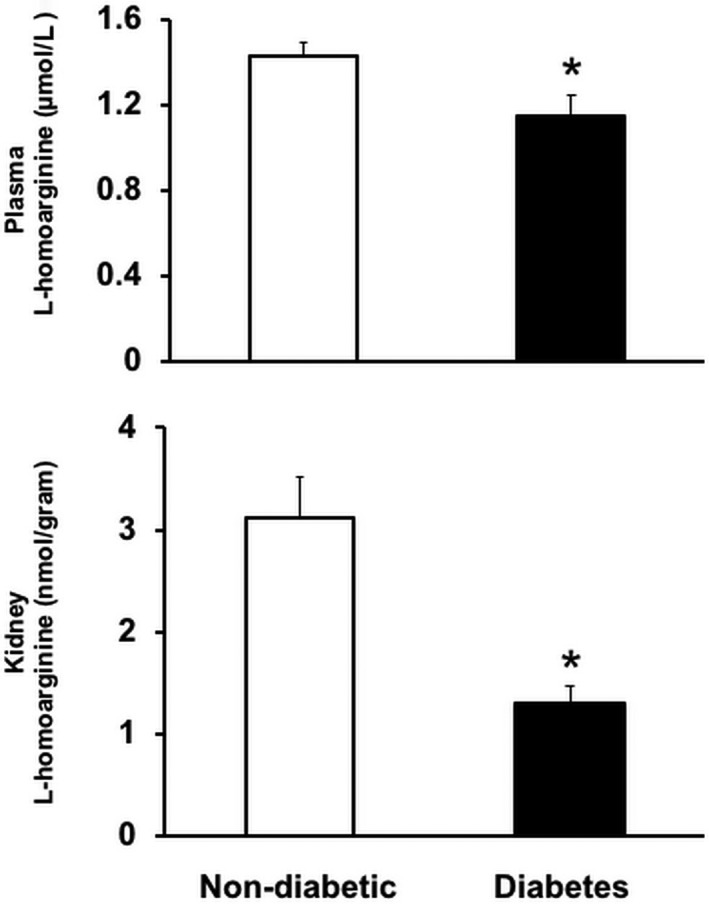
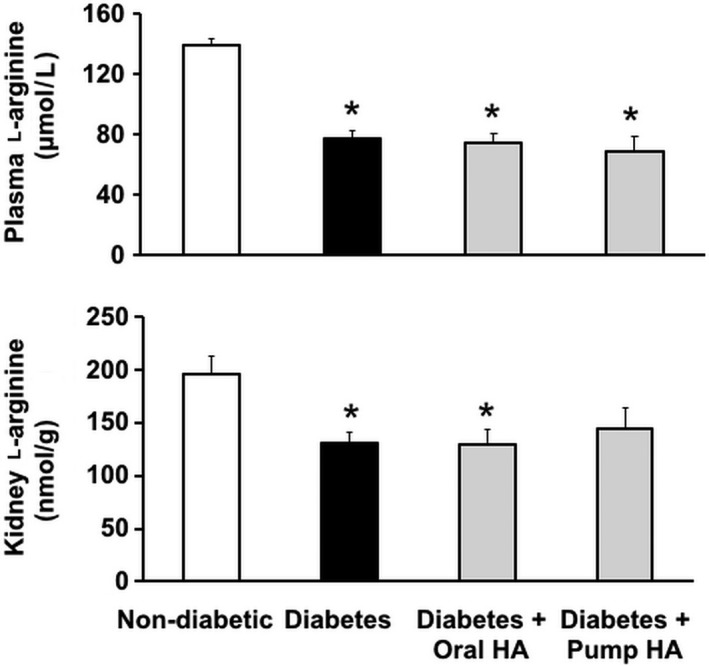
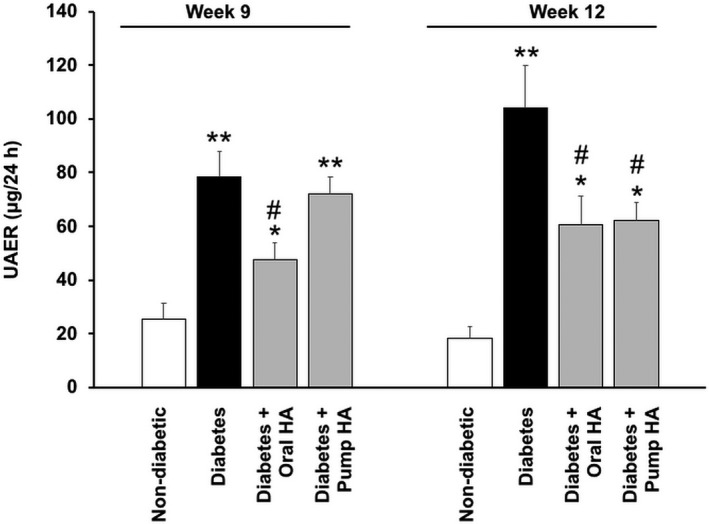
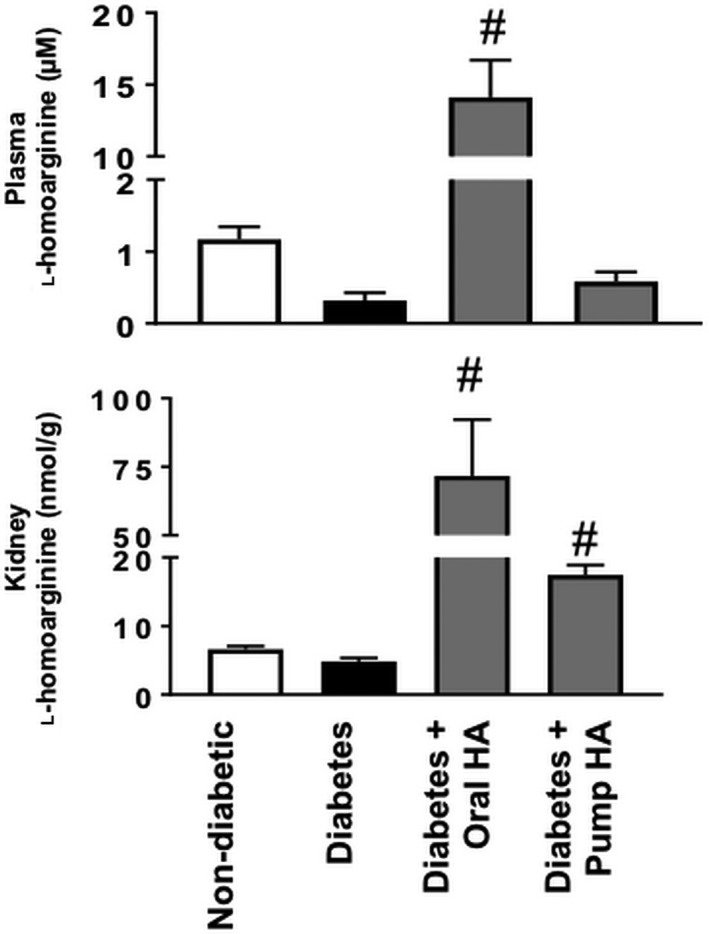
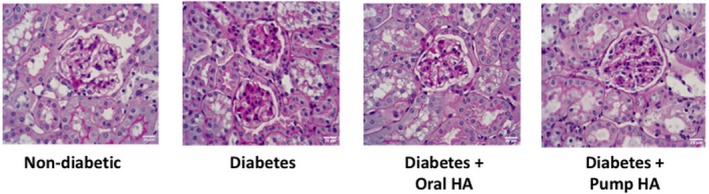
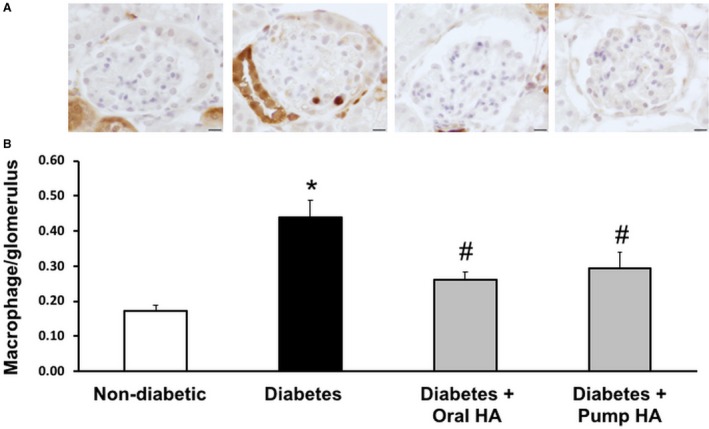
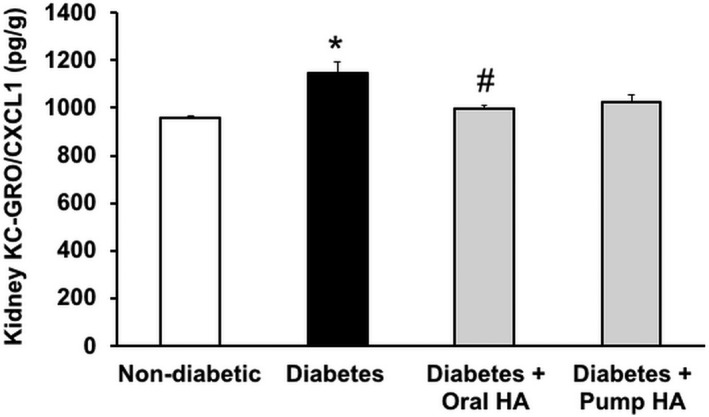
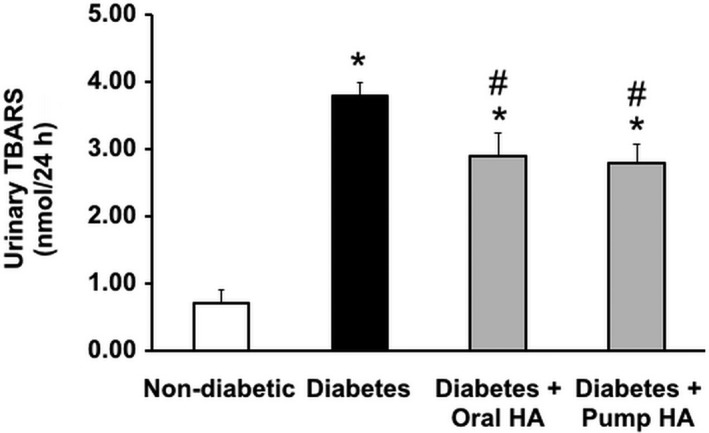
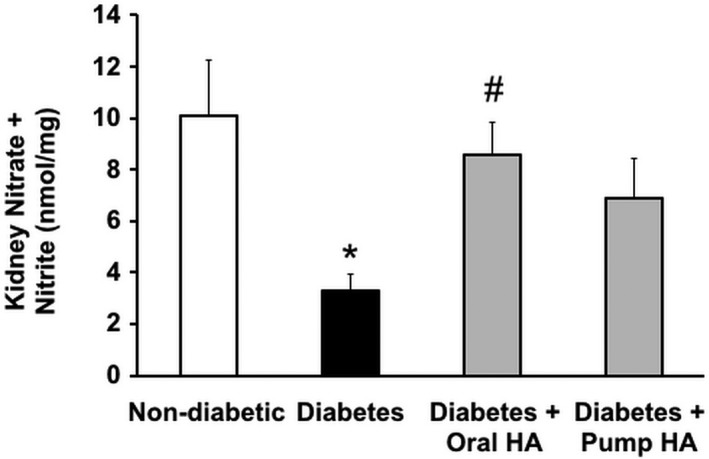
l-homoarginine is an endogenous, non-proteinogenic amino acid that has emerged as a new player in health and disease. Specifically, low l-homoarginine levels are associated with cardiovascular diseases, stroke, and reduced kidney function. However, the role of l-homoarginine in the pathogenesis of diabetic nephropathy (DN) is not known. Experiments were conducted in 6-week-old Ins2 mice supplemented with l-homoarginine via drinking water or mini osmotic pump for 12 weeks. Both plasma and kidney l-homoarginine levels were significantly reduced in diabetic mice compared to nondiabetic controls. Untreated Ins2 mice showed significant increases in urinary albumin excretion, histological changes, glomerular macrophage recruitment, the inflammatory cytokine KC-GRO/CXCL1, and urinary thiobarbituric acid reactive substances (TBARS) excretion as an indicator of oxidative stress, along with a significant reduction in kidney nitrate + nitrite levels compared to control mice at 18 weeks of age. In contrast, l-homoarginine supplementation for 12 weeks in Ins2 mice, via either drinking water or mini osmotic pump, significantly reduced albuminuria, renal histological changes, glomerular macrophage recruitment, KC-GRO/CXCL1 levels, urinary TBARS excretion, and largely restored kidney nitrate + nitrite levels. These data demonstrate that l-homoarginine supplementation attenuates specific features of DN in mice and could be a potential new therapeutic tool for treating diabetic patients.
L-高精氨酸是一种内源性非蛋白质氨基酸,已成为健康与疾病领域的新角色。具体而言,低水平的L-高精氨酸与心血管疾病、中风及肾功能减退相关。然而,L-高精氨酸在糖尿病肾病(DN)发病机制中的作用尚不清楚。对6周龄的Ins2小鼠进行实验,通过饮水或微型渗透泵补充L-高精氨酸,持续12周。与非糖尿病对照组相比,糖尿病小鼠的血浆和肾脏L-高精氨酸水平均显著降低。未经治疗的Ins2小鼠在18周龄时,尿白蛋白排泄、组织学变化、肾小球巨噬细胞募集、炎性细胞因子KC-GRO/CXCL1以及作为氧化应激指标的尿硫代巴比妥酸反应性物质(TBARS)排泄均显著增加,同时肾脏硝酸盐+亚硝酸盐水平与对照小鼠相比显著降低。相比之下,通过饮水或微型渗透泵对Ins2小鼠补充L-高精氨酸12周,可显著降低蛋白尿、肾脏组织学变化、肾小球巨噬细胞募集、KC-GRO/CXCL1水平、尿TBARS排泄,并在很大程度上恢复肾脏硝酸盐+亚硝酸盐水平。这些数据表明,补充L-高精氨酸可减轻小鼠DN的特定特征,可能是治疗糖尿病患者的一种潜在新治疗工具。