Su Lu, Liang Dan, Kuang Shen-Yi, Dong Qiang, Han Xiang, Wang Zheng
Department of Neurology, Huashan Hospital, Fudan University, Shanghai, China.
Department of Rehabilitation Medicine, Huashan Hospital, Fudan University, Shanghai, China.
Neural Regen Res. 2020 Feb;15(2):277-284. doi: 10.4103/1673-5374.265562.
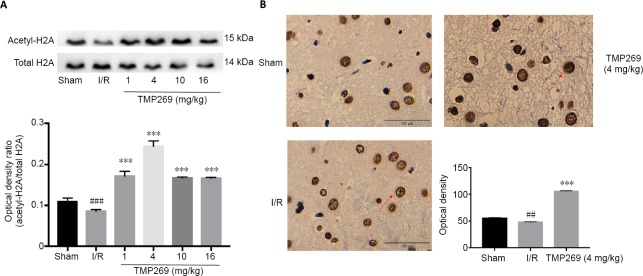
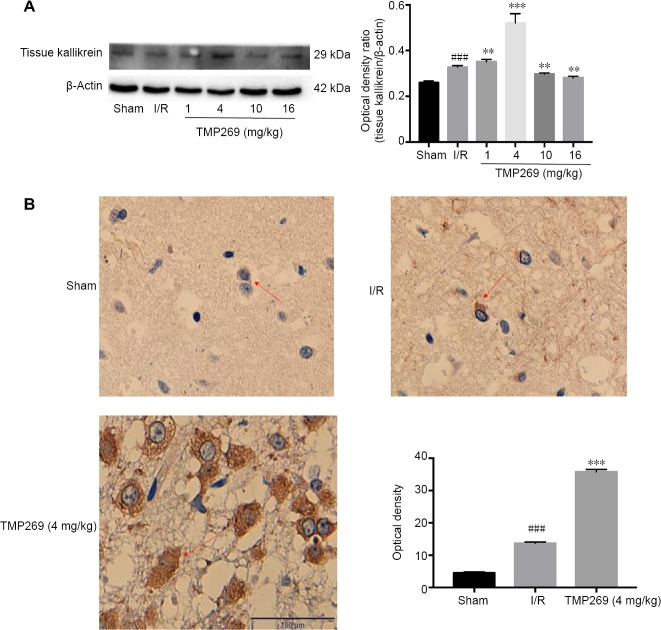
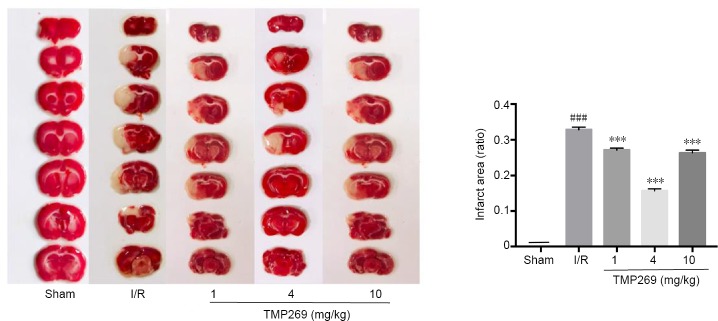
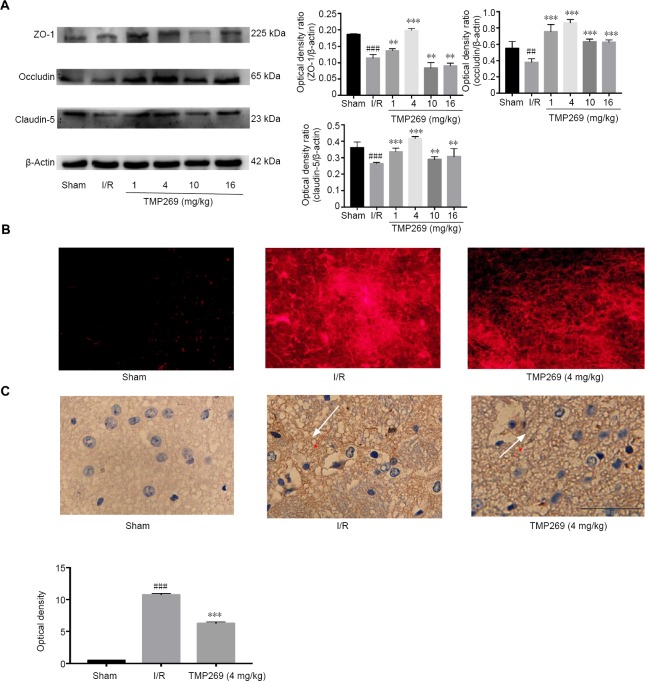
TMP269 is a selective class IIA histone deacetylase inhibitor that has a protective effect on the central nervous system, whose specific mechanism of action is unclear. We aimed to reveal the optimal concentration of TMP269 for protecting against cerebral ischemia/reperfusion injury and its neuroprotective mechanism. Male Sprague-Dawley rats were randomly divided into sham, ischemia/reperfusion, and 1, 4, 10 and 16 mg/kg TMP269 groups. Cerebral ischemia/reperfusion injury was induced by middle cerebral artery occlusion. TMP269 was intraperitoneally administered at different doses 0.5 hours before ischemia induction. Western blot assay and immunohistochemistry were used to detect effects of TMP269 on histone 2 acetylation. The results showed that the level of histone 2 acetylation was increased 24 hours after TMP269 injection. 2,3,5-Triphenyltetrazolium chloride staining was utilized to examine effect of TMP269 on infarct volume. The results found that different doses of TMP269 could reduce the infarct volume. Western blot assay, immunohistochemistry and Evans blue staining were employed to measure the effect of TMP269 on blood-brain barrier. The results showed that TMP269 counteracted the abnormal endothelial cell permeability changes caused by cerebral ischemia/reperfusion. Western blot assay and immunohistochemistry were used to determine the effect of TMP269 on tissue kallikrein. The results found that TMP269 up-regulated the expression of tissue kallikrein. Western blot assay further determined the optimal concentration to be 4 mg/kg. In conclusion, TMP269 plays a neuroprotective role by up-regulating the level of histone 2 acetylation, alleviating endothelial cell injury after cerebral ischemia/reperfusion, and up-regulating the expression of tissue kallikrein. The experimental protocol was approved in 2014 by the Department of Laboratory Animal Science, Fudan University, China (approval No. 20140143C001).
TMP269是一种选择性IIA型组蛋白去乙酰化酶抑制剂,对中枢神经系统具有保护作用,但其具体作用机制尚不清楚。我们旨在揭示TMP269预防脑缺血/再灌注损伤的最佳浓度及其神经保护机制。将雄性Sprague-Dawley大鼠随机分为假手术组、缺血/再灌注组以及1、4、10和16mg/kg TMP269组。通过大脑中动脉闭塞诱导脑缺血/再灌注损伤。在缺血诱导前0.5小时腹腔注射不同剂量的TMP269。采用蛋白质免疫印迹法和免疫组织化学法检测TMP269对组蛋白2乙酰化的影响。结果显示,注射TMP269后24小时,组蛋白2乙酰化水平升高。采用2,3,5-三苯基氯化四氮唑染色检测TMP269对梗死体积的影响。结果发现,不同剂量的TMP269均可减小梗死体积。采用蛋白质免疫印迹法、免疫组织化学法和伊文思蓝染色检测TMP269对血脑屏障的影响。结果显示,TMP269可对抗脑缺血/再灌注引起的异常内皮细胞通透性变化。采用蛋白质免疫印迹法和免疫组织化学法测定TMP269对组织激肽释放酶的影响。结果发现,TMP269上调组织激肽释放酶的表达。蛋白质免疫印迹法进一步确定最佳浓度为4mg/kg。总之,TMP269通过上调组蛋白2乙酰化水平、减轻脑缺血/再灌注后的内皮细胞损伤以及上调组织激肽释放酶的表达发挥神经保护作用。本实验方案于2014年获得中国复旦大学实验动物科学部批准(批准号:20140143C001)。