Department of Biology, Boston University, Boston, Massachusetts, United States of America.
Department of Oncology, McArdle Laboratory for Cancer Research, University of Wisconsin Carbone Cancer Center, University of Wisconsin, Madison, Wisconsin, United States of America.
PLoS One. 2019 Sep 25;14(9):e0222588. doi: 10.1371/journal.pone.0222588. eCollection 2019.
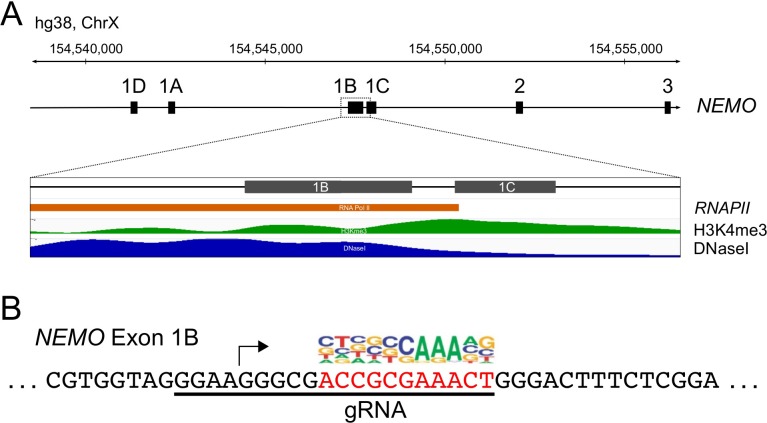
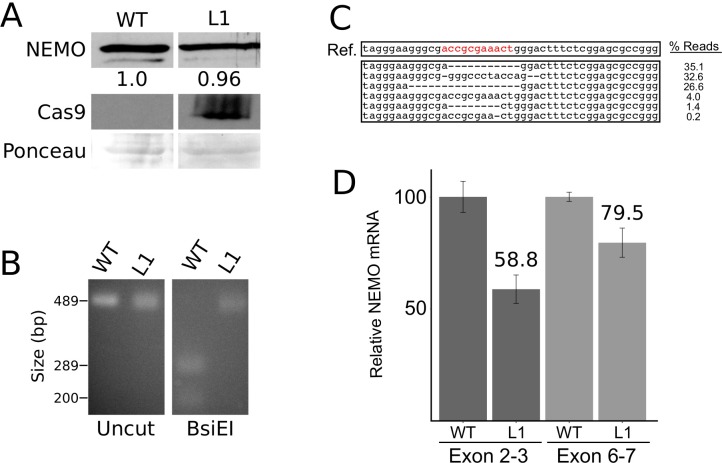
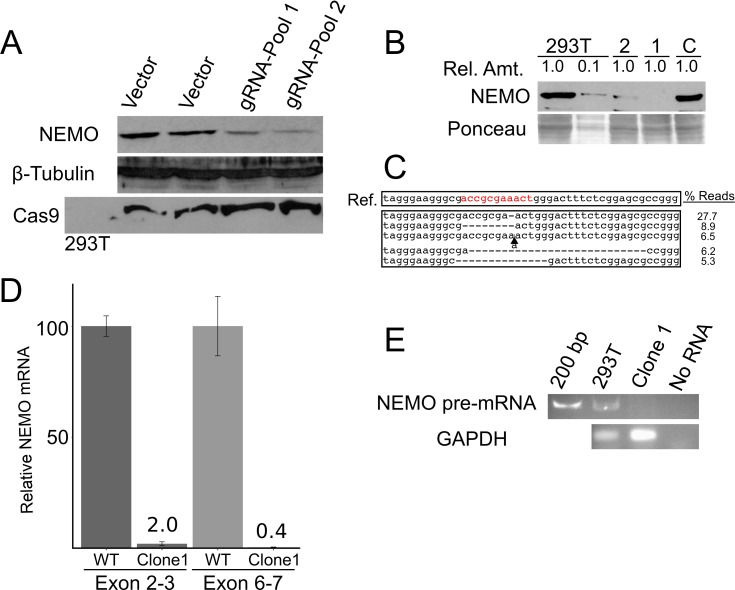
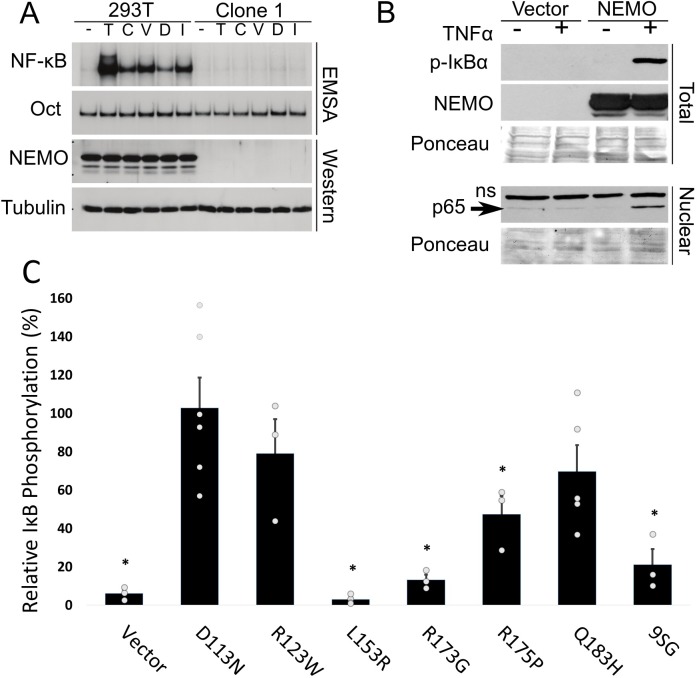
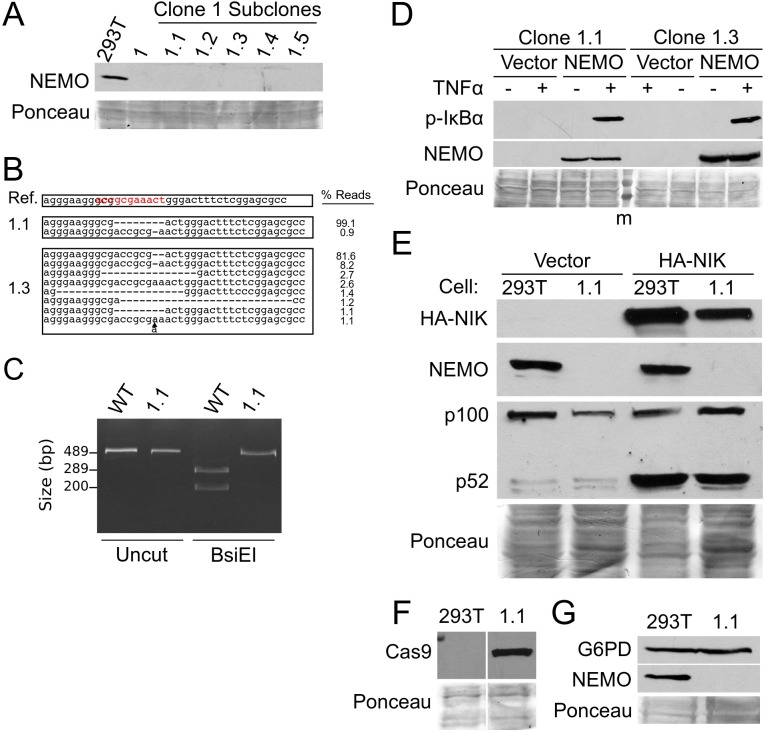
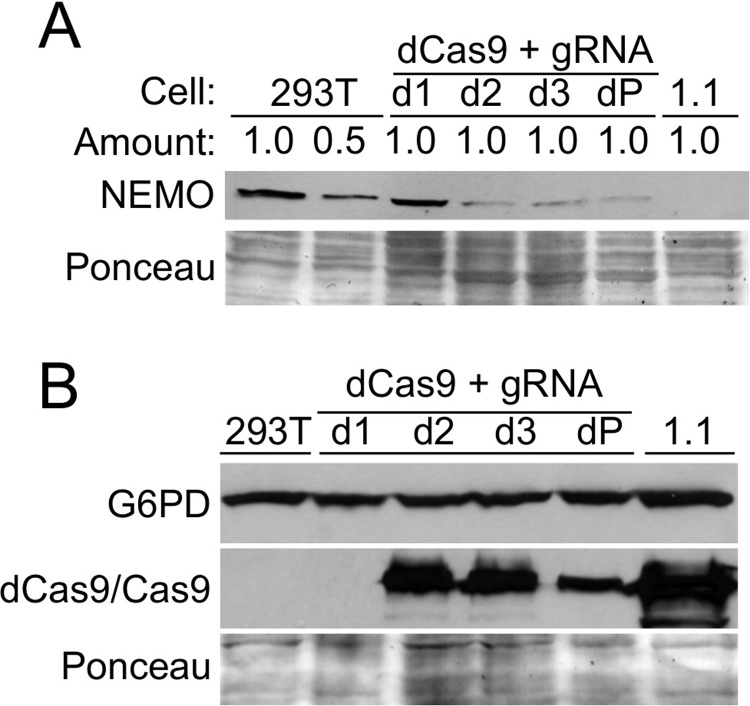
The use of alternative promoters for the cell type-specific expression of a given mRNA/protein is a common cell strategy. NEMO is a scaffold protein required for canonical NF-κB signaling. Transcription of the NEMO gene is primarily controlled by two promoters: one (promoter B) drives NEMO transcription in most cell types and the second (promoter D) is largely responsible for NEMO transcription in liver cells. Herein, we have used a CRISPR/Cas9-based approach to disrupt a core sequence element of promoter B, and this genetic editing essentially eliminates expression of NEMO mRNA and protein in 293T human kidney cells. By cell subcloning, we have isolated targeted 293T cell lines that express no detectable NEMO protein, have defined genomic alterations at promoter B, and do not support activation of canonical NF-κB signaling in response to treatment with tumor necrosis factor. Nevertheless, non-canonical NF-κB signaling is intact in these NEMO-deficient cells. Expression of ectopic wild-type NEMO, but not certain human NEMO disease mutants, in the edited cells restores downstream NF-κB signaling in response to tumor necrosis factor. Targeting of the promoter B element does not substantially reduce NEMO expression (from promoter D) in the human SNU-423 liver cancer cell line. Thus, we have created a strategy for selectively eliminating cell type-specific expression from an alternative promoter and have generated 293T cell lines with a functional knockout of NEMO. The implications of these findings for further studies and for therapeutic approaches to target canonical NF-κB signaling are discussed.
利用替代启动子在特定细胞类型中表达特定的 mRNA/蛋白质是一种常见的细胞策略。NEMO 是经典 NF-κB 信号通路所必需的支架蛋白。NEMO 基因的转录主要受两个启动子控制:一个(启动子 B)驱动大多数细胞类型中的 NEMO 转录,而第二个(启动子 D)主要负责肝细胞中的 NEMO 转录。在此,我们使用基于 CRISPR/Cas9 的方法破坏了启动子 B 的核心序列元件,这种基因编辑基本上消除了 293T 人肾细胞中 NEMO mRNA 和蛋白质的表达。通过细胞亚克隆,我们分离出了靶向的 293T 细胞系,这些细胞系不表达可检测到的 NEMO 蛋白,在启动子 B 处具有明确的基因组改变,并且不支持在肿瘤坏死因子处理后激活经典 NF-κB 信号。然而,在这些缺乏 NEMO 的细胞中,非经典 NF-κB 信号仍然完整。在编辑的细胞中表达异位野生型 NEMO,但不是某些人类 NEMO 疾病突变体,可恢复下游 NF-κB 信号对肿瘤坏死因子的反应。针对启动子 B 元件的靶向不会显著降低人 SNU-423 肝癌细胞系中(来自启动子 D)的 NEMO 表达。因此,我们创建了一种从替代启动子中选择性消除细胞类型特异性表达的策略,并生成了具有 NEMO 功能缺失的 293T 细胞系。这些发现对进一步研究和针对经典 NF-κB 信号的治疗方法具有重要意义。