Division of Biostatistics and Bioinformatics, Department of Family Medicine and Public Health, University of California, San Diego, La Jolla, CA 92093, USA.
Center for Human Disease Modeling, Duke University, Durham, NC 27701, USA.
Cell Rep. 2019 Sep 24;28(13):3320-3328.e4. doi: 10.1016/j.celrep.2019.08.071.
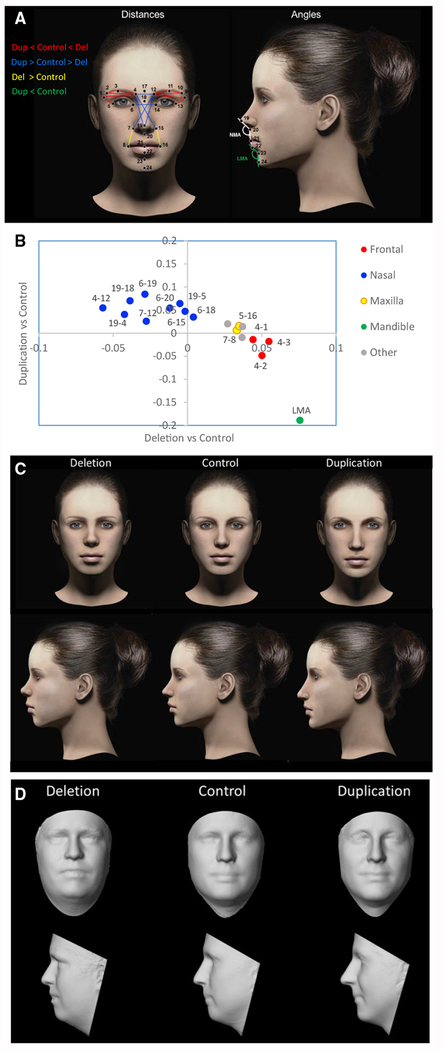
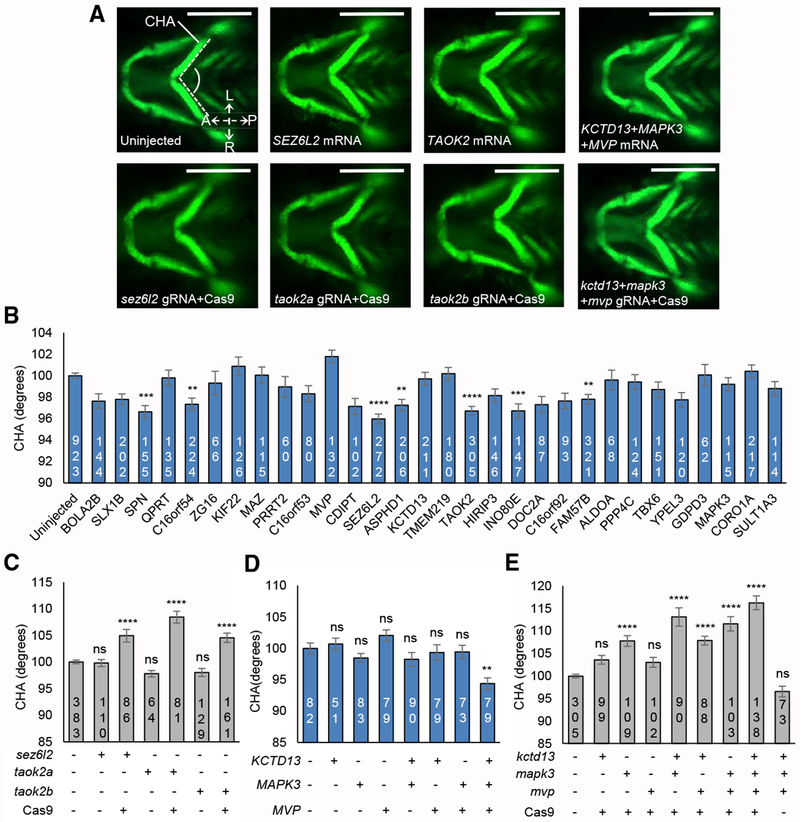
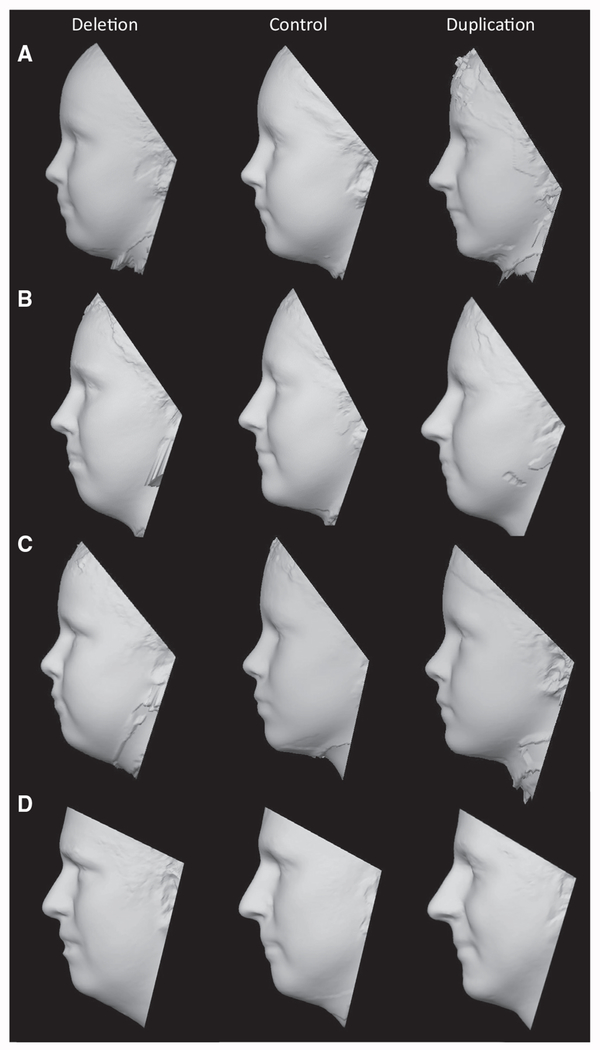
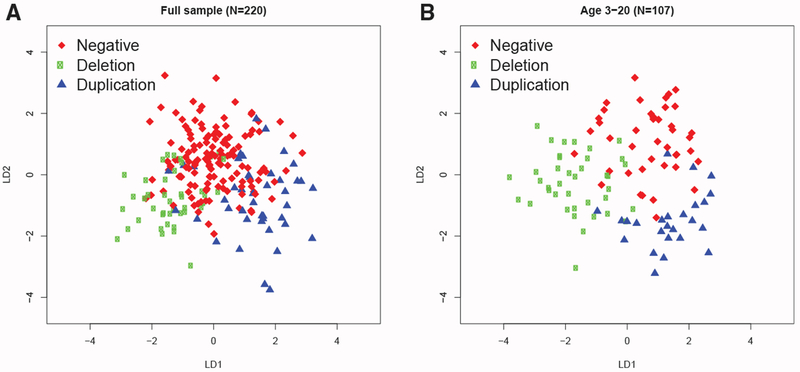
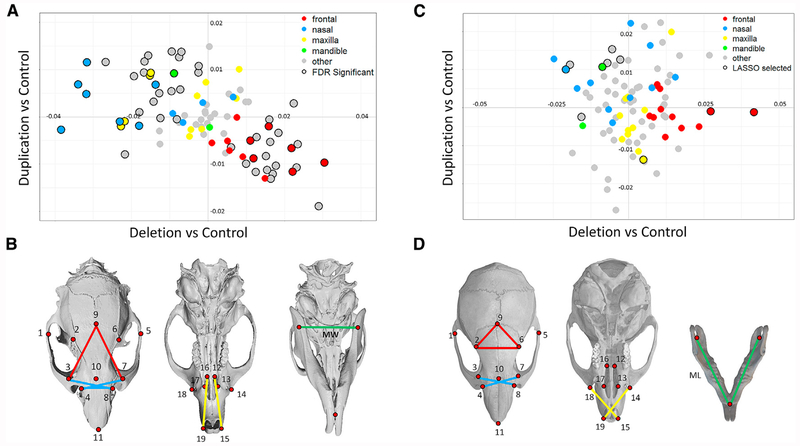
A copy-number variant (CNV) of 16p11.2 encompassing 30 genes is associated with developmental and psychiatric disorders, head size, and body mass. The genetic mechanisms that underlie these associations are not understood. To determine the influence of 16p11.2 genes on development, we investigated the effects of CNV on craniofacial structure in humans and model organisms. We show that deletion and duplication of 16p11.2 have "mirror" effects on specific craniofacial features that are conserved between human and rodent models of the CNV. By testing dosage effects of individual genes on the shape of the mandible in zebrafish, we identify seven genes with significant effects individually and find evidence for others when genes were tested in combination. The craniofacial phenotypes of 16p11.2 CNVs represent a model for studying the effects of genes on development, and our results suggest that the associated facial gestalts are attributable to the combined effects of multiple genes.
16p11.2 上包含 30 个基因的拷贝数变异(CNV)与发育和精神疾病、头围和体重有关。这些关联背后的遗传机制尚不清楚。为了确定 16p11.2 基因对发育的影响,我们研究了 CNV 对人类和模式生物颅面结构的影响。我们表明,16p11.2 的缺失和重复对特定的颅面特征具有“镜像”效应,这些特征在人类和啮齿动物 CNV 模型之间是保守的。通过测试斑马鱼下颌骨形状的单个基因的剂量效应,我们确定了七个具有显著效应的基因,并在基因组合测试时发现了其他基因的证据。16p11.2 CNV 的颅面表型代表了研究基因对发育影响的模型,我们的结果表明,相关的面部整体形态归因于多个基因的共同作用。