Carl R. Woese Institute for Genomic Biology.
Neuroscience Program.
G3 (Bethesda). 2019 Nov 5;9(11):3891-3906. doi: 10.1534/g3.119.400723.
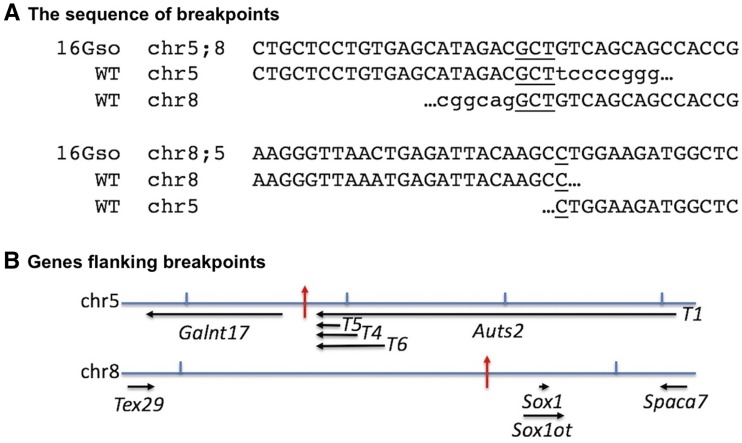
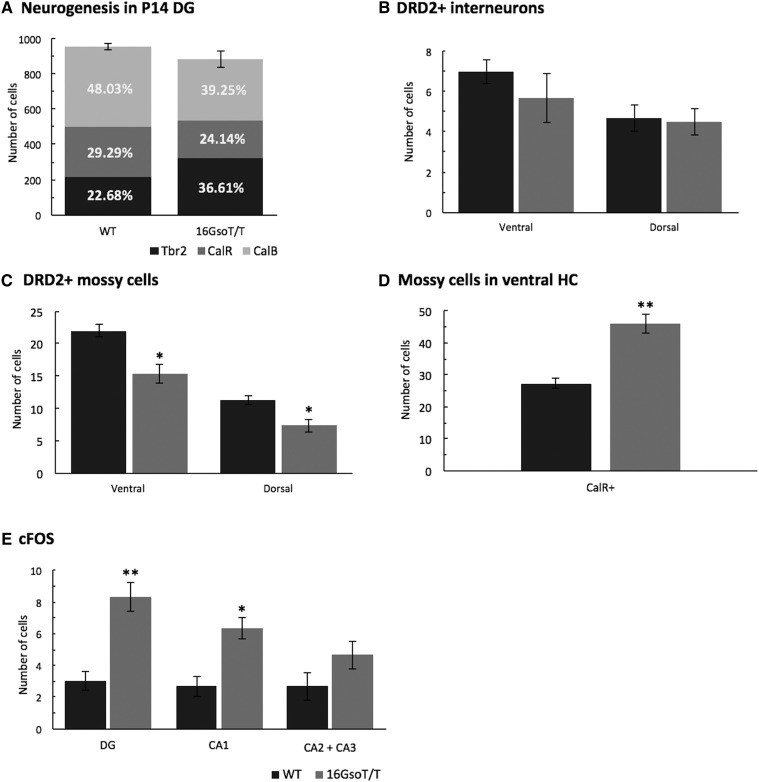
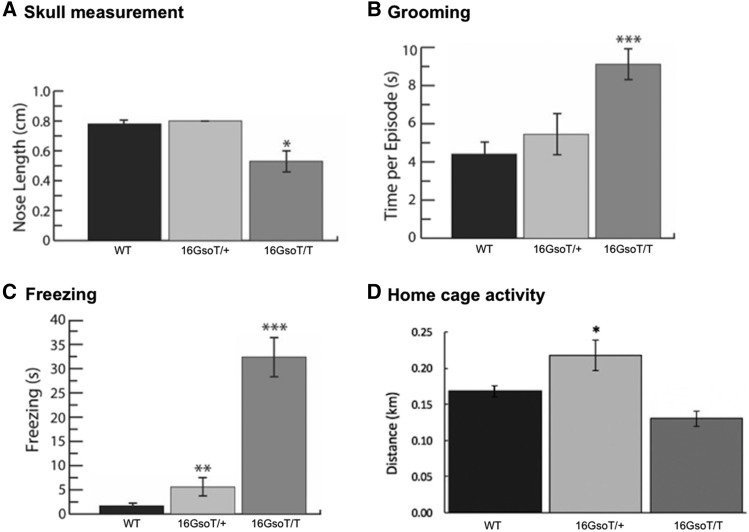
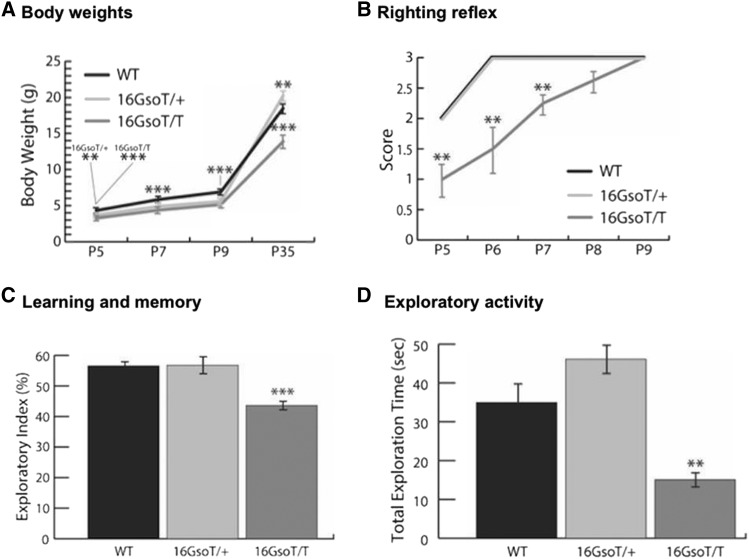
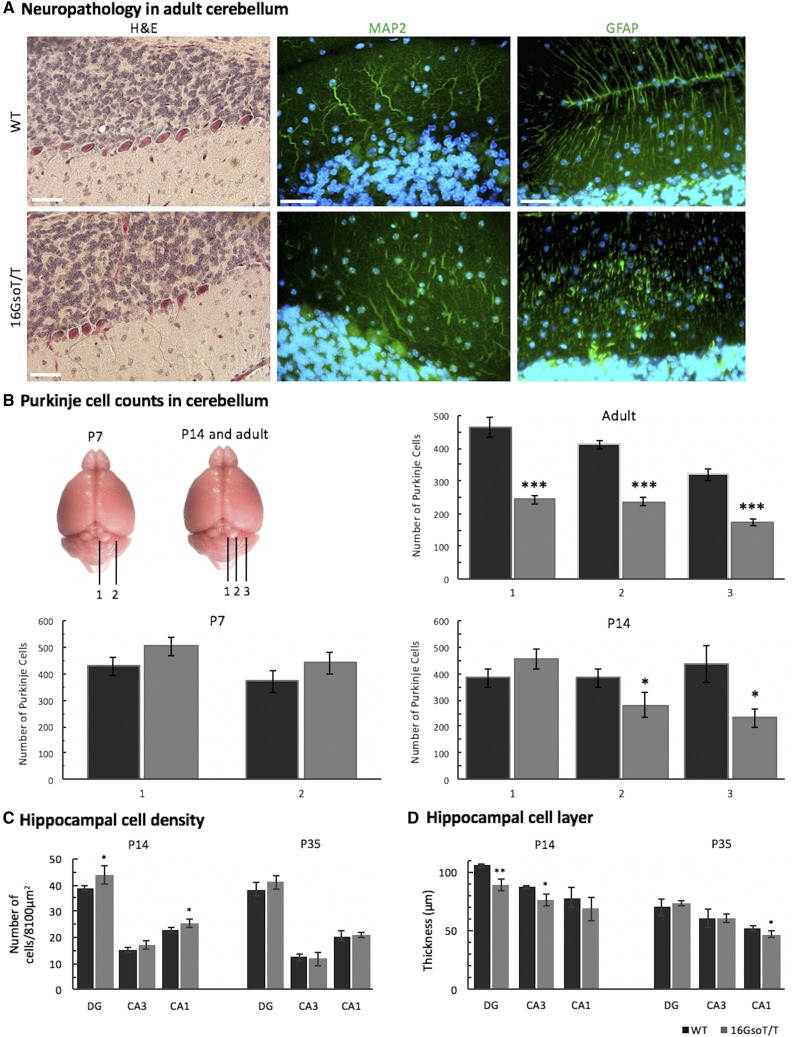
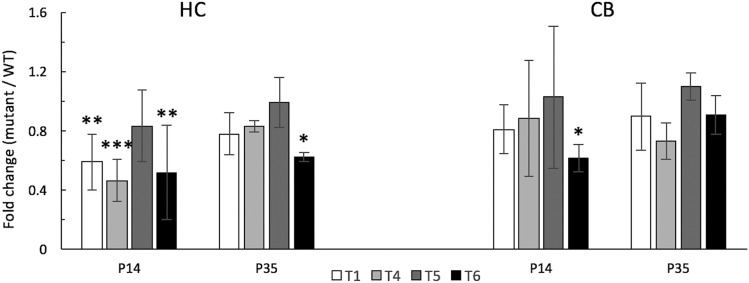
was originally discovered as the gene disrupted by a translocation in human twins with Autism spectrum disorder, intellectual disability, and epilepsy. Since that initial finding, -linked mutations and variants have been associated with a very broad array of neuropsychiatric disorders, sugg esting that is required for fundamental steps of neurodevelopment. However, genotype-phenotype correlations in this region are complicated, because most mutations could also involve neighboring genes. Of particular interest is the nearest downstream neighbor of , , which encodes a brain-expressed N-acetylgalactosaminyltransferase of unknown brain function. Here we describe a mouse () mutation, T(5G2;8A1)GSO (abbreviated 16Gso), a reciprocal translocation that breaks between and and dysregulates both genes. Despite this complex regulatory effect, 16Gso homozygotes model certain human -linked phenotypes very well. In addition to abnormalities in growth, craniofacial structure, learning and memory, and behavior, 16Gso homozygotes display distinct pathologies of the cerebellum and hippocampus that are similar to those associated with autism and other types of -linked neurological disease. Analyzing mutant cerebellar and hippocampal transcriptomes to explain this pathology, we identified disturbances in pathways related to neuron and synapse maturation, neurotransmitter signaling, and cellular stress, suggesting possible cellular mechanisms. These pathways, coupled with the translocation's selective effects on isoforms and coordinated dysregulation of , suggest novel hypotheses regarding the etiology of the human "AUTS2 syndrome" and the wide array of neurodevelopmental disorders linked to variance in this genomic region.
最初发现它是在患有自闭症谱系障碍、智力障碍和癫痫的双胞胎中因易位而受到干扰的基因。自最初发现以来,-连锁突变和变体与广泛的神经精神疾病有关,这表明 对于神经发育的基本步骤是必需的。然而,该区域的基因型-表型相关性很复杂,因为大多数突变也可能涉及相邻基因。特别有趣的是 的最接近下游邻居 ,它编码一种未知脑功能的脑表达 N-乙酰半乳糖胺基转移酶。在这里,我们描述了一种小鼠()突变,T(5G2;8A1)GSO(简称 16Gso),这是一种倒位易位,在 和 之间断裂并使两个基因失活。尽管存在这种复杂的调控效应,但 16Gso 纯合子很好地模拟了某些人类 -连锁表型。除了生长、颅面结构、学习和记忆以及行为异常外,16Gso 纯合子还表现出小脑和海马的明显病理学,类似于与自闭症和其他类型的 -连锁神经疾病相关的病理学。分析突变小脑和海马转录组以解释这种病理学,我们发现与神经元和突触成熟、神经递质信号传递和细胞应激相关的途径存在干扰,这表明了可能的细胞机制。这些途径,加上易位对 同工型的选择性影响和 的协调失调,提示了关于人类“AUTS2 综合征”病因以及与该基因组区域变异相关的广泛神经发育障碍的新假说。