Biomedical Engineering Research Center, Asan Institute for Life Sciences, Asan Medical Center, College of Medicine, University of Ulsan, Seoul, Republic of Korea.
Department of Stem Cell Center, Asan Institute for Life Sciences, Asan Medical Center, Seoul, Republic of Korea.
Sci Rep. 2019 Sep 25;9(1):13854. doi: 10.1038/s41598-019-50435-2.
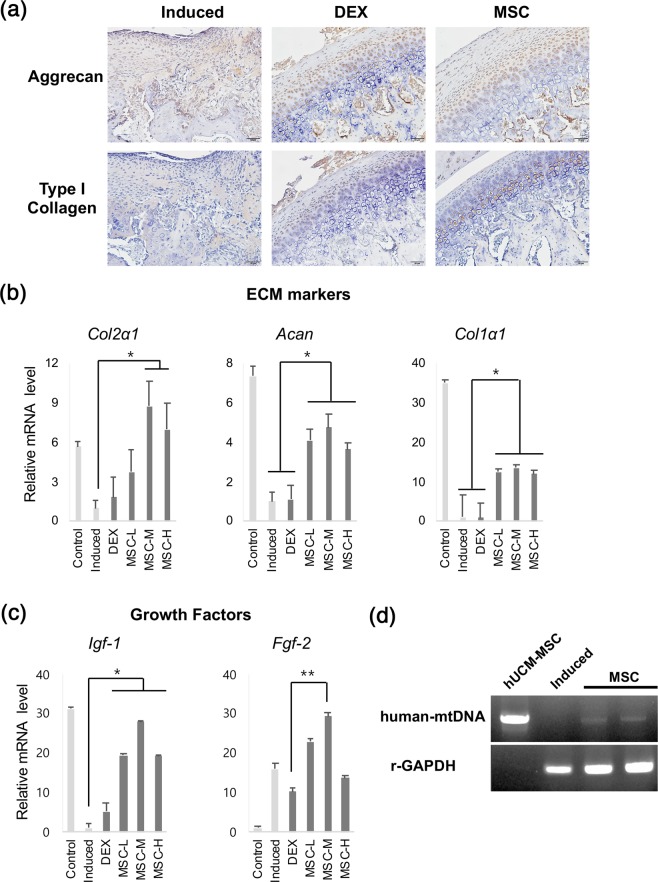
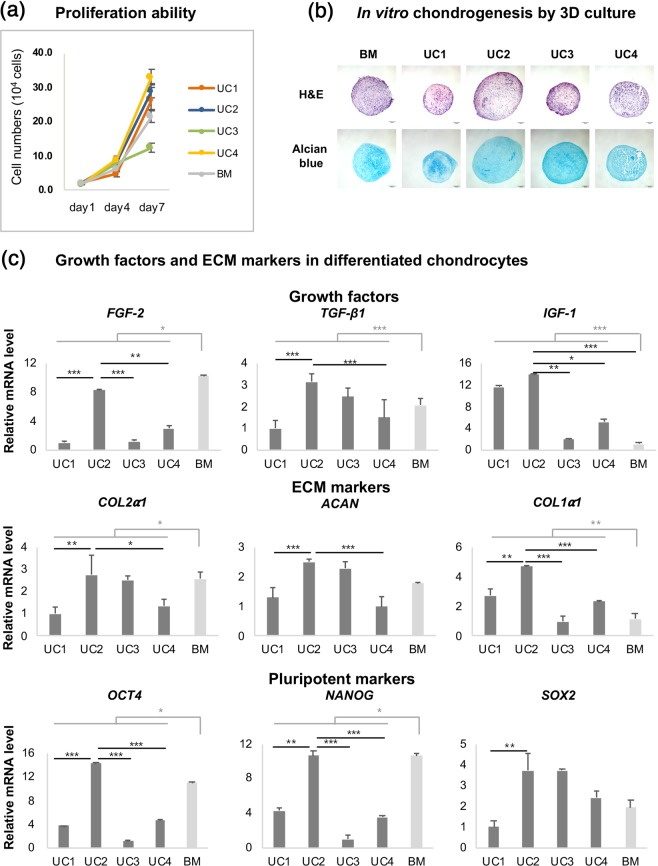
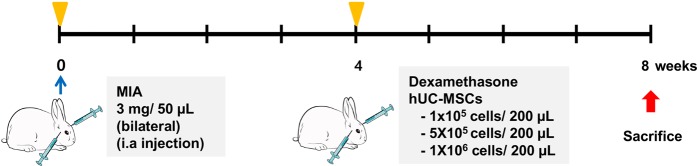
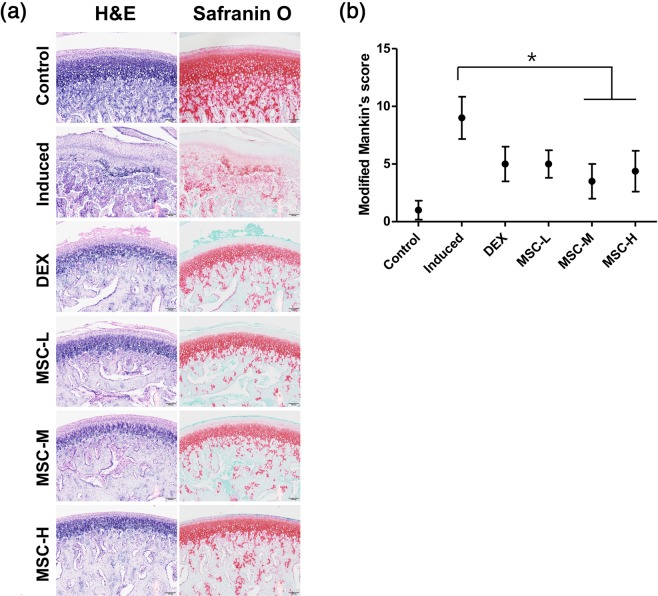
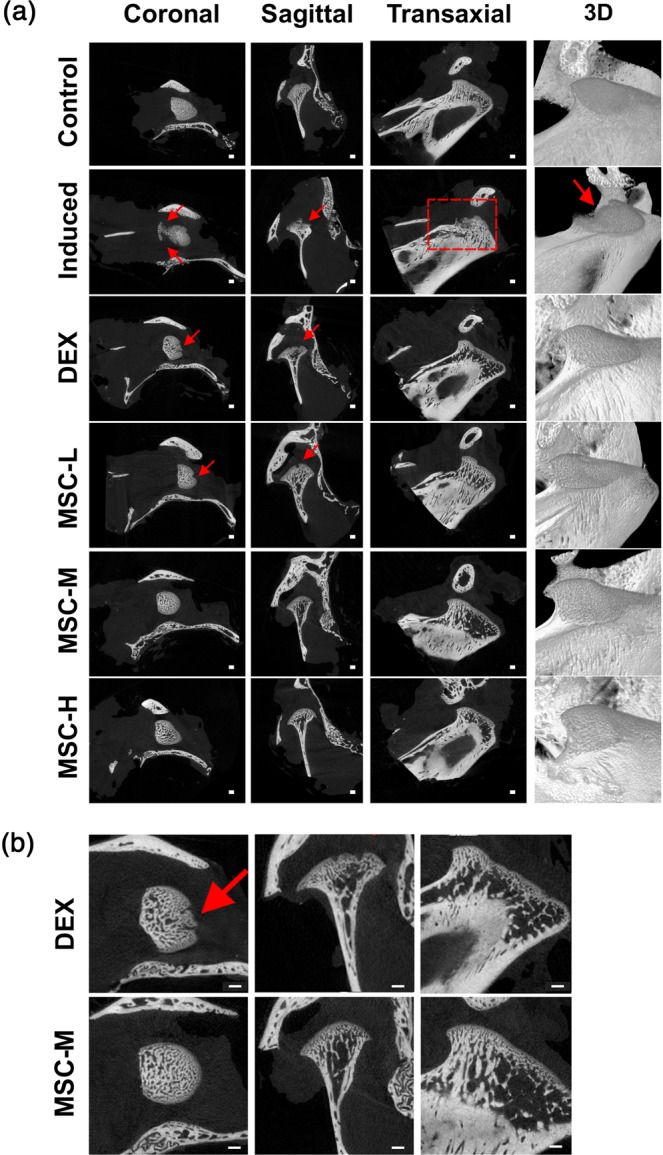
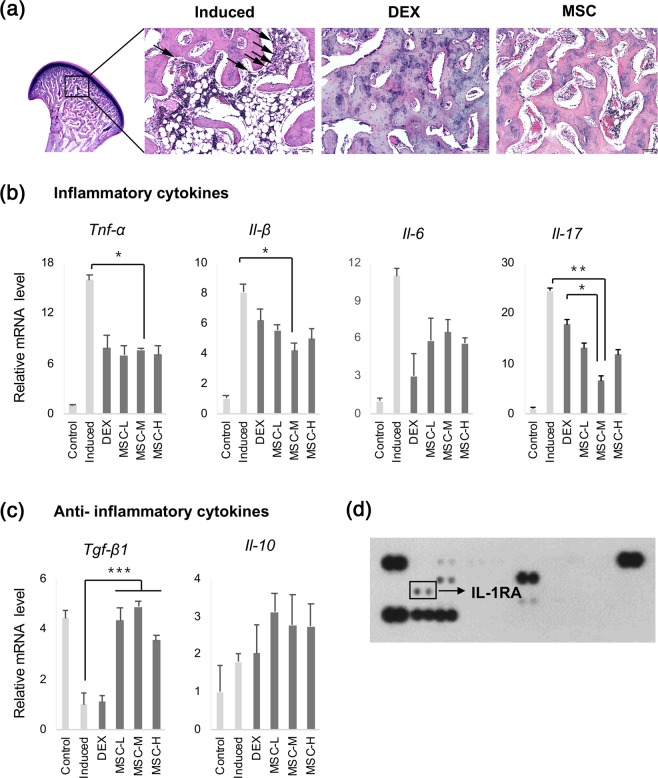
Osteoarthritis (OA) is a degenerative condition of the temporomandibular joint (TMJ) characterised by chronic inflammation and damage to joint structures. Because of the complexity of TMJ-OA, only symptomatic treatments are currently available. Recent reports have shown that many of stem cells can exert anti-inflammatory and tissue-regenerating effects. In this study, we investigated the potential cartilage-regenerating and anti-inflammatory effects of human umbilical cord matrix-mesenchymal stem cells (hUCM-MSCs) for the treatment of TMJ-OA. hUCM-MSC lines, isolated from different donors, which showed different activities in vitro. Using a selected cell line, we used different concentrations of hUCM-MSCs to assess therapeutic effects in a rabbit model of monosodium iodoacetate-induced TMJ-OA. Compared with the untreated control group, the potential regenerative result and anti-inflammatory effects of hUCM-MSCs were evident at all the tested concentrations in rabbits with induced TMJ-OA. The median dose of hUCM-MSCs showed the prominent cartilage protective effect and further cartilage regeneration potential. This effect occurred via upregulated expression of growth factors, extracellular matrix markers, and anti-inflammatory cytokines, and reduced expression of pro-inflammatory cytokines. The anti-inflammatory effect of hUCM-MSCs was comparable to that of dexamethasone (DEX). However, only hUCM-MSCs showed potential chondrogenesis effects in this study. In conclusion, our results indicate that hUCM-MSCs may be an effective treatment option for the treatment of TMJ-OA.
骨关节炎(OA)是一种颞下颌关节(TMJ)的退行性疾病,其特征为慢性炎症和关节结构损伤。由于 TMJ-OA 的复杂性,目前仅提供对症治疗。最近的报告表明,许多干细胞具有抗炎和组织再生作用。在这项研究中,我们研究了人脐带基质间充质干细胞(hUCM-MSCs)治疗 TMJ-OA 的潜在软骨再生和抗炎作用。从不同供体分离的 hUCM-MSC 系在体外表现出不同的活性。使用选定的细胞系,我们使用不同浓度的 hUCM-MSCs 评估在兔碘酸钠诱导的 TMJ-OA 模型中的治疗效果。与未治疗的对照组相比,在诱导 TMJ-OA 的兔中,所有测试浓度的 hUCM-MSCs 均具有明显的再生效果和抗炎作用。hUCM-MSCs 的中位数剂量显示出突出的软骨保护作用和进一步的软骨再生潜力。这种作用是通过上调生长因子、细胞外基质标志物和抗炎细胞因子的表达,以及降低促炎细胞因子的表达来实现的。hUCM-MSCs 的抗炎作用与地塞米松(DEX)相当。然而,只有 hUCM-MSCs 在这项研究中显示出潜在的软骨生成作用。总之,我们的结果表明 hUCM-MSCs 可能是治疗 TMJ-OA 的有效治疗选择。