Department of Biomedicine, Aarhus Research Center for Innate Immunology, Aarhus University, Aarhus, Denmark.
Fox Chase Cancer Center, Philadelphia, PA, United States.
Front Immunol. 2019 Sep 6;10:2101. doi: 10.3389/fimmu.2019.02101. eCollection 2019.
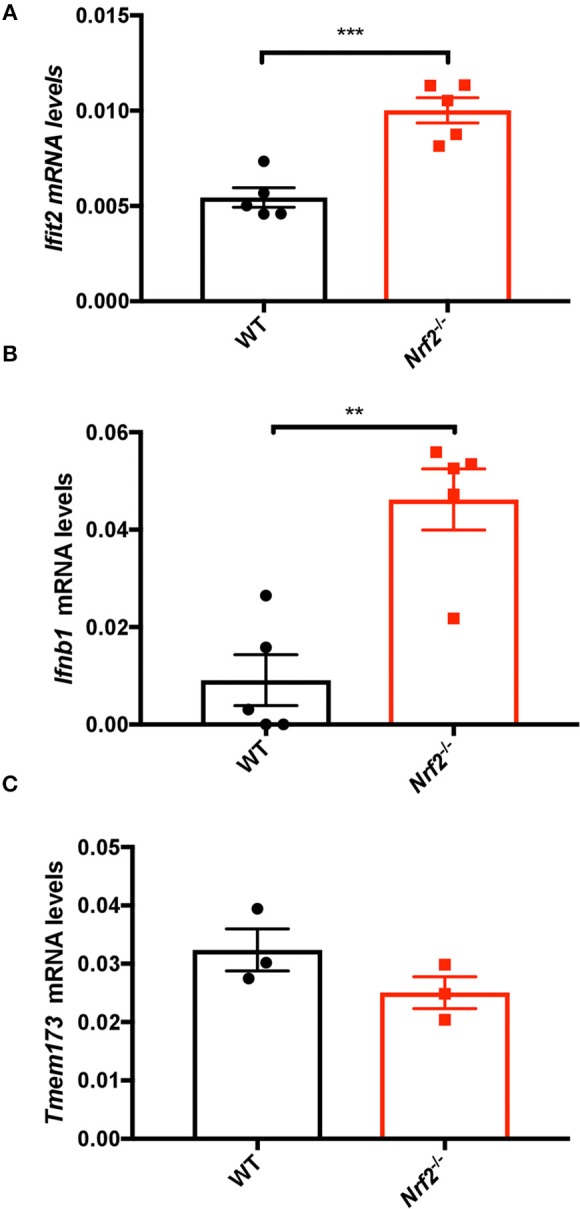
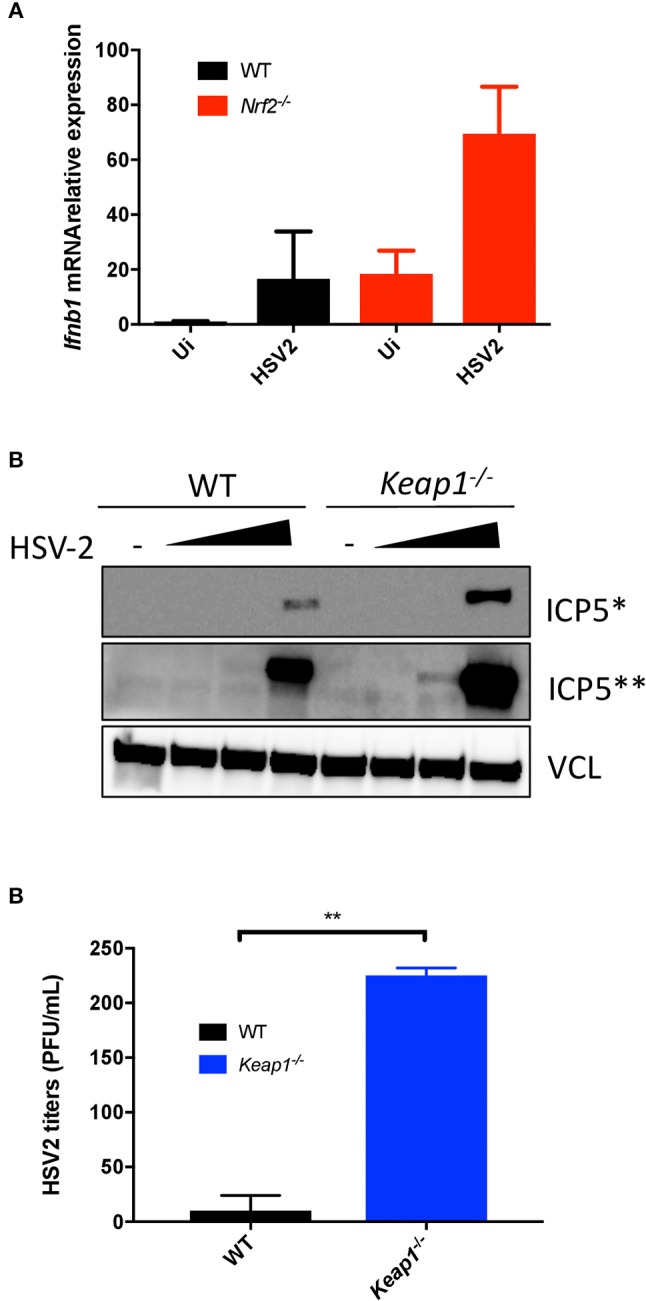
Herpes simplex virus-2 (HSV-2) is a leading cause of sexually transmitted infections for which no effective vaccines or prophylactic treatment currently exist. Nuclear factor erythroid 2-related factor 2 (Nrf2) is a transcription factor involved in the detoxification of reactive oxygen species (ROS) and has been more recently shown to regulate inflammatory and antiviral responses. Here, we evaluated the importance of Nrf2 in the control of HSV-2 genital infection, and its role in the regulation of HSV-induced innate antiviral immunity. Comparison of antiviral gene expression profile by RNA-sequencing analysis of wild type and -mutant ( ) murine macrophages showed an upregulation at the basal level of the type I interferon-associated gene network. The same basal increased antiviral profile was also observed in the spleen of mice. Interestingly, the lack of Nrf2 in murine cells was sufficient to increase the responsiveness to HSV-derived dsDNA and protect cells from HSV-2 infection . Surprisingly, there was no indication of an alteration in STING expression in murine cells as previously reported in cells of human origin. Additionally, genetic activation of Nrf2 in mouse embryonic fibroblasts increased HSV-2 infectivity and replication. Finally, using an vaginal herpes infection model, we showed that Nrf2 controlled early innate immune responses to HSV-2 without affecting STING expression levels. mice exhibited reduced viral replication that was associated with higher level of type I interferons in vaginal washes. mice also displayed reduced weight loss, lower disease scores, and higher survival rates than wild type animals. Collectively, these data identify Nrf2 as a negative regulator of the interferon-driven antiviral response to HSV-2 without impairing STING mRNA and protein expression levels in murine cells.
单纯疱疹病毒 2(HSV-2)是一种主要的性传播感染病原体,目前尚无有效的疫苗或预防治疗方法。核因子红细胞 2 相关因子 2(Nrf2)是一种参与活性氧(ROS)解毒的转录因子,最近已被证明可调节炎症和抗病毒反应。在这里,我们评估了 Nrf2 在控制 HSV-2 生殖器感染中的重要性,以及其在调节 HSV 诱导的先天抗病毒免疫中的作用。通过 RNA 测序分析野生型和突变型()小鼠巨噬细胞的抗病毒基因表达谱比较,发现 I 型干扰素相关基因网络的基础水平上调。在 小鼠的脾脏中也观察到相同的基础上调抗病毒谱。有趣的是,在缺乏 Nrf2 的情况下,小鼠细胞对 HSV 衍生的 dsDNA 的反应性增加,并能保护细胞免受 HSV-2 感染。令人惊讶的是,与之前在人类细胞中报道的情况不同,小鼠细胞中没有表明 STING 表达发生改变。此外,在 小鼠胚胎成纤维细胞中遗传激活 Nrf2 会增加 HSV-2 的感染性和复制。最后,我们使用阴道单纯疱疹感染模型表明,Nrf2 控制了对 HSV-2 的早期先天免疫反应,而不影响 STING 表达水平。在阴道冲洗中,Nrf2 缺失的小鼠显示出较低的病毒复制,这与较高水平的 I 型干扰素有关。与野生型动物相比,Nrf2 缺失的小鼠还表现出体重减轻减少、疾病评分降低和存活率提高。总之,这些数据表明,Nrf2 是一种负调节因子,可调节针对 HSV-2 的干扰素驱动的抗病毒反应,而不会损害小鼠细胞中的 STING mRNA 和蛋白表达水平。