Carter Taylor H, Weyer-Nichols Chloe E, Garcia-Sanchez Jeffrey I, Wilson Kiesha, Nagarkatti Prakash, Nagarkatti Mitzi
Department of Pathology Microbiology and Immunology, University of South Carolina School of Medicine, Columbia, SC 29209, USA.
Antioxidants (Basel). 2024 Jul 23;13(8):887. doi: 10.3390/antiox13080887.
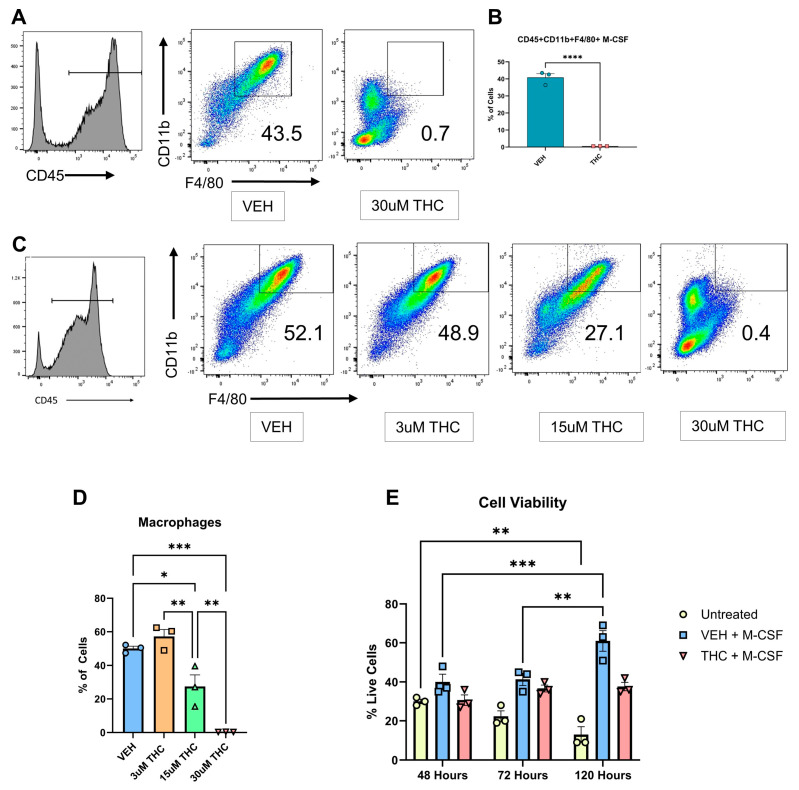
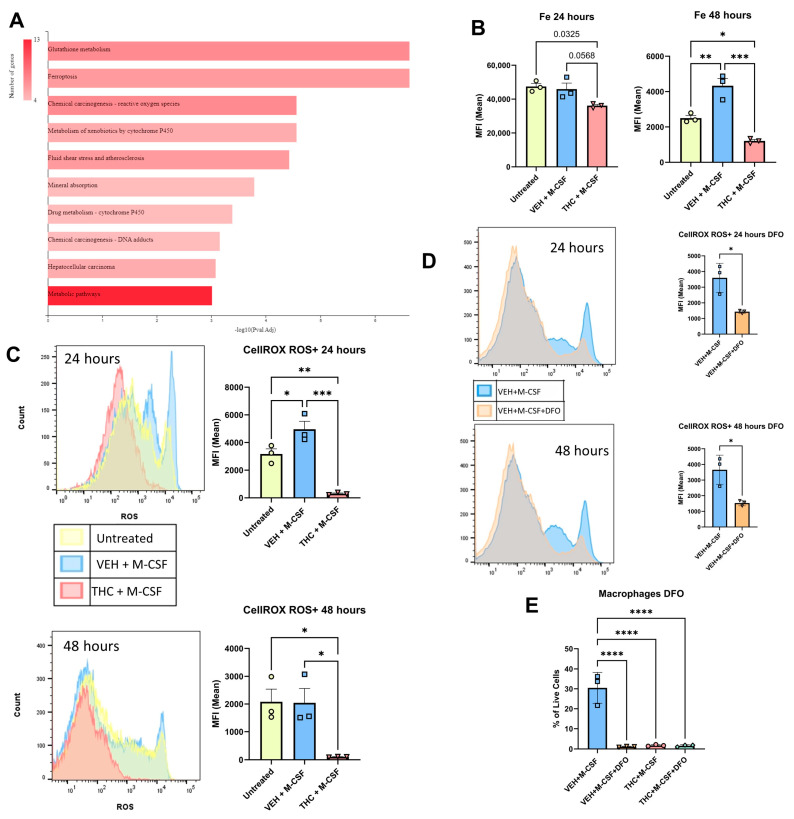
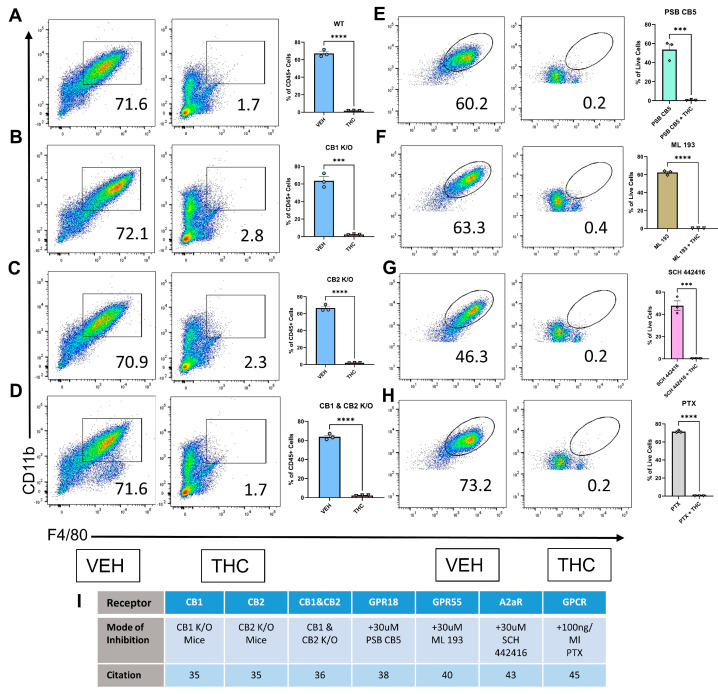
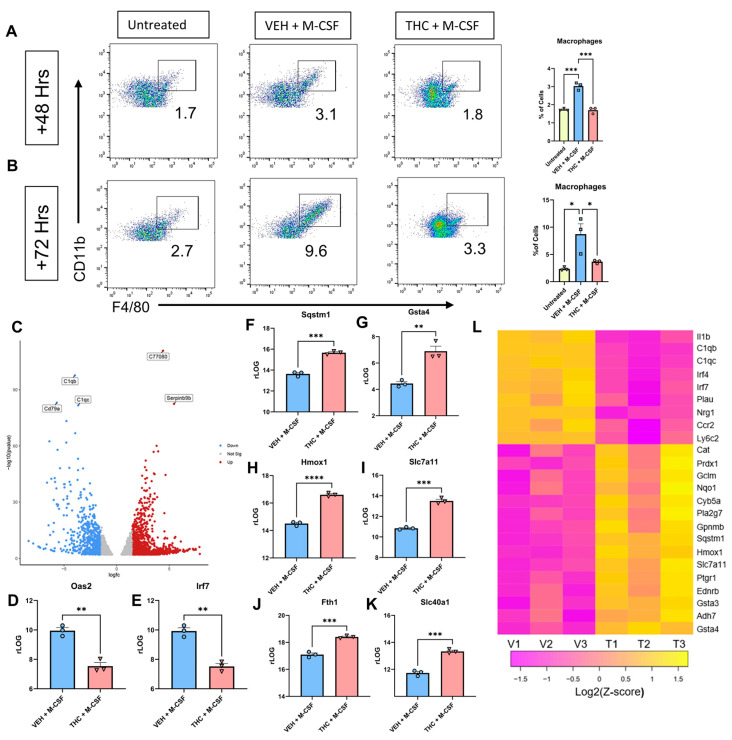
Macrophages are vital components of the immune system and serve as the first line of defense against pathogens. Macrophage colony-stimulating factor (M-CSF) induces macrophage differentiation from bone marrow-derived cells (BMDCs). Δ9-tetrahydrocannabiol (THC), a phytocannabinoid from the plant, has profound anti-inflammatory properties with significant effects on myeloid cells. To investigate the effect of THC on macrophage differentiation, we cultured BMDCs with M-CSF in the presence of THC. Interestingly, THC markedly blocked the differentiation of BMDCs into CD45 + CD11b + F4/80+ macrophages. The effect of THC was independent of cannabinoid receptors CB1, and CB2, as well as other potential receptors such as GPR18, GPR55, and Adenosine 2A Receptor. RNA-seq analysis revealed that the THC-treated BMDCs displayed a significant increase in the expression of NRF2-ARE-related genes. KEGG pathway analysis revealed that the expression profiles of THC-treated cells correlated with ferroptosis and glutathione metabolism pathways. Fluorescence-based labile iron assays showed that the THC-treated BMDCs had significantly increased iron levels. Finally, THC-exposed BMDCs showed decreased levels of intracellular ROS. THC has the unique molecular property to block the Fenton Reaction, thus preventing the increase in intracellular ROS that is normally induced by high iron levels. Together, these studies demonstrated that THC blocks M-CSF-induced macrophage differentiation by inhibiting ROS production through both the induction of NRF2-ARE-related gene expression and the prevention of ROS formation via the Fenton Reaction.
巨噬细胞是免疫系统的重要组成部分,是抵御病原体的第一道防线。巨噬细胞集落刺激因子(M-CSF)诱导骨髓来源细胞(BMDCs)分化为巨噬细胞。Δ9-四氢大麻酚(THC)是一种从植物中提取的植物大麻素,具有显著的抗炎特性,对髓样细胞有重要影响。为了研究THC对巨噬细胞分化的影响,我们在THC存在的情况下,用M-CSF培养BMDCs。有趣的是,THC显著阻断了BMDCs向CD45 + CD11b + F4/80+巨噬细胞的分化。THC的作用独立于大麻素受体CB1、CB2以及其他潜在受体,如GPR18、GPR55和腺苷2A受体。RNA测序分析显示,经THC处理的BMDCs中NRF2-ARE相关基因的表达显著增加。KEGG通路分析显示,经THC处理的细胞的表达谱与铁死亡和谷胱甘肽代谢通路相关。基于荧光的不稳定铁检测表明,经THC处理的BMDCs中铁水平显著升高。最后,暴露于THC的BMDCs显示细胞内活性氧水平降低。THC具有独特的分子特性,可阻断芬顿反应,从而防止通常由高铁水平诱导的细胞内活性氧增加。总之,这些研究表明,THC通过诱导NRF2-ARE相关基因表达和通过芬顿反应防止活性氧形成来抑制活性氧产生,从而阻断M-CSF诱导的巨噬细胞分化。