Department of Biology, The Johns Hopkins University, Baltimore, MD 21218, USA.
Department of Biology, The Johns Hopkins University, Baltimore, MD 21218, USA.
Cell Stem Cell. 2019 Nov 7;25(5):666-681.e5. doi: 10.1016/j.stem.2019.08.014. Epub 2019 Sep 26.
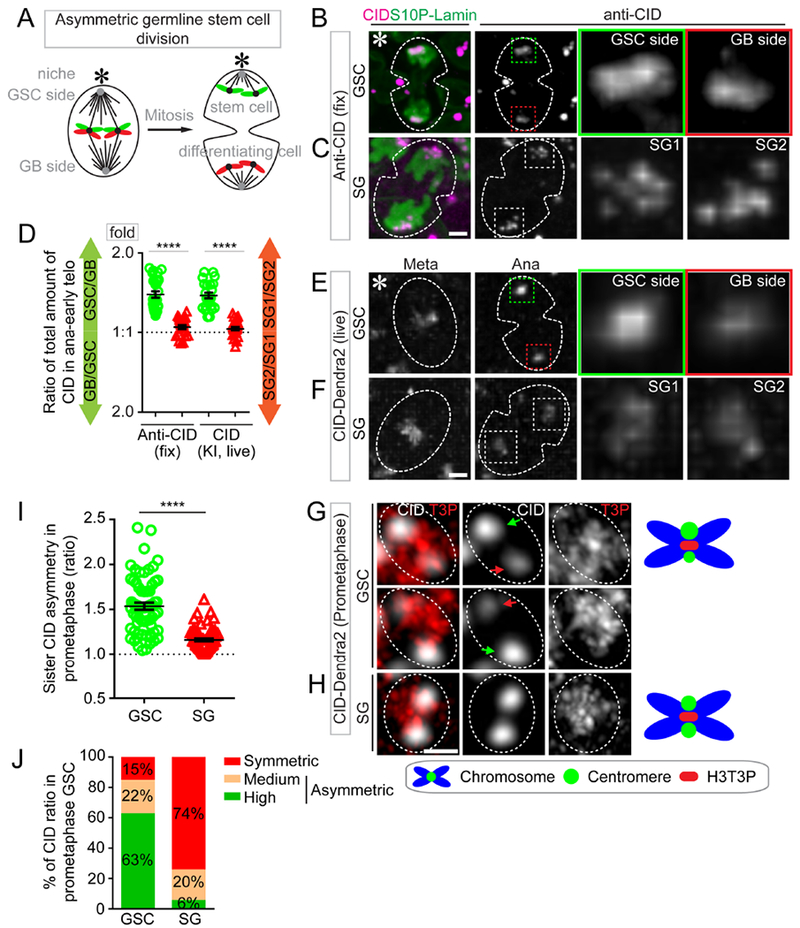
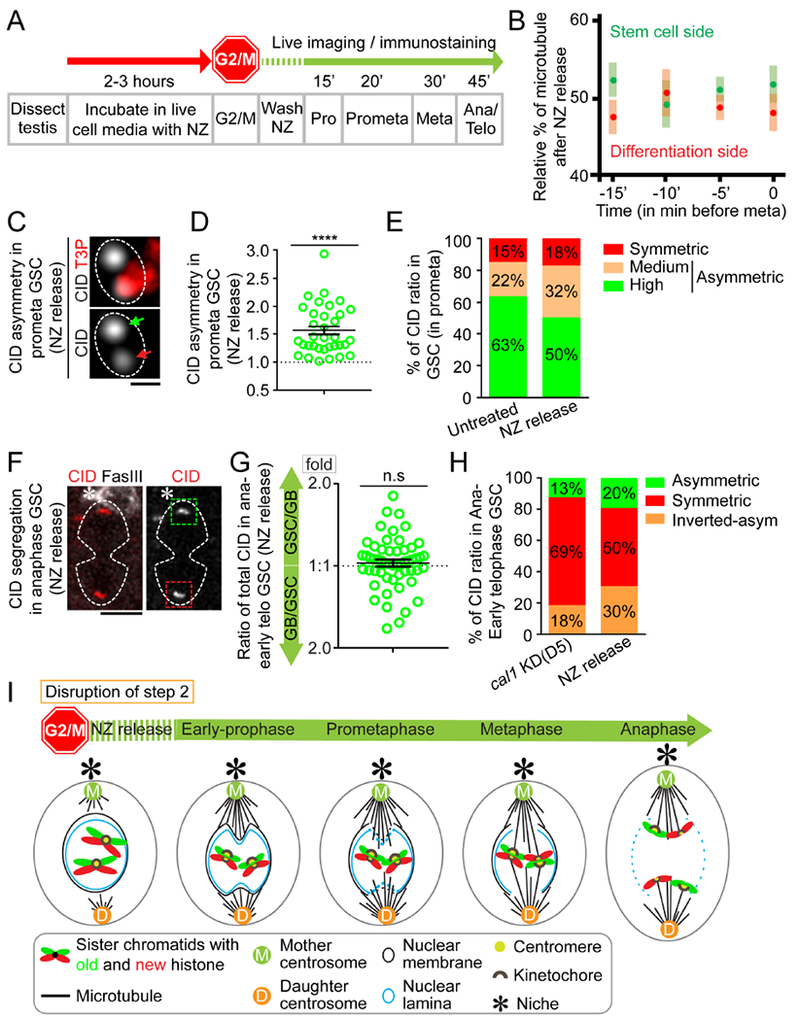
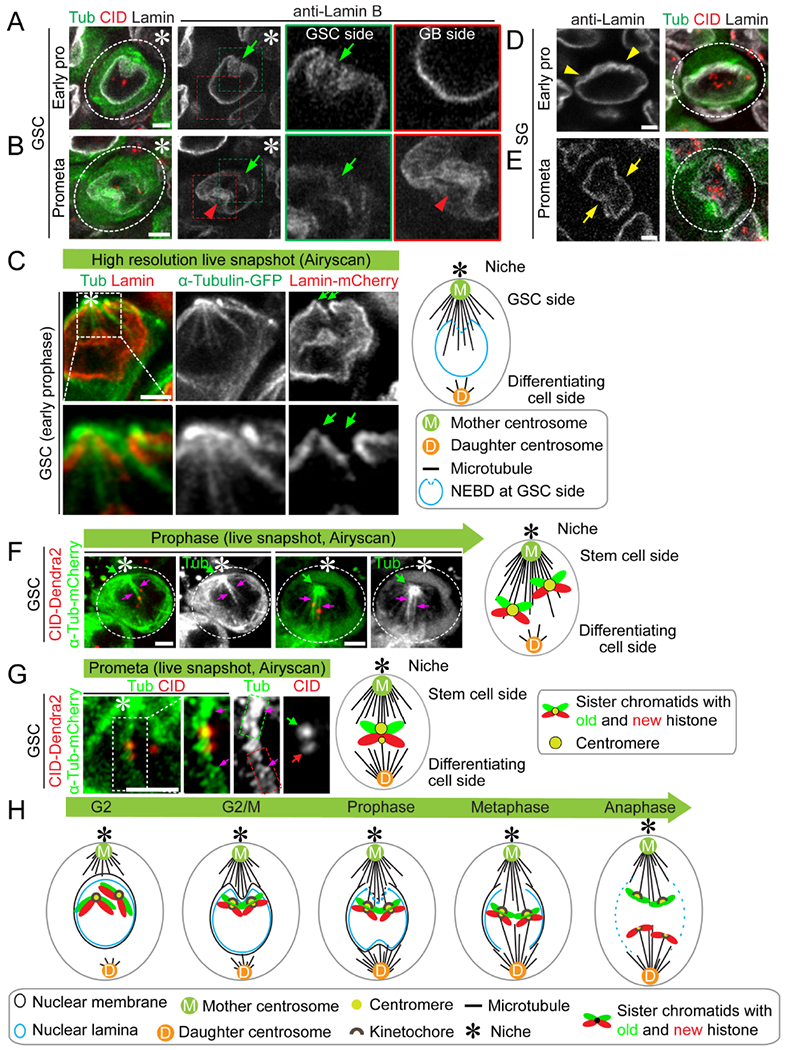
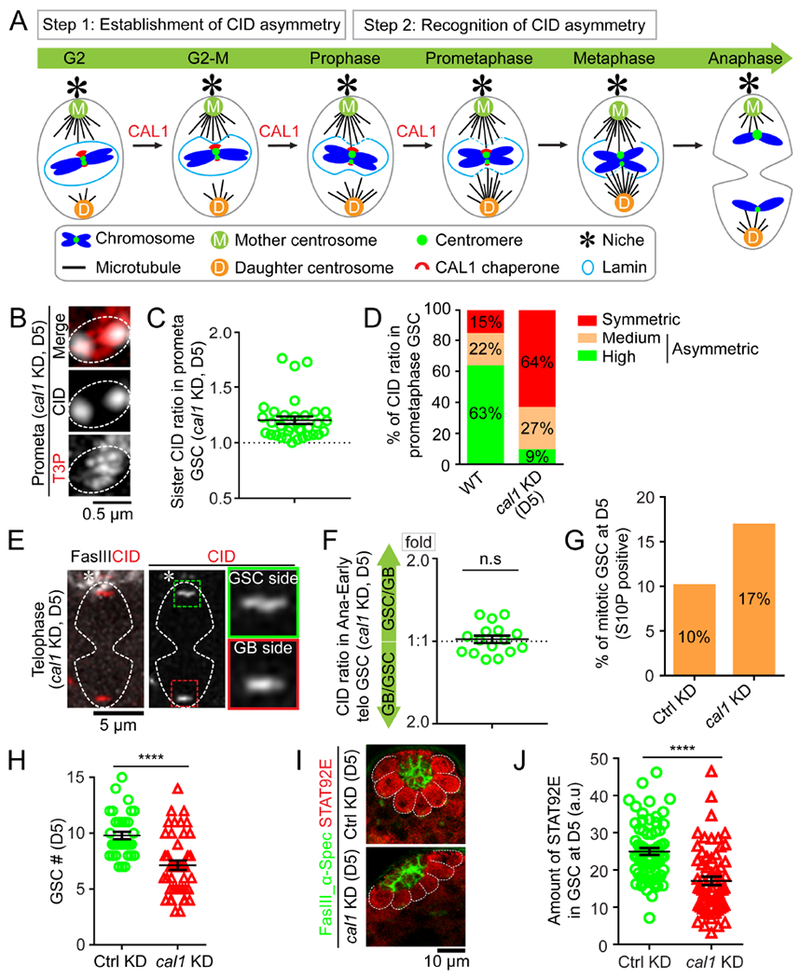
Many stem cells utilize asymmetric cell division (ACD) to produce a self-renewed stem cell and a differentiating daughter cell. How non-genic information could be inherited differentially to establish distinct cell fates is not well understood. Here, we report a series of spatiotemporally regulated asymmetric components, which ensure biased sister chromatid attachment and segregation during ACD of Drosophila male germline stem cells (GSCs). First, sister centromeres are differentially enriched with proteins involved in centromere specification and kinetochore function. Second, temporally asymmetric microtubule activities and polarized nuclear envelope breakdown allow for the preferential recognition and attachment of microtubules to asymmetric sister kinetochores and sister centromeres. Abolishment of either the asymmetric sister centromeres or the asymmetric microtubule activities results in randomized sister chromatid segregation. Together, these results provide the cellular basis for partitioning epigenetically distinct sister chromatids during stem cell ACDs, which opens new directions to study these mechanisms in other biological contexts.
许多干细胞利用不对称细胞分裂(ACD)产生自我更新的干细胞和分化的子细胞。非基因信息如何能够以不同的方式遗传,从而建立不同的细胞命运,这一点还不是很清楚。在这里,我们报告了一系列时空调节的不对称成分,这些成分确保了果蝇雄性生殖干细胞(GSCs)ACD 过程中姐妹染色单体的偏向附着和分离。首先,姐妹着丝粒在参与着丝粒指定和动粒功能的蛋白质方面存在差异富集。其次,时间不对称的微管活性和极化的核膜破裂允许微管优先识别和附着到不对称的姐妹动粒和姐妹着丝粒上。不对称姐妹着丝粒或不对称微管活性的消除会导致姐妹染色单体随机分离。总之,这些结果为干细胞 ACD 过程中表观遗传不同的姐妹染色单体的分配提供了细胞基础,为在其他生物背景下研究这些机制开辟了新的方向。