Hayashi Y, Sato M, Hirokawa K
Am J Pathol. 1985 Mar;118(3):476-83.
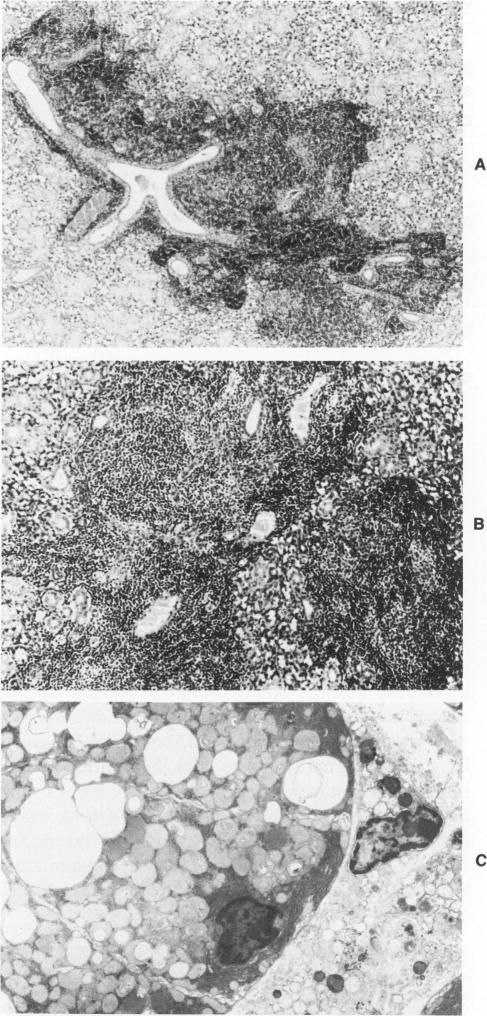
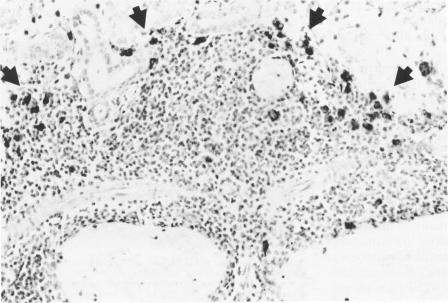
This article reports that sialadenitis developed in female CRJ:CD-1 mice thymectomized 3 days after birth and later immunized with a homogenate of the submandibular salivary gland emulsified with complete Freund's adjuvant. Significant inflammatory changes did not develop in various control groups, including animals thymectomized at Day 3 but not immunized and animals not thymectomized on the day of birth but immunized. Because a more marked decrease of Lyt 2+ cells was found in mice thymectomized on Day 3 after birth than in neonatally thymectomized mice, thymectomy at 3 days of age is more effective for the induction of sialadenitis, presumably by markedly decreasing a population of suppressor T cells. The lesions observed in mice with sialadenitis were mostly composed of small and medium-sized lymphocytes stained by anti-Thy 1.2 and Lyt 2 antibodies and in later stages by immunoglobulin-containing cells in the periphery of inflammatory lesions.
本文报道,雌性CRJ:CD-1小鼠在出生后3天进行胸腺切除,随后用完全弗氏佐剂乳化的下颌下唾液腺匀浆免疫,发生了涎腺炎。在各个对照组中未出现明显的炎症变化,包括出生后第3天进行胸腺切除但未免疫的动物以及出生当天未进行胸腺切除但免疫的动物。因为出生后第3天进行胸腺切除的小鼠中Lyt 2+细胞的减少比新生期胸腺切除的小鼠更明显,所以3日龄时进行胸腺切除对诱导涎腺炎更有效,推测是通过显著减少抑制性T细胞群体来实现的。在患有涎腺炎的小鼠中观察到的病变主要由抗Thy 1.2和Lyt 2抗体染色的中小型淋巴细胞组成,在后期炎症病变周边出现含免疫球蛋白的细胞。