Interventional Cath Lab, ASL 2 Abruzzo, Chieti, Italy, Italy.
Institute of Cardiology "G. d'Annunzio University", Chieti, Italy, Italy.
Cardiol J. 2019;26(5):429-437. doi: 10.5603/CJ.a2019.0094. Epub 2019 Sep 30.
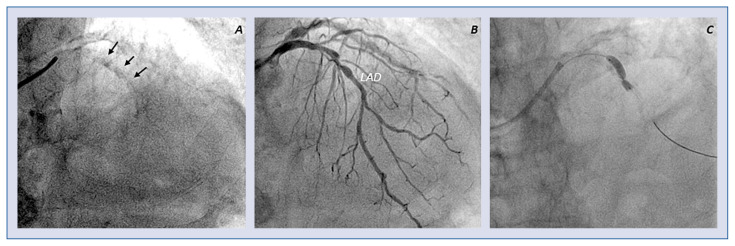
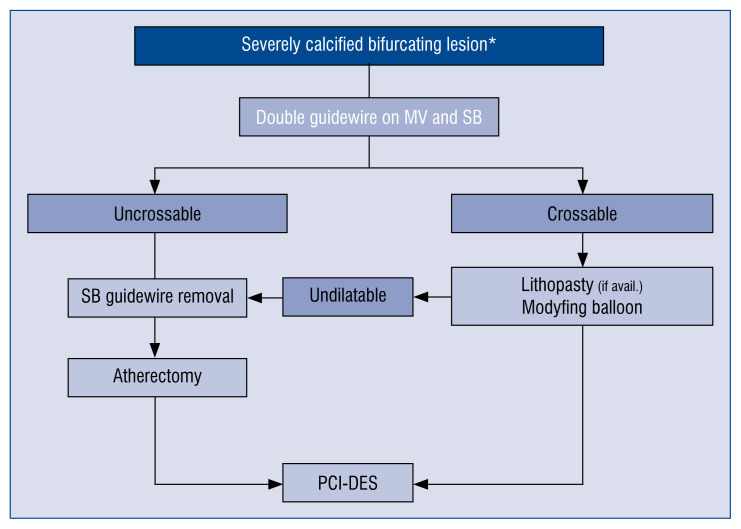
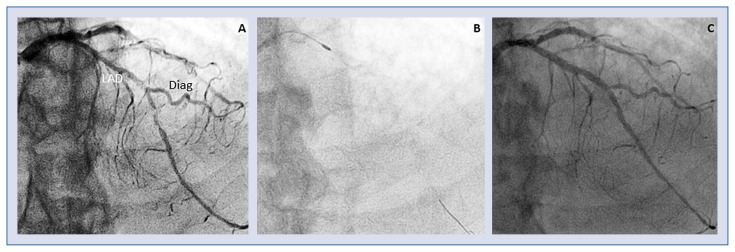
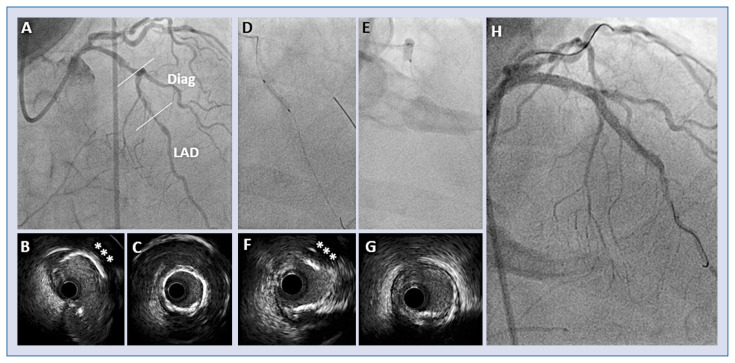
Bifurcating coronary lesions are a very common challenge in interventional cardiology because of the technical complexity in their treatment, the risk of side branch occlusion and an overall worse outcome when compared to non-bifurcating lesions. The presence of calcifications represents further complexity due to the difficulty in device delivery and stent expansion as well as enhanced risk of side branch occlusion. Rotational and orbital atherectomy, scoring and cutting balloons, coronary lithoplasty are available tools which have been introduced over the last three decades to overcome such issue. Nevertheless, their application in different contexts of bifurcations presents specific caveats and the studies directed at comparing such techniques have never been expressly oriented in the subset of the bifurcating lesion. In this paper, we review these devices and their usefulness in bifurcations by analyzing consistent data from clinical trials, and we propose a practical algorithm for the treatment of severely calcified bifurcating lesions according to their anatomical features.
分叉病变在介入心脏病学中是一个非常常见的挑战,因为其治疗技术复杂,与非分叉病变相比,侧支闭塞的风险更高,整体预后更差。钙化的存在增加了进一步的复杂性,因为设备输送和支架扩张困难,侧支闭塞的风险也增加了。旋转和轨道动脉粥样切除术、切割球囊、冠状动脉碎石术是过去三十年中引入的可用工具,用于克服这些问题。然而,它们在不同的分叉情况下的应用有特定的注意事项,并且针对这些技术的比较研究从未明确针对分叉病变的亚组。在本文中,我们通过分析临床试验中的一致数据来回顾这些设备及其在分叉病变中的用途,并根据其解剖特征提出了一种治疗严重钙化分叉病变的实用算法。