Department of Biology, Center for Evolutionary and Theoretical Immunology, University of New Mexico, Albuquerque, NM, United States of America.
Wellcome Sanger Institute, Wellcome Genome Campus, Hinxton, United Kingdom.
PLoS Negl Trop Dis. 2019 Sep 30;13(9):e0007013. doi: 10.1371/journal.pntd.0007013. eCollection 2019 Sep.
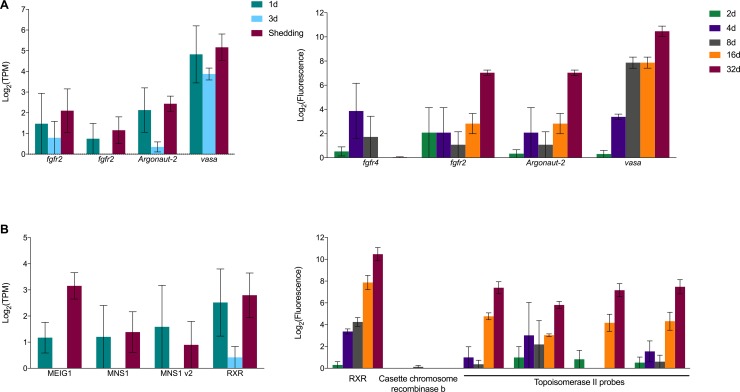
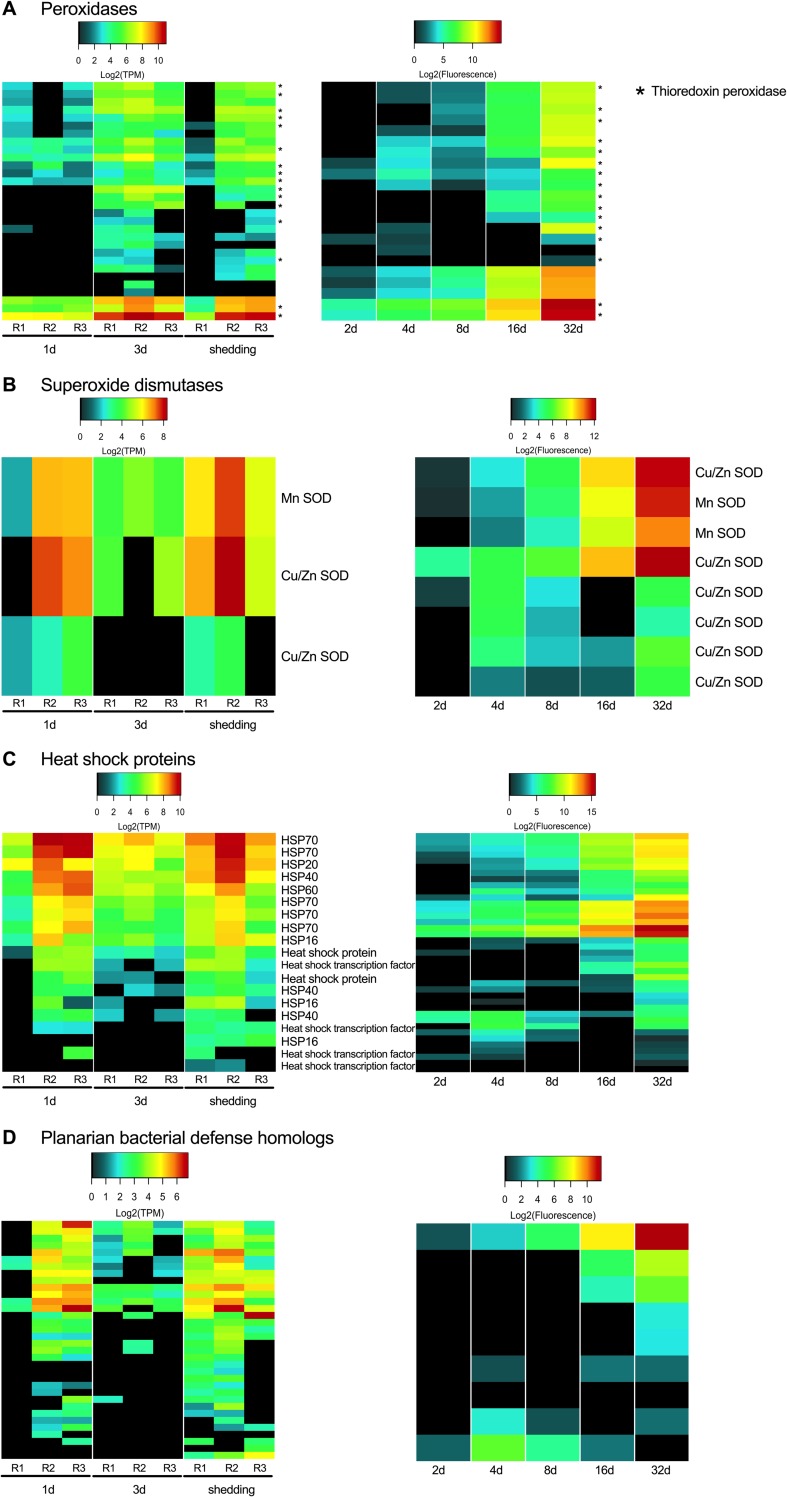
The full scope of the genes expressed by schistosomes during intramolluscan development has yet to be characterized. Understanding the gene products deployed by larval schistosomes in their snail hosts will provide insights into their establishment, maintenance, asexual reproduction, ability to castrate their hosts, and their prolific production of human-infective cercariae. Using the Illumina platform, the intramolluscan transcriptome of Schistosoma mansoni was investigated in field-derived specimens of the prominent vector species Biomphalaria pfeifferi at 1 and 3 days post infection (d) and from snails shedding cercariae. These S. mansoni samples were derived from the same snails used in our complementary B. pfeifferi transcriptomic study. We supplemented this view with microarray analyses of S. mansoni from B. glabrata at 2d, 4d, 8d, 16d, and 32d to highlight robust features of S. mansoni transcription, even when a different technique and vector species was used.
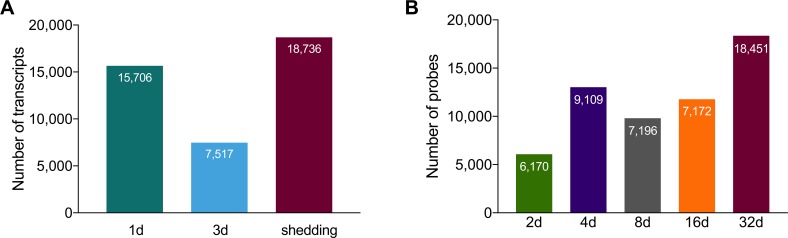
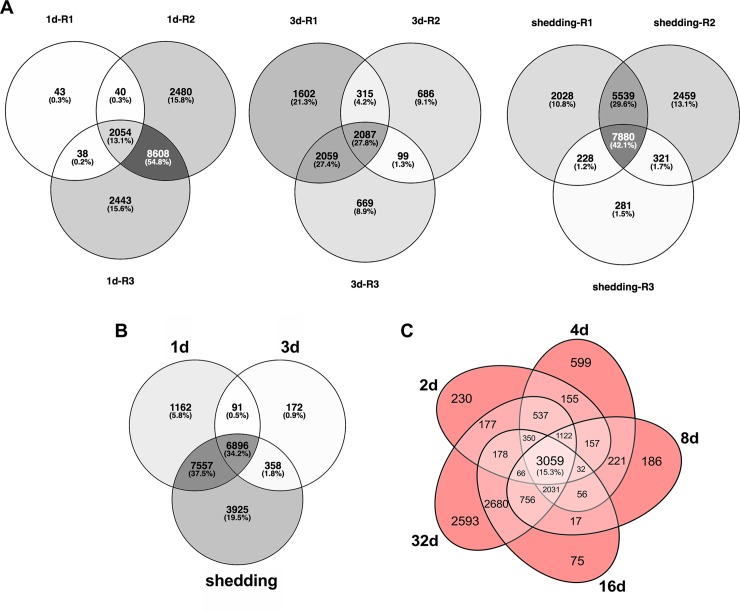
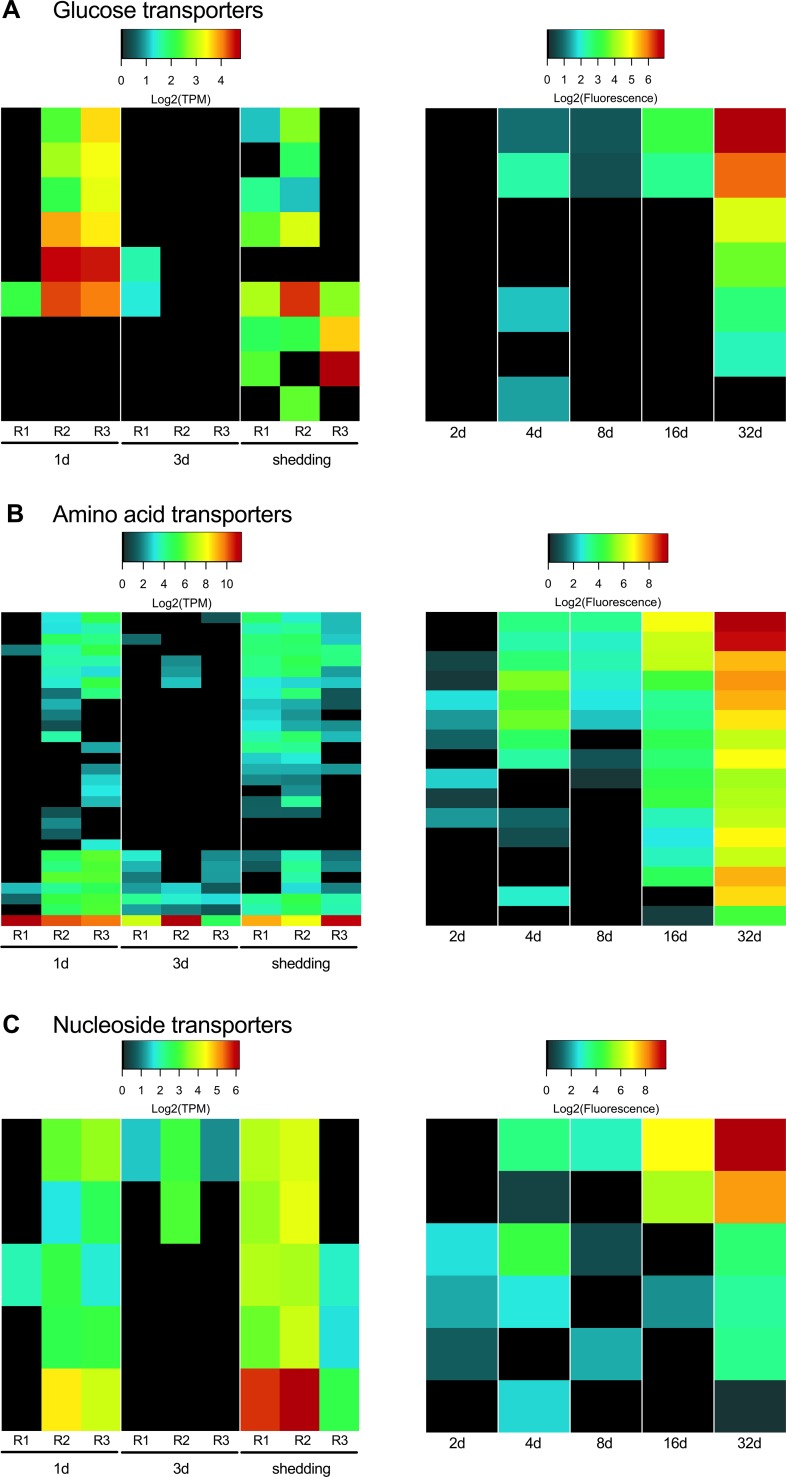
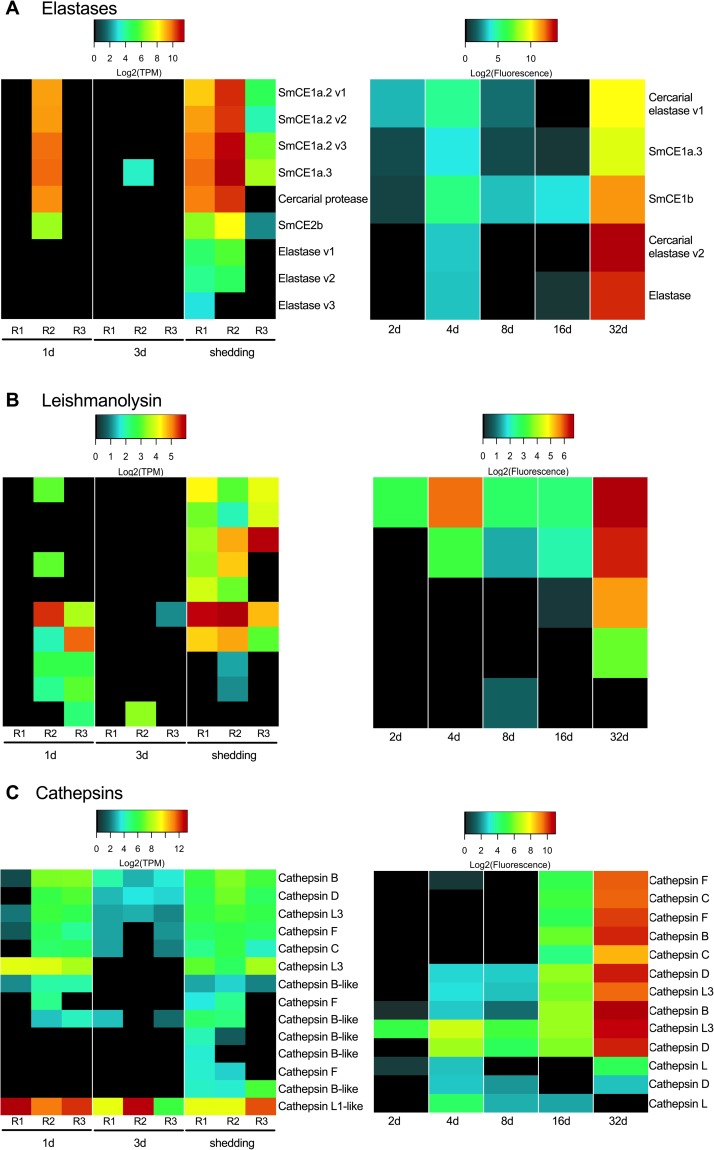
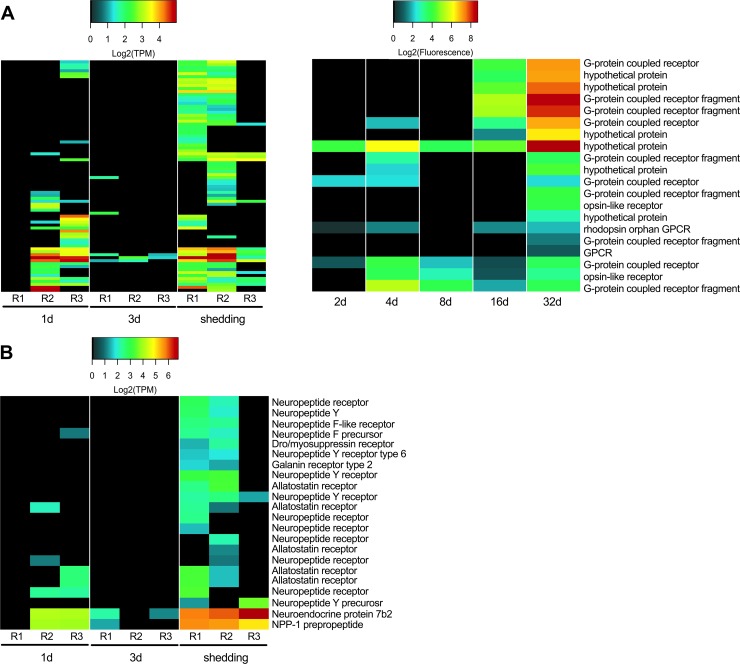
Transcripts representing at least 7,740 (66%) of known S. mansoni genes were expressed during intramolluscan development, with the greatest number expressed in snails shedding cercariae. Many transcripts were constitutively expressed throughout development featuring membrane transporters, and metabolic enzymes involved in protein and nucleic acid synthesis and cell division. Several proteases and protease inhibitors were expressed at all stages, including some proteases usually associated with cercariae. Transcripts associated with G-protein coupled receptors, germ cell perpetuation, and stress responses and defense were well represented. We noted transcripts homologous to planarian anti-bacterial factors, several neural development or neuropeptide transcripts including neuropeptide Y, and receptors that may be associated with schistosome germinal cell maintenance that could also impact host reproduction. In at least one snail the presence of larvae of another digenean species (an amphistome) was associated with repressed S. mansoni transcriptional activity.
CONCLUSIONS/SIGNIFICANCE: This in vivo study, emphasizing field-derived snails and schistosomes, but supplemented with observations from a lab model, provides a distinct view from previous studies of development of cultured intramolluscan stages from lab-maintained organisms. We found many highly represented transcripts with suspected or unknown functions, with connection to intramolluscan development yet to be elucidated.
曼氏血吸虫在其螺类中间宿主内发育过程中所表达的基因全貌尚未被描述。了解幼虫期曼氏血吸虫在其螺类宿主体内所部署的基因产物,将有助于深入了解其建立、维持、无性繁殖、对宿主去势以及大量产生感染人类的尾蚴的能力。使用 Illumina 平台,我们调查了来自曼氏血吸虫主要传播物种菲氏鲍螺的野外样本,这些样本在感染后 1 天和 3 天(d)以及从释放尾蚴的螺类中获得。这些曼氏血吸虫样本取自我们之前对菲氏鲍螺转录组学互补研究中使用的相同螺类。我们补充了来自光滑鲍螺的曼氏血吸虫的微阵列分析,这些样本在 2d、4d、8d、16d 和 32d 时采集,以突出曼氏血吸虫转录的稳健特征,即使使用了不同的技术和传播物种。
在螺类中间发育过程中,至少有 7740 个(66%)已知的曼氏血吸虫基因的转录本被表达,在释放尾蚴的螺类中表达数量最多。许多转录本在整个发育过程中持续表达,包括膜转运蛋白和参与蛋白质和核酸合成以及细胞分裂的代谢酶。在所有阶段都表达了几种蛋白酶和蛋白酶抑制剂,包括一些通常与尾蚴相关的蛋白酶。G 蛋白偶联受体、生殖细胞维持以及应激反应和防御相关的转录本也得到了很好的代表。我们注意到与扁形动物抗菌因子、几种神经发育或神经肽转录本(包括神经肽 Y)以及可能与曼氏血吸虫生殖细胞维持相关的受体同源的转录本,这些转录本也可能影响宿主繁殖。在至少一只螺类中,另一种双腔吸虫(一种后睾吸虫)幼虫的存在与曼氏血吸虫转录活性的抑制有关。
结论/意义:这项体内研究强调了野外来源的螺类和血吸虫,但补充了来自实验室模型的观察结果,为以前从实验室维持的生物中培养的螺类中间发育阶段的研究提供了一个独特的视角。我们发现了许多具有可疑或未知功能的高度代表性转录本,其与螺类中间发育的联系尚待阐明。