Liu Guozhen, Bursill Christina, Cartland Siân P, Anwer Ayad G, Parker Lindsay M, Zhang Kaixin, Feng Shilun, He Meng, Inglis David W, Kavurma Mary M, Hutchinson Mark R, Goldys Ewa M
Graduate School of Biomedical Engineering, ARC Centre of Excellence in Nanoscale Biophotonics (CNBP), Faculty of Engineering, The University of New South Wales, Sydney, NSW 2052, Australia; ARC Centre of Excellence in Nanoscale Biophotonics (CNBP), Macquarie University, Sydney, NSW 2109, Australia; International Joint Research Center for Intelligent Biosensor Technology and Health, College of Chemistry, Central China Normal University, Wuhan 430079, P. R. China.
Heart Health Theme, South Australian Health and Medical Research Institute, Adelaide, SA 5005, Australia; Heart Research Institute, Sydney 2042, Australia.
iScience. 2019 Oct 25;20:137-147. doi: 10.1016/j.isci.2019.09.019. Epub 2019 Sep 17.
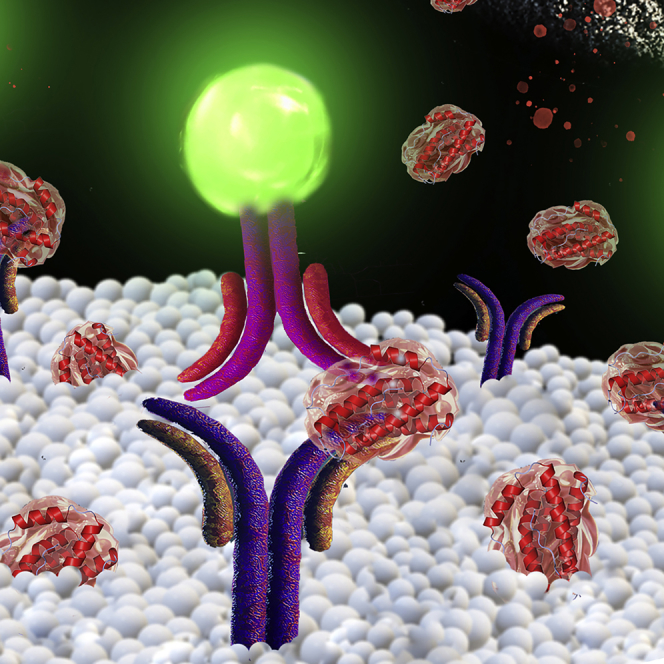
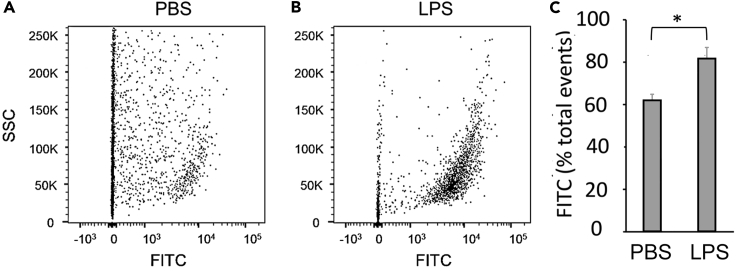
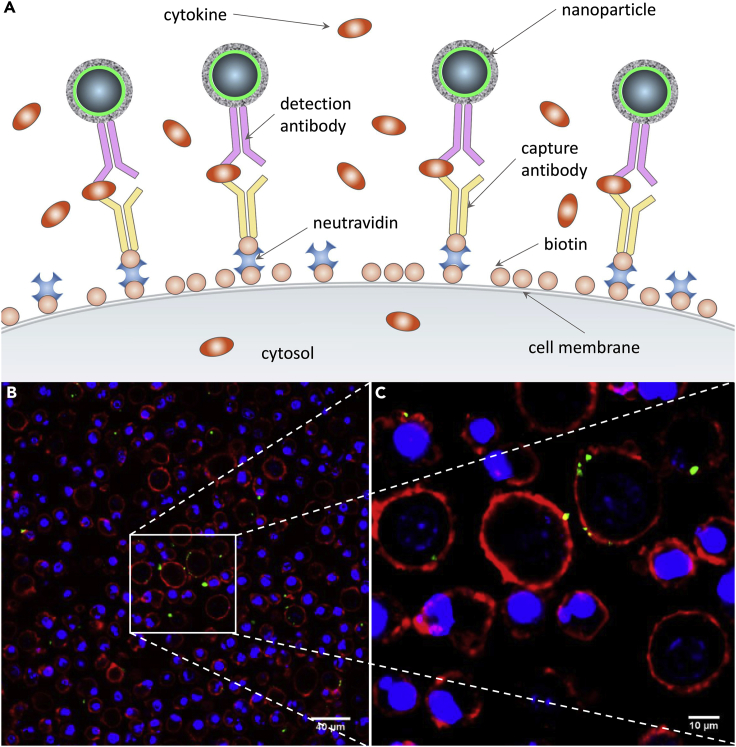
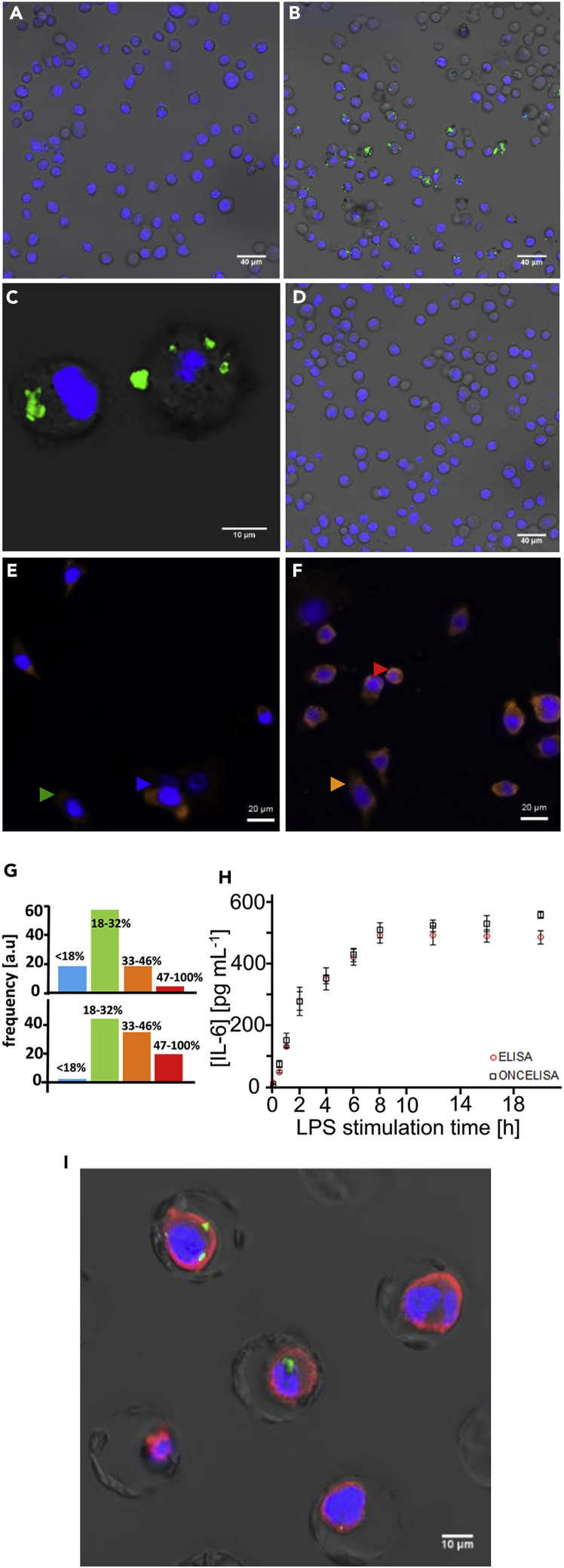
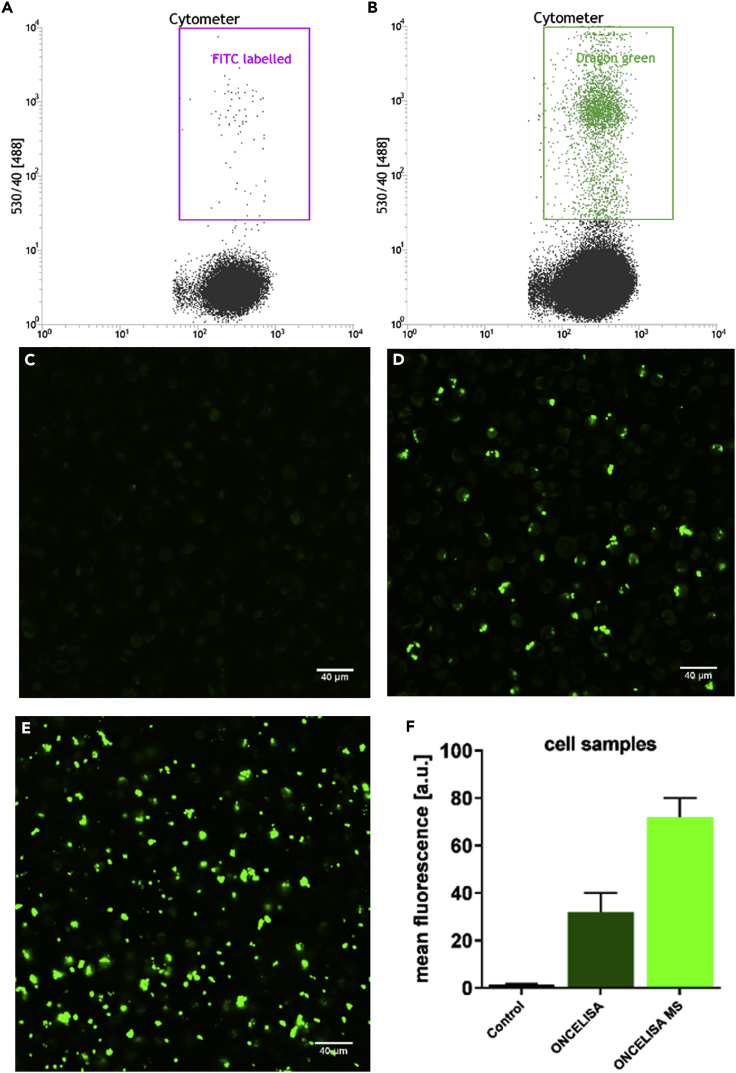
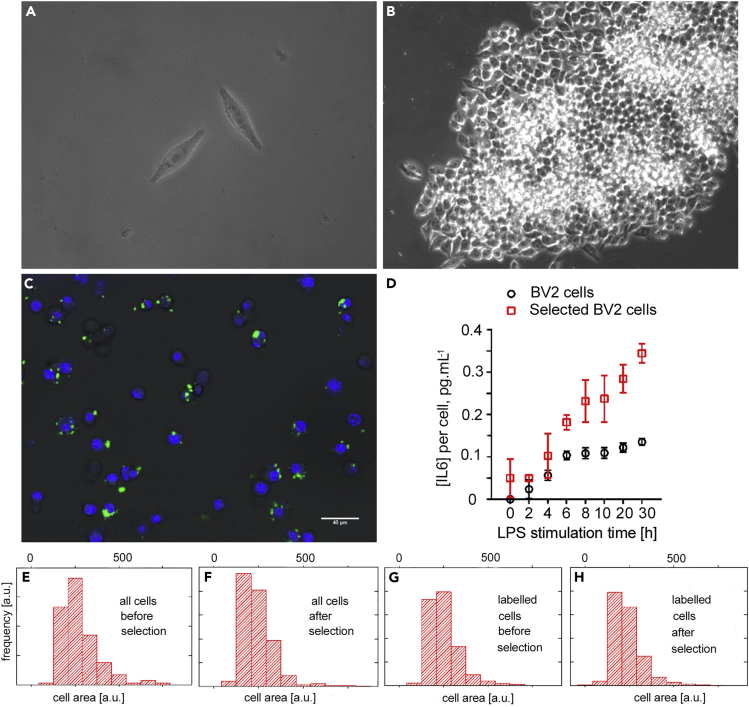
We developed a universal method termed OnCELISA to detect cytokine secretion from individual cells by applying a capture technology on the cell membrane. OnCELISA uses fluorescent magnetic nanoparticles as assay reporters that enable detection on a single-cell level in microscopy and flow cytometry and fluorimetry in cell ensembles. This system is flexible and can be modified to detect different cytokines from a broad range of cytokine-secreting cells. Using OnCELISA we have been able to select and sort highly cytokine-secreting cells and identify cytokine-secreting expression profiles of different cell populations in vitro and ex vivo. We show that this system can be used for ultrasensitive monitoring of cytokines in the complex biological environment of atherosclerosis that contains multiple cell types. The ability to identify and select cell populations based on their cytokine expression characteristics is valuable in a host of applications that require the monitoring of disease progression.
我们开发了一种名为OnCELISA的通用方法,通过在细胞膜上应用捕获技术来检测单个细胞的细胞因子分泌。OnCELISA使用荧光磁性纳米颗粒作为检测报告分子,能够在显微镜下进行单细胞水平的检测,在流式细胞术中也能检测,在细胞群体中则可进行荧光测定。该系统具有灵活性,可以进行修改以检测来自多种细胞因子分泌细胞的不同细胞因子。使用OnCELISA,我们已经能够选择和分选高度分泌细胞因子的细胞,并在体外和体内识别不同细胞群体的细胞因子分泌表达谱。我们表明,该系统可用于在包含多种细胞类型的动脉粥样硬化复杂生物环境中对细胞因子进行超灵敏监测。基于细胞因子表达特征来识别和选择细胞群体的能力在许多需要监测疾病进展的应用中具有重要价值。