Havelund Jesper F, Nygaard Kevin H, Nielsen Troels H, Nordström Carl-Henrik, Poulsen Frantz R, Færgeman Nils J, Forsse Axel, Gramsbergen Jan Bert
VILLUM Center for Bioanalytical Sciences, Department of Biochemistry and Molecular Biology, University of Southern Denmark, Campusvej 55, 5230 Odense M, Denmark.
Department of Neurosurgery, Odense University Hospital, University of Southern Denmark, Sdr. Boulevard 29, 5000 Odense C, Denmark.
Metabolites. 2019 Sep 27;9(10):204. doi: 10.3390/metabo9100204.
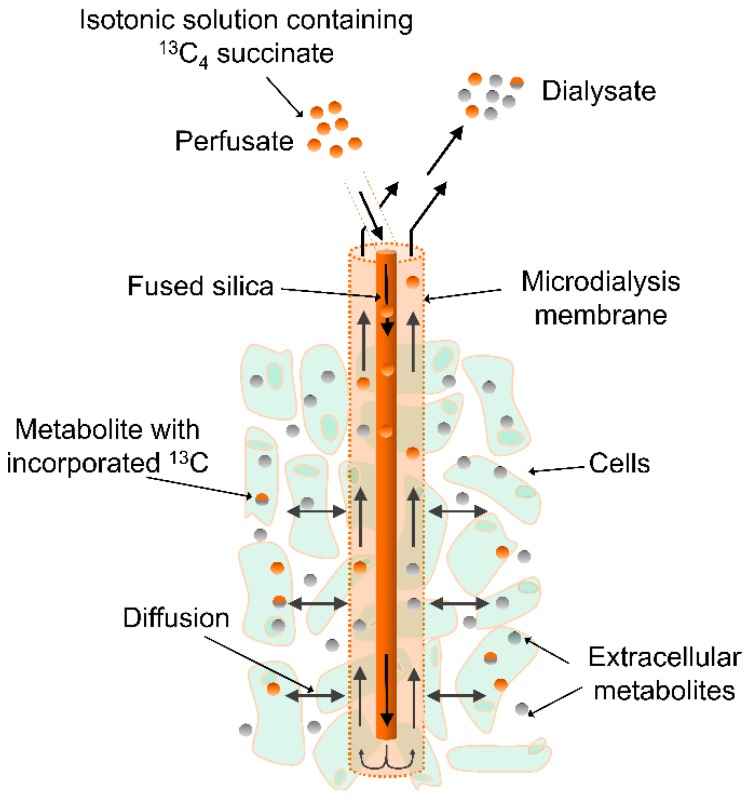
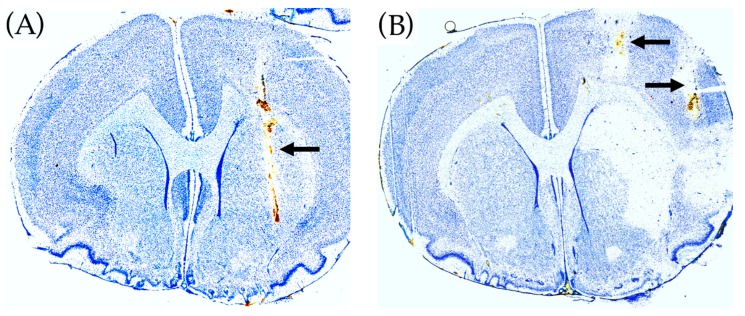
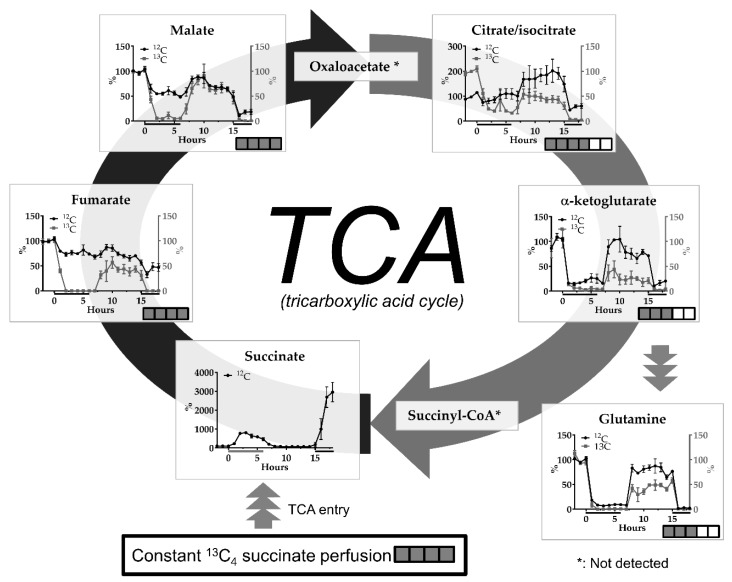
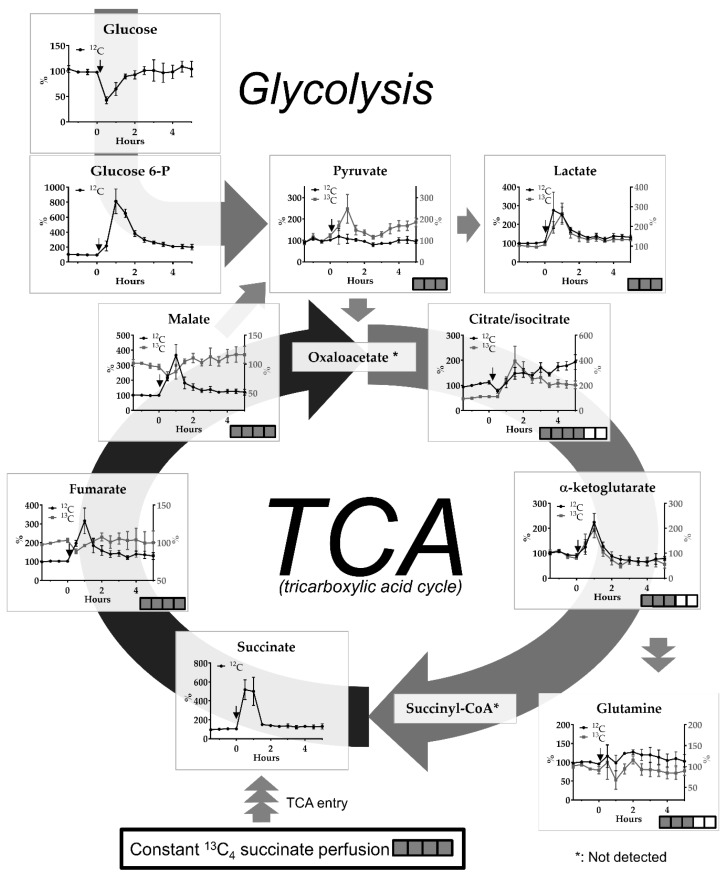
Cerebral micro-dialysis allows continuous sampling of extracellular metabolites, including glucose, lactate and pyruvate. Transient ischemic events cause a rapid drop in glucose and a rise in lactate levels. Following such events, the lactate/pyruvate (L/P) ratio may remain elevated for a prolonged period of time. In neurointensive care clinics, this ratio is considered a metabolic marker of ischemia and/or mitochondrial dysfunction. Here we propose a novel, sensitive microdialysis liquid chromatography-mass spectrometry (LC-MS) approach to monitor mitochondrial dysfunction in living brain using perfusion with C-labeled succinate and analysis of C-labeled tricarboxylic acid cycle (TCA) intermediates. This approach was evaluated in rat brain using malonate-perfusion (10-50 mM) and endothelin-1 (ET-1)-induced transient cerebral ischemia. In the malonate model, the expected changes upon inhibition of succinate dehydrogenase (SDH) were observed, i.e., an increase in endogenous succinate and decreases in fumaric acid and malic acid. The inhibition was further elaborated by incorporation of C into specific TCA intermediates from C-labeled succinate. In the ET-1 model, increases in non-labeled TCA metabolites (reflecting release of intracellular compounds) and decreases in C-labeled TCA metabolites (reflecting inhibition of de novo synthesis) were observed. The analysis of C incorporation provides further layers of information to identify metabolic disturbances in experimental models and neuro-intensive care patients.
脑微透析可连续采集细胞外代谢物样本,包括葡萄糖、乳酸和丙酮酸。短暂性缺血事件会导致葡萄糖迅速下降,乳酸水平升高。此类事件发生后,乳酸/丙酮酸(L/P)比值可能会在较长时间内保持升高。在神经重症监护病房,该比值被视为缺血和/或线粒体功能障碍的代谢标志物。在此,我们提出一种新颖、灵敏的微透析液相色谱-质谱联用(LC-MS)方法,通过灌注C标记的琥珀酸并分析C标记的三羧酸循环(TCA)中间体来监测活体大脑中的线粒体功能障碍。该方法在大鼠脑中使用丙二酸灌注(10 - 50 mM)和内皮素-1(ET-1)诱导的短暂性脑缺血进行了评估。在丙二酸模型中,观察到了抑制琥珀酸脱氢酶(SDH)后预期的变化,即内源性琥珀酸增加,富马酸和苹果酸减少。通过将C掺入来自C标记琥珀酸的特定TCA中间体中,进一步阐述了这种抑制作用。在ET-1模型中,观察到未标记的TCA代谢物增加(反映细胞内化合物的释放),而C标记的TCA代谢物减少(反映从头合成的抑制)。对C掺入的分析提供了更多层次的信息,以识别实验模型和神经重症监护患者中的代谢紊乱。