Nygaard Kevin H, Havelund Jesper F, Nielsen Troels H, Nordström Carl-Henrik, Færgeman Nils J, Poulsen Frantz R, Gramsbergen Jan Bert, Forsse Axel
Department of Neurosurgery, Odense University Hospital, University of Southern Denmark, Sdr. Boulevard 29, 5000 Odense C, Denmark.
BRIDGE-Brain Researche-Inter-Disciplinary Guided Excellence, Institute of Clinical Research, University of Southern Denmark, Winsløwparken 19, 5000 Odense C, Denmark.
Metabolites. 2020 Jul 13;10(7):287. doi: 10.3390/metabo10070287.
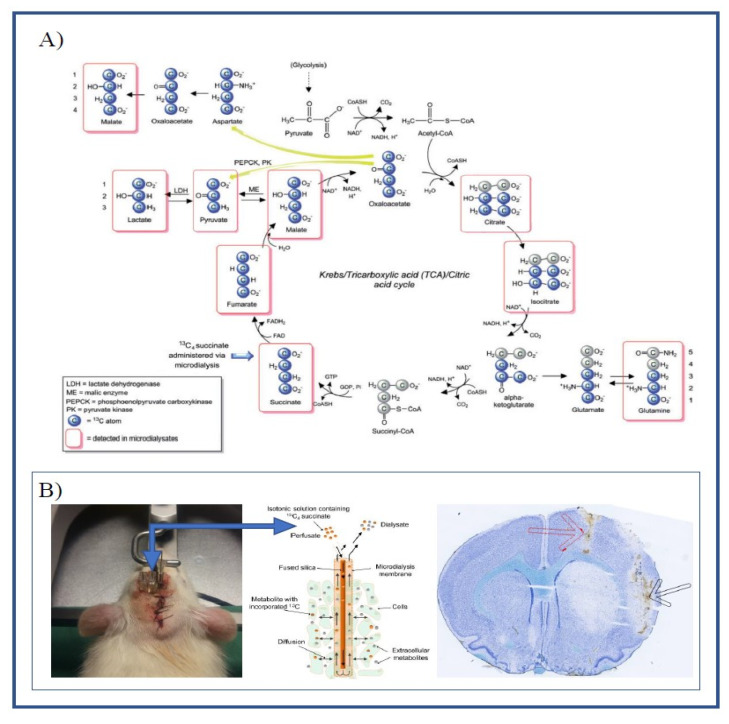
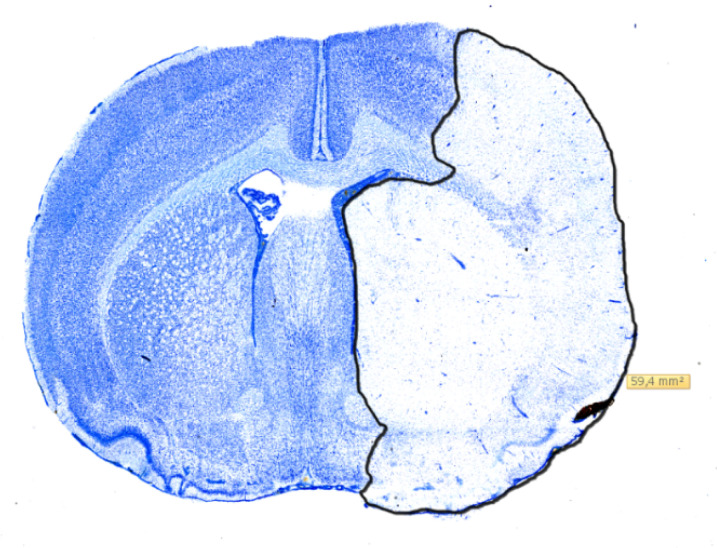
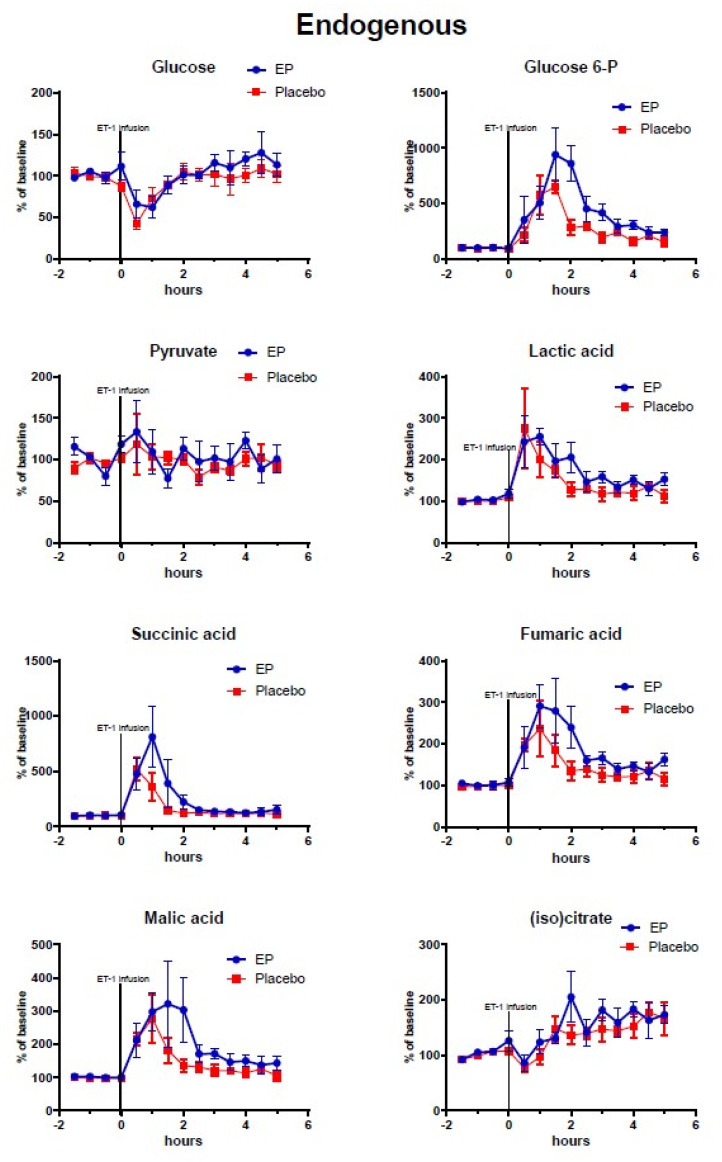
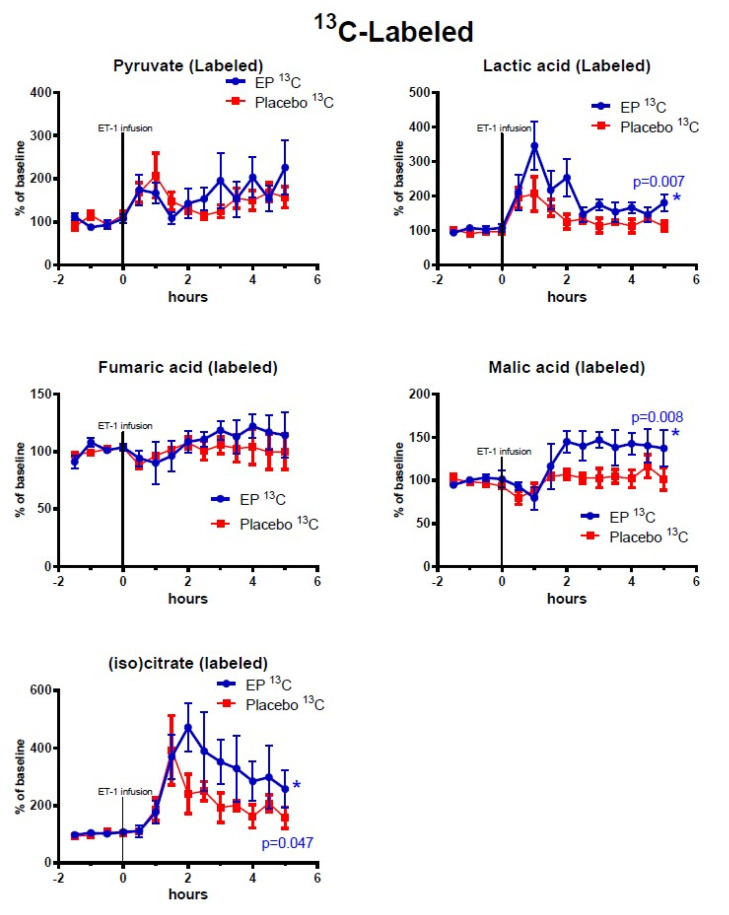
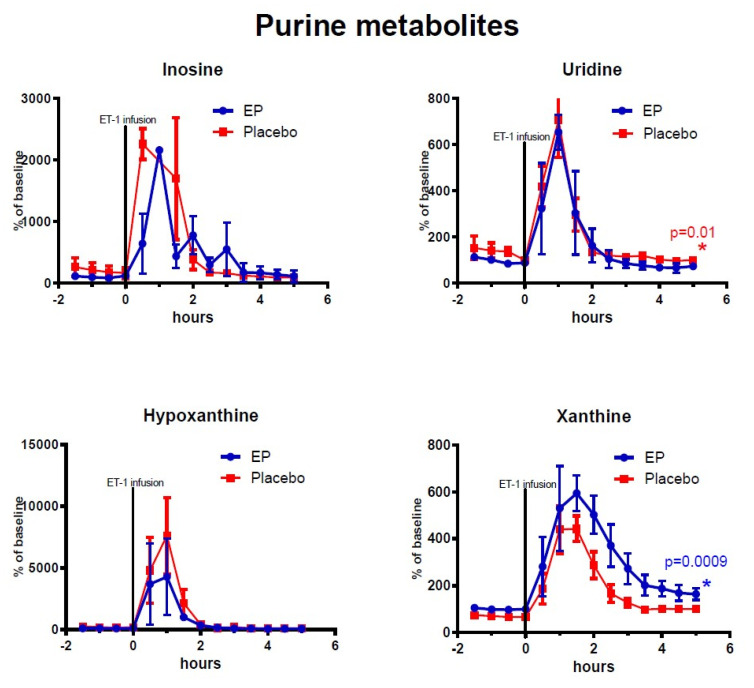
Mitochondrial dysfunction after transient cerebral ischemia can be monitored by cerebral microdialysis (CMD) using changes in the lactate and pyruvate concentrations and ratio. Other metabolites associated with mitochondrial (dys)function are, e.g., tricyclic acid (TCA) and purine metabolites. Ethyl pyruvate (EP) is a putative neuroprotectant, supposedly targeting mitochondrial energy metabolism, but its effect on cerebral energy metabolism has never been described using microdialysis. In this study we monitored the metabolic effects of EP in the endothelin-1 (ET-1) rat model using perfusion with C-succinate and analysis of endogenous and C-labeled metabolites in the dialysates by liquid chromatography-mass spectrometry (LC-MS). Adult Sprague Dawley rats ( = 27 of which = 11 were included in the study) were subjected to the microdialysis experiments. Microdialysis probes were perfused with C-labeled succinate (1 mM), and striatal dialysates were collected at 30 min intervals before induction of the insult, during intracerebral application of ET-1, and during intravenous treatment with either EP (40 mg/kg) or placebo, which was administered immediately after the insult. The rats were subjected to transient cerebral ischemia by unilateral microinjection of ET-1 in the piriform cortex, causing vasoconstriction of the medial cerebral artery. Monitoring was continued for 5 h after reperfusion, and levels of endogenous and C-labeled energy metabolites before and after ischemia-reperfusion were compared in EP-treated and control groups. Infarct volumes were assessed after 24 h. In both the EP-treated and placebo groups, ET-1-induced vasoconstriction resulted in a transient depression of interstitial glucose and elevation of lactate in the ipsilateral striatum. In the reperfusion phase, the concentrations of labeled malate, isocitrate, and lactate as well as endogenous xanthine were significantly higher in the EP-group than in the placebo-group: (mean ± SEM) labeled malate: 39.5% ± 14.9, = 0.008; labeled isocitrate: 134.8% ± 67.9, = 0.047; labeled lactate: 61% ± 22.0, = 0.007; and endogenous xanthine: 93.9% ± 28.3, = 0.0009. In the placebo group, significantly elevated levels of uridine were observed (mean ± SEM) 32.5% ± 12.7, = 0.01. Infarct volumes were not significantly different between EP-treated and placebo groups, = 0.4679. CMD labeled with C-succinate enabled detection of ischemic induction and EP treatment effects in the ET-1 rat model of transient focal cerebral ischemia. EP administered as a single intravenous bolus in the reperfusion-phase after transient cerebral ischemia increased de novo synthesis of several key intermediate energy metabolites (C-malate, C-isocitrate, and endogenous xanthine). In summary, mitochondria process C-succinate more effectively after EP treatment.
短暂性脑缺血后的线粒体功能障碍可通过脑微透析(CMD),利用乳酸和丙酮酸浓度及比值的变化进行监测。其他与线粒体(功能)障碍相关的代谢物,例如三羧酸(TCA)和嘌呤代谢物。丙酮酸乙酯(EP)是一种假定的神经保护剂,据推测其作用靶点是线粒体能量代谢,但从未使用微透析描述过其对脑能量代谢的影响。在本研究中,我们使用灌注C-琥珀酸盐并通过液相色谱-质谱联用(LC-MS)分析透析液中的内源性和C标记代谢物,监测了EP在内皮素-1(ET-1)大鼠模型中的代谢作用。成年Sprague Dawley大鼠(n = 27,其中11只纳入研究)接受了微透析实验。微透析探针用C标记的琥珀酸盐(1 mM)灌注,在诱导损伤前、脑内应用ET-1期间以及静脉注射EP(40 mg/kg)或安慰剂(在损伤后立即给药)期间,每隔30分钟收集纹状体透析液。通过在梨状皮质单侧微量注射ET-1使大鼠遭受短暂性脑缺血,导致大脑中动脉血管收缩。再灌注后持续监测5小时,比较EP治疗组和对照组缺血再灌注前后内源性和C标记的能量代谢物水平。24小时后评估梗死体积。在EP治疗组和安慰剂组中,ET-1诱导的血管收缩均导致同侧纹状体间质葡萄糖短暂降低和乳酸升高。在再灌注阶段,EP组中标记的苹果酸、异柠檬酸和乳酸以及内源性黄嘌呤的浓度显著高于安慰剂组:(平均值±标准误)标记的苹果酸:39.5%±14.9,P = 0.008;标记的异柠檬酸:134.8%±67.9,P = 0.047;标记的乳酸:61%±22.0,P = 0.007;内源性黄嘌呤:93.9%±28.3,P = 0.0009。在安慰剂组中,观察到尿苷水平显著升高(平均值±标准误)32.5%±12.7,P = 0.01。EP治疗组和安慰剂组之间的梗死体积无显著差异,P = 0.4679。用C-琥珀酸盐标记的CMD能够检测ET-1大鼠短暂性局灶性脑缺血模型中的缺血诱导和EP治疗效果。在短暂性脑缺血后的再灌注阶段单次静脉推注EP可增加几种关键中间能量代谢物(C-苹果酸、C-异柠檬酸和内源性黄嘌呤)的从头合成。总之,EP治疗后线粒体更有效地处理C-琥珀酸盐。