Ferreira Letícia T, Venancio Vinícius P, Kawano Taila, Abrão Lailah C C, Tavella Tatyana A, Almeida Ludimila D, Pires Gabriel S, Bilsland Elizabeth, Sunnerhagen Per, Azevedo Luciana, Talcott Stephen T, Mertens-Talcott Susanne U, Costa Fabio T M
Laboratory of Tropical Diseases-Prof. Dr. Luiz Jacintho da Silva, Department of Genetics, Evolution, Microbiology and Immunology and Synthetic Biology Laboratory, Department of Structural and Functional Biology, Institute of Biology, University of Campinas-UNICAMP, Campinas, SP 13083-970, Brazil.
Department of Nutrition and Food Science, Texas A&M University, College Station, Texas 77843, United States.
ACS Omega. 2019 Sep 13;4(13):15628-15635. doi: 10.1021/acsomega.9b02127. eCollection 2019 Sep 24.
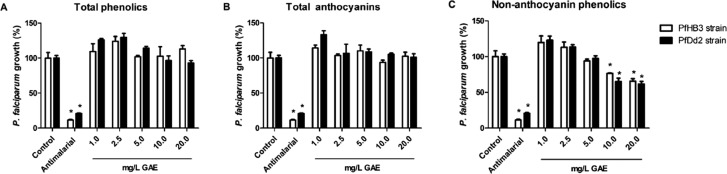
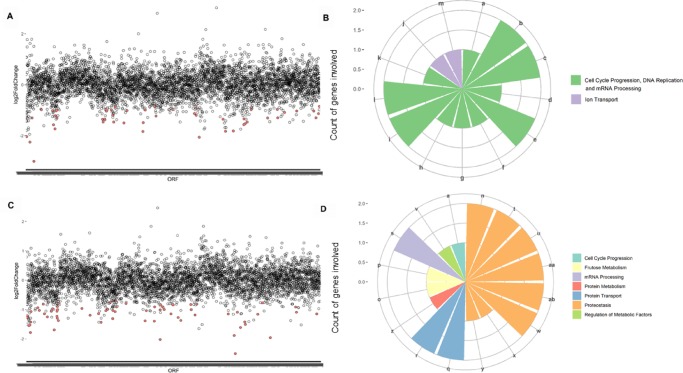
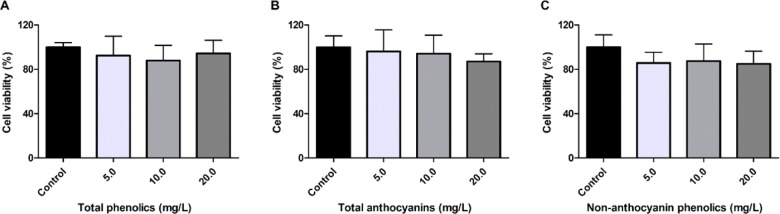
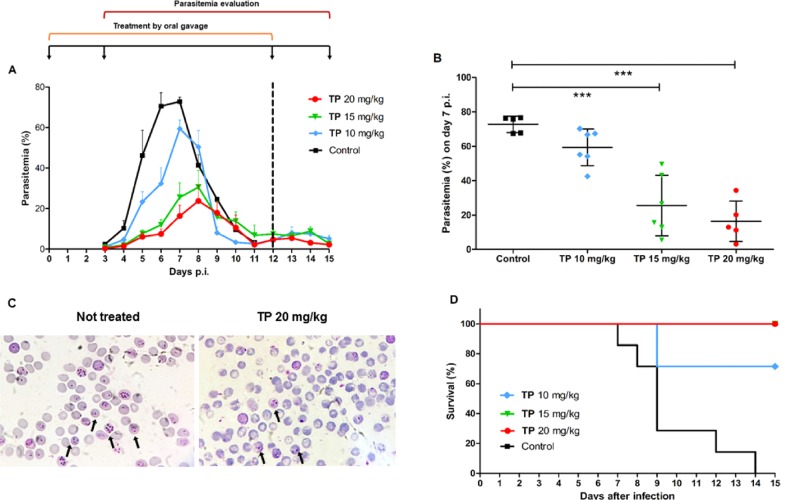
Malaria remains a major detrimental parasitic disease in the developing world, with more than 200 million cases annually. Widespread drug-resistant parasite strains push for the development of novel antimalarial drugs. Plant-derived natural products are key sources of antimalarial molecules. Martius ("açaí") originates from Brazil and has anti-inflammatory and antineoplasic properties. Here, we evaluated the antimalarial efficacy of three phenolic fractions of açaí; total phenolics (), nonanthocyanin phenolics (), and total anthocyanins (). In vitro, fraction moderately inhibited parasite growth in chloroquine-sensitive (HB3) and multiresistant (Dd2) strains, while none of the fractions was toxic to noncancer cells. Despite the limited activity in vitro, the oral treatment with 20 mg/kg of fraction reduced parasitemia by 89.4% in -infected mice and prolonged survival. Contrasting in vitro and in vivo activities of suggest key antiplasmodial roles for polyphenol metabolites rather than the fraction itself. Finally, we performed haploinsufficiency chemical genomic profiling (HIP) utilizing heterozygous deletion mutants to identify molecular mechanisms of açaí fractions. HIP results indicate proteostasis as the main cellular pathway affected by fraction . These results open avenues to develop açaí polyphenols as potential new antimalarial candidates.
疟疾仍然是发展中世界一种主要的有害寄生虫病,每年有超过2亿例病例。广泛存在的耐药寄生虫菌株推动了新型抗疟药物的研发。植物来源的天然产物是抗疟分子的关键来源。马尔蒂厄斯(“阿萨伊”)原产于巴西,具有抗炎和抗肿瘤特性。在此,我们评估了阿萨伊三种酚类组分的抗疟功效;总酚类()、非花青素酚类()和总花青素()。在体外,组分适度抑制氯喹敏感(HB3)和多耐药(Dd2)菌株中的寄生虫生长,而这些组分对非癌细胞均无毒性。尽管体外活性有限,但用20毫克/千克的组分口服治疗可使感染疟原虫的小鼠的寄生虫血症降低89.4%,并延长生存期。阿萨伊体外和体内活性的差异表明多酚代谢产物而非组分本身具有关键的抗疟原虫作用。最后,我们利用杂合缺失突变体进行单倍剂量不足化学基因组分析(HIP)以确定阿萨伊组分的分子机制。HIP结果表明蛋白质稳态是受组分影响的主要细胞途径。这些结果为将阿萨伊多酚开发为潜在的新型抗疟候选物开辟了道路。