Werner Siemens-Chair of Synthetic Biotechnology, Department of Chemistry, Technical University of Munich, 85748, Garching, Germany.
Microb Cell Fact. 2019 Oct 3;18(1):163. doi: 10.1186/s12934-019-1217-7.
Sustainable production of microbial fatty acids derivatives has the potential to replace petroleum based equivalents in the chemical, cosmetic and pharmaceutical industry. Most fatty acid sources for production oleochemicals are currently plant derived. However, utilization of these crops are associated with land use change and food competition. Microbial oils could be an alternative source of fatty acids, which circumvents the issue with agricultural competition.
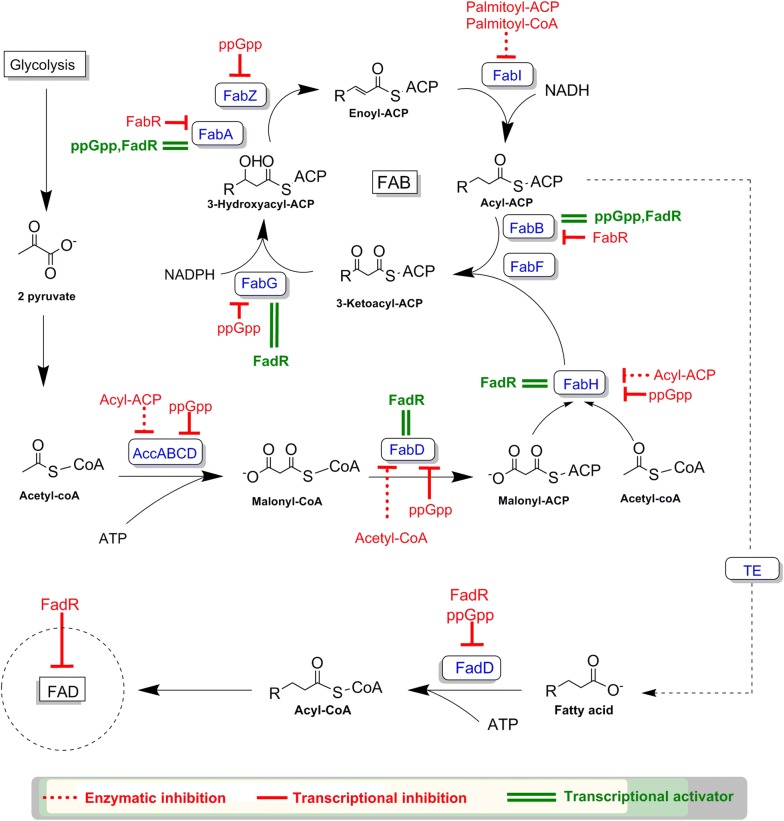
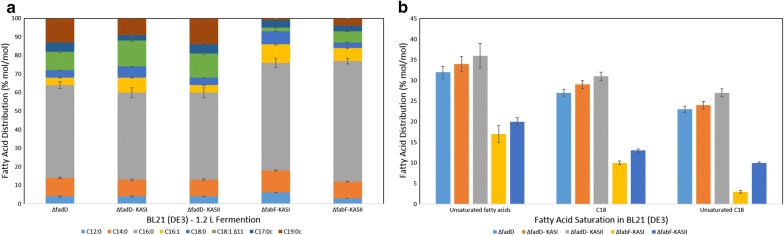
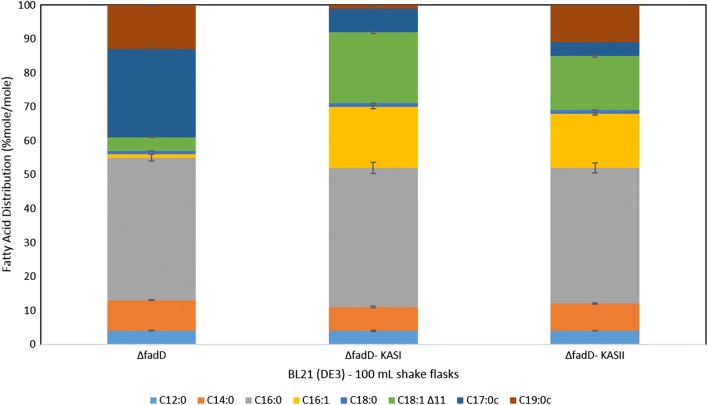
In this study, we generated a chimeric microbial production system that features aspects of both prokaryotic and eukaryotic fatty acid biosynthetic pathways targeted towards the generation of long chain fatty acids. We redirected the type-II fatty acid biosynthetic pathway of Escherichia coli BL21 (DE3) strain by incorporating two homologues of the beta-ketoacyl-[acyl carrier protein] synthase I and II from the chloroplastic fatty acid biosynthetic pathway of Arabidopsis thaliana. The microbial clones harboring the heterologous pathway yielded 292 mg/g and 220 mg/g DCW for KAS I and KAS II harboring plasmids respectively. Surprisingly, beta-ketoacyl synthases KASI/II isolated from A. thaliana showed compatibility with the FAB pathway in E. coli.
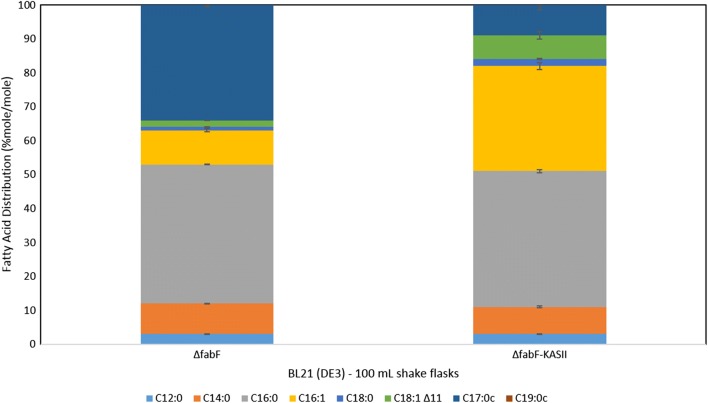
The efficiency of the heterologous plant enzymes supersedes the overexpression of the native enzyme in the E. coli production system, which leads to cell death in fabF overexpression and fabB deletion mutants. The utilization of our plasmid based system would allow generation of plant like fatty acids in E. coli and their subsequent chemical or enzymatic conversion to high end oleochemical products.
可持续生产微生物脂肪酸衍生物有可能替代化学、化妆品和制药行业的石油基产品。目前,生产油脂化学品的大多数脂肪酸来源都是植物性的。然而,这些作物的利用与土地利用变化和粮食竞争有关。微生物油脂可以作为脂肪酸的替代来源,避免了与农业竞争相关的问题。
在这项研究中,我们生成了一个嵌合微生物生产系统,该系统结合了原核和真核脂肪酸生物合成途径的特点,旨在生成长链脂肪酸。我们通过整合来自拟南芥质体脂肪酸生物合成途径的两种β-酮酰基-[酰基载体蛋白]合酶 I 和 II 的同源物,重新定向了大肠杆菌 BL21(DE3)菌株的 II 型脂肪酸生物合成途径。携带异源途径的微生物克隆分别产生了 292mg/g 和 220mg/g 的 DCW,用于 KAS I 和 KAS II 携带质粒。令人惊讶的是,从拟南芥中分离出的β-酮酰基合成酶 KASI/II 与大肠杆菌中的 FAB 途径兼容。
异源植物酶的效率超过了大肠杆菌生产系统中天然酶的过表达,这导致 fabF 过表达和 fabB 缺失突变体中的细胞死亡。我们基于质粒的系统的利用将允许在大肠杆菌中产生类似植物的脂肪酸,并且可以随后对其进行化学或酶转化为高端油脂化学品产品。