• 文献检索
  • 文档翻译
  • 深度研究
  • 学术资讯
  • Suppr Zotero 插件Zotero 插件
  • 邀请有礼
  • 套餐&价格
  • 历史记录
应用&插件
Suppr Zotero 插件Zotero 插件浏览器插件Mac 客户端Windows 客户端微信小程序
定价
高级版会员购买积分包购买API积分包
服务
文献检索文档翻译深度研究API 文档MCP 服务
关于我们
关于 Suppr公司介绍联系我们用户协议隐私条款
关注我们

Suppr 超能文献

核心技术专利:CN118964589B侵权必究
粤ICP备2023148730 号-1Suppr @ 2026

文献检索

告别复杂PubMed语法,用中文像聊天一样搜索,搜遍4000万医学文献。AI智能推荐,让科研检索更轻松。

立即免费搜索

文件翻译

保留排版,准确专业,支持PDF/Word/PPT等文件格式,支持 12+语言互译。

免费翻译文档

深度研究

AI帮你快速写综述,25分钟生成高质量综述,智能提取关键信息,辅助科研写作。

立即免费体验

退伍军人粪便失禁的患病率及严重程度

Prevalence and Severity of Fecal Incontinence in Veterans.

作者信息

Hosmer Amy E, Saini Sameer D, Menees Stacy B

机构信息

1 Division of Gastroenterology, Department of Internal Medicine, Ohio State University, Columbus, OH, USA.

Division of Gastroenterology, Department of Internal Medicine, University of Michigan Medical School, Ann Arbor, MI, USA.

出版信息

J Neurogastroenterol Motil. 2019 Oct 30;25(4):576-588. doi: 10.5056/jnm17134.

DOI:10.5056/jnm17134
PMID:31587549
原文链接:https://pmc.ncbi.nlm.nih.gov/articles/PMC6786443/
Abstract

BACKGROUND/AIMS: Fecal incontinence (FI) is a common complaint that increases in prevalence with age. Our aim was to determine the prevalence of FI and assess its severity by self-report in a male-predominant Veteran outpatient clinic setting.

METHODS

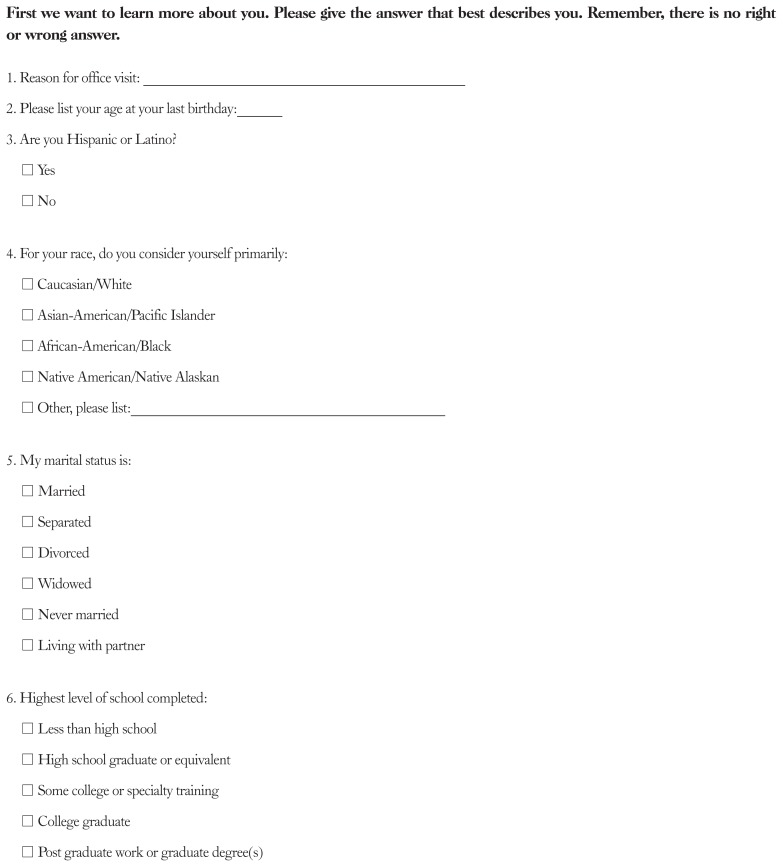
An anonymous 28 item questionnaire was administered to a convenience sample of veterans awaiting appointments. FI was defined as a loss of liquid or solid stool at least monthly. Multivariable logistic and linear models were used to identify predictors of FI prevalence and severity.

RESULTS

One hundred thirty-three gastroenterology (GI) participants and 126 primary care (PC) participants completed the survey. Ninety-four of 259 participants (36.3%, 95% confidence interval [CI]: 30.4-42.5) reported an episode of FI (41.4% GI participants vs 31.0% PC participants; = 0.078) with 33.6% having FI within the last 30 days (36.8% GI participants vs 30.2% PC participants; = 0.122). Participants with more bowel movements per week ( = 0.005) and per day ( < 0.001) and with a higher Bristol Stool Scale form ( = 0.010) were more likely to have FI. Of participants with FI, mean Fecal Incontinence Severity Index score was 23.0 ± 9.5 with a significantly higher symptom score in GI participants compared to PC participants (25.2 ± 10.0 vs 20.1 ± 8.2; = 0.011). Few participants had ever been asked by (35.0%) or evaluated by (18.0%) a doctor for FI symptoms.

CONCLUSION

FI is a common complaint and under-recognized problem in the male-dominant Veteran population. Despite its prevalence, relatively few participants were asked about FI, with even less being treated. Due to the possible effects and implications on quality of life, more should be done to recognize this condition and arrange treatment.

摘要

背景/目的:大便失禁(FI)是一种常见疾病,其患病率随年龄增长而升高。我们的目的是确定在以男性为主的退伍军人门诊环境中,通过自我报告得出的FI患病率,并评估其严重程度。

方法

对等待预约的退伍军人便利样本进行了一项包含28个条目的匿名问卷调查。FI被定义为至少每月出现一次液体或固体粪便失禁。使用多变量逻辑回归和线性模型来确定FI患病率和严重程度的预测因素。

结果

133名胃肠病学(GI)参与者和126名初级保健(PC)参与者完成了调查。259名参与者中有94名(36.3%,95%置信区间[CI]:30.4 - 42.5)报告有过FI发作(41.4%的GI参与者 vs 31.0%的PC参与者;P = 0.078),其中33.6%在过去30天内有FI(36.8%的GI参与者 vs 30.2%的PC参与者;P = 0.122)。每周排便次数更多(P = 0.005)、每天排便次数更多(P < 0.001)以及布里斯托大便分类法(Bristol Stool Scale)形态更高(P = 0.010)的参与者更有可能出现FI。在有FI的参与者中,大便失禁严重程度指数(Fecal Incontinence Severity Index)平均得分为23.0 ± 9.5,GI参与者的症状评分显著高于PC参与者(25.2 ± 10.0 vs 20.1 ± 8.2;P = 0.011)。很少有参与者曾被医生询问过(35.0%)或评估过(18.0%)FI症状。

结论

在以男性为主的退伍军人人群中,FI是一种常见且未得到充分认识的问题。尽管其患病率较高,但相对较少的参与者被询问过FI情况,接受治疗的更少。鉴于其对生活质量可能产生的影响,应采取更多措施来识别这种情况并安排治疗。
https://cdn.ncbi.nlm.nih.gov/pmc/blobs/6d99/6786443/a885cfce9eb4/jnm-25-576-g001.jpg

相似文献

1
Prevalence and Severity of Fecal Incontinence in Veterans.退伍军人粪便失禁的患病率及严重程度
J Neurogastroenterol Motil. 2019 Oct 30;25(4):576-588. doi: 10.5056/jnm17134.
2
Shared Risk Factors for Constipation, Fecal Incontinence, and Combined Symptoms in Older U.S. Adults.美国老年成年人便秘、大便失禁及合并症状的共同风险因素。
J Am Geriatr Soc. 2016 Nov;64(11):e183-e188. doi: 10.1111/jgs.14521. Epub 2016 Oct 26.
3
Prevalence of and Factors Associated With Fecal Incontinence: Results From a Population-Based Survey.基于人群的调查:粪便失禁的流行情况及相关因素。
Gastroenterology. 2018 May;154(6):1672-1681.e3. doi: 10.1053/j.gastro.2018.01.062. Epub 2018 Feb 3.
4
Fecal Incontinence and Quality of Life in Adults With Rectal Cancer After Lower Anterior Resection.低位前切除术后直肠癌成人患者的大便失禁与生活质量
J Wound Ostomy Continence Nurs. 2015 Jul-Aug;42(4):395-400. doi: 10.1097/WON.0000000000000135.
5
Fecal incontinence in people with self-reported irritable bowel syndrome: Prevalence and quality of life.自述肠易激综合征人群中的粪便失禁:患病率和生活质量。
J Psychosom Res. 2018 Oct;113:45-51. doi: 10.1016/j.jpsychores.2018.07.015. Epub 2018 Jul 27.
6
Relationship between symptoms and quality of life in fecal incontinence.粪便失禁症状与生活质量的关系。
Neurogastroenterol Motil. 2018 Mar;30(3). doi: 10.1111/nmo.13241. Epub 2017 Nov 2.
7
Obstetric sphincter injury interacts with diarrhea and urgency to increase the risk of fecal incontinence in women with irritable bowel syndrome.产科括约肌损伤与腹泻和尿急相互作用,增加了肠易激综合征女性患大便失禁的风险。
Female Pelvic Med Reconstr Surg. 2013 Jan-Feb;19(1):40-5. doi: 10.1097/SPV.0b013e31827bfd64.
8
Factors associated with fecal incontinence in a nationally representative sample of diabetic women.全国代表性糖尿病女性样本中与大便失禁相关的因素。
Int Urogynecol J. 2015 Oct;26(10):1483-8. doi: 10.1007/s00192-015-2730-9. Epub 2015 May 14.
9
Factors associated with symptom severity in women presenting with fecal incontinence.与女性粪便失禁症状严重程度相关的因素。
Dis Colon Rectum. 2013 Jan;56(1):97-102. doi: 10.1097/DCR.0b013e31826f8773.
10
Fecal incontinence in irritable bowel syndrome: Prevalence and associated factors in Swedish and American patients.肠易激综合征中的大便失禁:瑞典和美国患者的患病率及相关因素
Neurogastroenterol Motil. 2017 Feb;29(2). doi: 10.1111/nmo.12919. Epub 2016 Aug 31.

引用本文的文献

1
Comparison of the Fecal Incontinence Severity Scores between Self-administration by Patients and an Oral Interview by a Physician.患者自行管理与医生口头询问的大便失禁严重程度评分比较。
J Anus Rectum Colon. 2024 Jul 30;8(3):179-187. doi: 10.23922/jarc.2023-061. eCollection 2024.
2
Non-ablative Erbium (YAG) and Neodymium (YAG) Laser Treatment for Anal Incontinence and Vaginal Atrophy: A Case Study.非剥脱性铒(YAG)和钕(YAG)激光治疗肛门失禁和阴道萎缩:病例报告
Cureus. 2024 Mar 5;16(3):e55542. doi: 10.7759/cureus.55542. eCollection 2024 Mar.
3
Novel Nonablative Radiofrequency Approach for the Treatment of Anal Incontinence: A Phase 1 Clinical Trial.

本文引用的文献

1
Prevalence of and Factors Associated With Fecal Incontinence: Results From a Population-Based Survey.基于人群的调查:粪便失禁的流行情况及相关因素。
Gastroenterology. 2018 May;154(6):1672-1681.e3. doi: 10.1053/j.gastro.2018.01.062. Epub 2018 Feb 3.
2
Functional Anorectal Disorders.功能性肛门直肠疾病
Gastroenterology. 2016 Mar 25. doi: 10.1053/j.gastro.2016.02.009.
3
Faecal incontinence in men referred for specialty care: a cross-sectional study.因专科护理而转诊的男性大便失禁:一项横断面研究。
新型非消融性射频治疗肛门失禁方法:一项1期临床试验
Cureus. 2023 Jun 16;15(6):e40500. doi: 10.7759/cureus.40500. eCollection 2023 Jun.
Colorectal Dis. 2015 Sep;17(9):802-9. doi: 10.1111/codi.12943.
4
Prevalence correlates and impact of fecal incontinence among older women.老年女性粪便失禁的流行率相关性及其影响。
Dis Colon Rectum. 2013 Sep;56(9):1080-6. doi: 10.1097/DCR.0b013e31829203a9.
5
Prevalence, trends, and risk factors for fecal incontinence in United States adults, 2005-2010.美国成年人粪便失禁的患病率、趋势和危险因素,2005-2010 年。
Clin Gastroenterol Hepatol. 2014 Apr;12(4):636-43.e1-2. doi: 10.1016/j.cgh.2013.07.020. Epub 2013 Jul 29.
6
Prevalence of anal incontinence among Norwegian women: a cross-sectional study.挪威女性肛门失禁的患病率:一项横断面研究。
BMJ Open. 2012 Jul 30;2(4). doi: 10.1136/bmjopen-2012-001257. Print 2012.
7
Fecal incontinence: prevalence, severity, and quality of life data from an outpatient gastroenterology practice.粪便失禁:来自一个门诊胃肠病学实践的患病率、严重程度和生活质量数据。
Gastroenterol Res Pract. 2012;2012:947694. doi: 10.1155/2012/947694. Epub 2011 Sep 25.
8
Prevalence of fecal incontinence and its relationship with urinary incontinence in women living in the community.社区女性中粪便失禁的流行情况及其与尿失禁的关系。
Menopause. 2011 Jun;18(6):685-9. doi: 10.1097/gme.0b013e3181fee03b.
9
Bowel disturbances are the most important risk factors for late onset fecal incontinence: a population-based case-control study in women.肠道紊乱是导致晚期粪便失禁的最重要的危险因素:一项基于人群的女性病例对照研究。
Gastroenterology. 2010 Nov;139(5):1559-66. doi: 10.1053/j.gastro.2010.07.056. Epub 2010 Aug 10.
10
Prevalence and risk factors for urinary incontinence in healthy pregnant Brazilian women.健康巴西孕妇尿失禁的患病率及危险因素
Int Urogynecol J. 2010 Oct;21(10):1271-7. doi: 10.1007/s00192-010-1185-2. Epub 2010 May 26.