Computational Biology Laboratory, Interdisciplinary Biology, Rajiv Gandhi Centre for Biotechnology (RGCB), Thiruvananthapuram, India.
Manipal Academy of Higher Education (MAHE), Manipal, India.
Genome Biol Evol. 2019 Oct 1;11(10):2917-2926. doi: 10.1093/gbe/evz213.
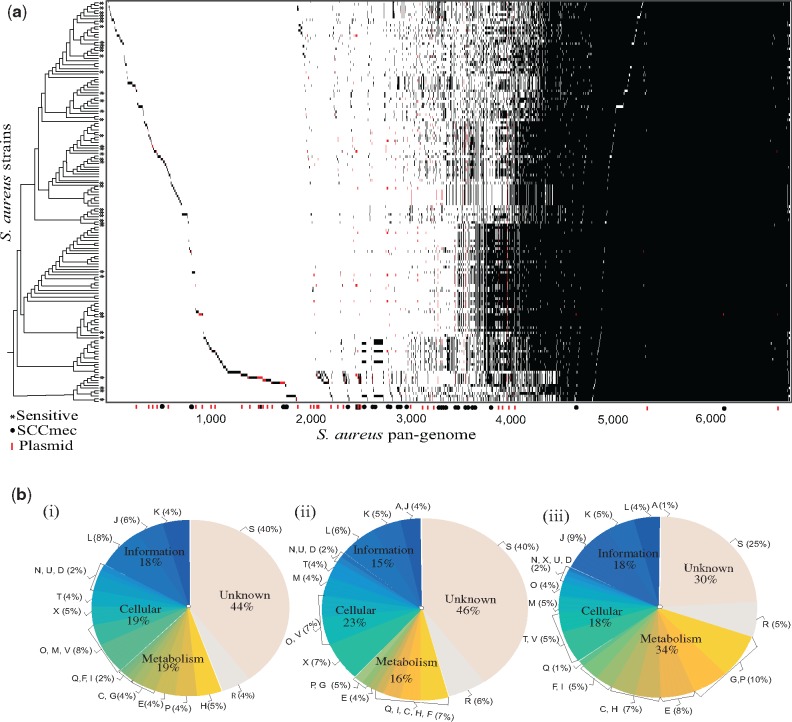
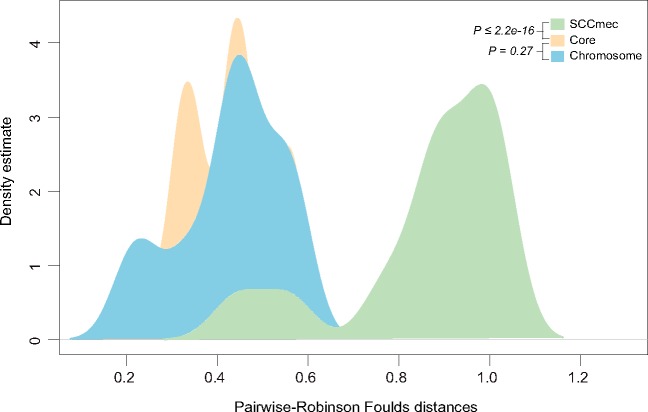
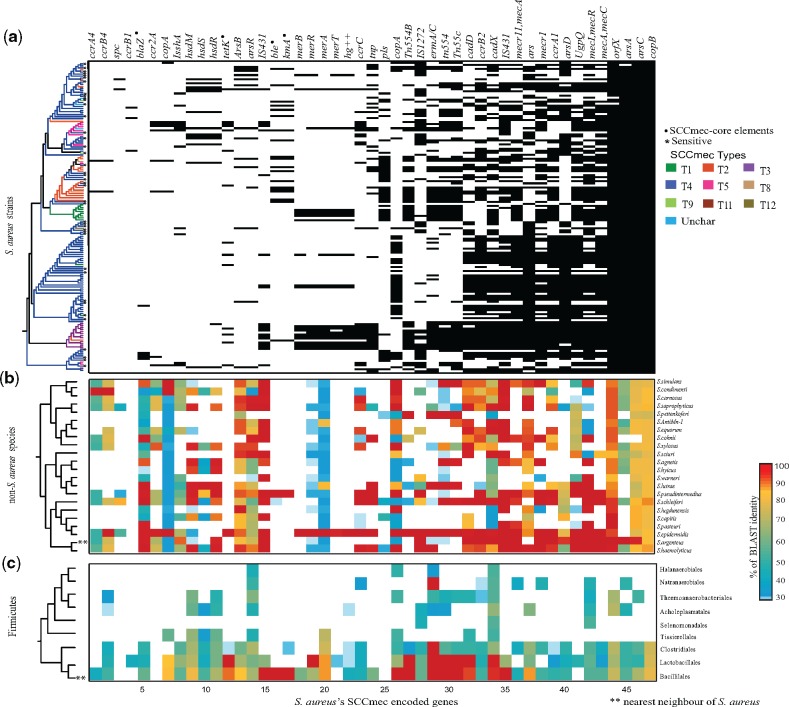
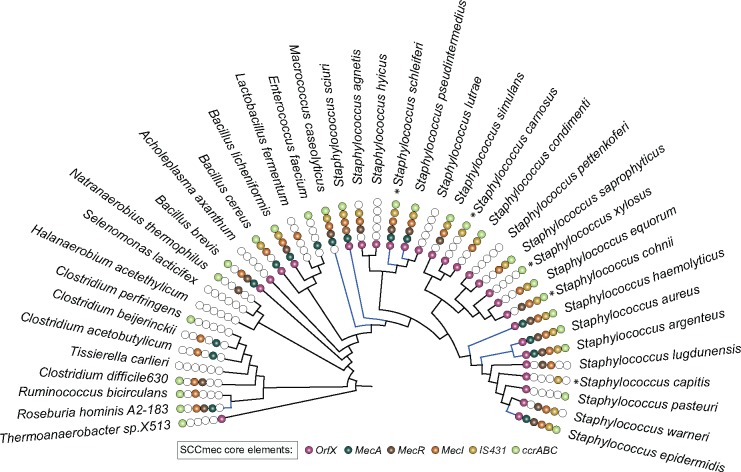
Multidrug-resistant Staphylococcus aureus is a leading concern worldwide. Coagulase-Negative Staphylococci are claimed to be the reservoir and source of important resistant elements in S. aureus. However, the origin and evolutionary route of resistant genes in S. aureus are still remaining unknown. Here, we performed a detailed phylogenomic analysis of 152 completely sequenced S. aureus strains in comparison with 7,529 non-Staphylococcus aureus reference bacterial genomes. Our results reveal that S. aureus has a large open pan-genome where 97 (55%) of its known resistant-related genes belonging to its accessory genome. Among these genes, 47 (27%) were located within the Staphylococcal Cassette Chromosome mec (SCCmec), a transposable element responsible for resistance against major classes of antibiotics including beta-lactams, macrolides, and aminoglycosides. However, the physically linked mec-box genes (MecA-MecR-MecI) that are responsible for the maintenance of SCCmec elements is not unique to S. aureus, instead it is widely distributed within Staphylococcaceae family. The phyletic patterns of SCCmec-encoded resistant genes in Staphylococcus species are significantly different from that of its core genes indicating frequent exchange of these genes between Staphylococcus species. Our in-depth analysis of SCCmec-resistant gene phylogenies reveals that genes such as blaZ, ble, kmA, and tetK that are responsible for beta-lactam, bleomycin, kanamycin, and tetracycline resistance in S. aureus were laterally transferred from non-Staphylococcus sources. In addition, at least 11 non-SCCmec-encoded resistant genes in S. aureus, were laterally acquired from distantly related species. Our study evidently shows that gene transfers played a crucial role in shaping the evolution of antibiotic resistance in S. aureus.
耐多药金黄色葡萄球菌是全球关注的主要问题。凝固酶阴性葡萄球菌被认为是金黄色葡萄球菌中重要耐药元素的储库和来源。然而,金黄色葡萄球菌中耐药基因的起源和进化途径仍不清楚。在这里,我们对 152 株完全测序的金黄色葡萄球菌菌株进行了详细的系统基因组分析,并与 7529 株非金黄色葡萄球菌参考细菌基因组进行了比较。我们的结果表明,金黄色葡萄球菌具有一个大型的开放泛基因组,其中 97 个(55%)已知的耐药相关基因属于其辅助基因组。在这些基因中,47 个(27%)位于耐多药金黄色葡萄球菌的转座元件——葡萄球菌盒染色体 mec(SCCmec)内,该元件负责对抗生素的主要类别产生耐药性,包括β-内酰胺类、大环内酯类和氨基糖苷类。然而,负责维持 SCCmec 元件的物理连接 mec 框基因(MecA-MecR-MecI)并非金黄色葡萄球菌所特有,而是广泛分布于葡萄球菌科家族中。葡萄球菌属物种中 SCCmec 编码的耐药基因的系统发育模式与核心基因明显不同,表明这些基因在葡萄球菌属物种之间频繁交换。我们对 SCCmec 耐药基因系统发育树的深入分析表明,blaZ、ble、kma 和 tetK 等基因负责金黄色葡萄球菌中的β-内酰胺、博莱霉素、卡那霉素和四环素耐药性,它们是从非葡萄球菌来源横向转移而来的。此外,金黄色葡萄球菌中至少有 11 个非 SCCmec 编码的耐药基因是从远缘相关物种中获得的。我们的研究清楚地表明,基因转移在塑造金黄色葡萄球菌抗生素耐药性的进化中发挥了关键作用。