Department of Microbiology and Immunology, College of Medicine, National Cheng Kung University, Tainan City, 701, Taiwan.
Department of Parasitology, College of Medicine, National Cheng Kung University, Tainan City, 701, Taiwan.
Parasit Vectors. 2019 Oct 9;12(1):467. doi: 10.1186/s13071-019-3725-z.
Pathogenic protozoans use extracellular vesicles (EVs) for intercellular communication and host manipulation. Acanthamoeba castellanii is a free-living protozoan that may cause severe keratitis and fatal granulomatous encephalitis. Although several secreted molecules have been shown to play crucial roles in the pathogenesis of Acanthamoeba, the functions and components of parasite-derived EVs are far from understood.
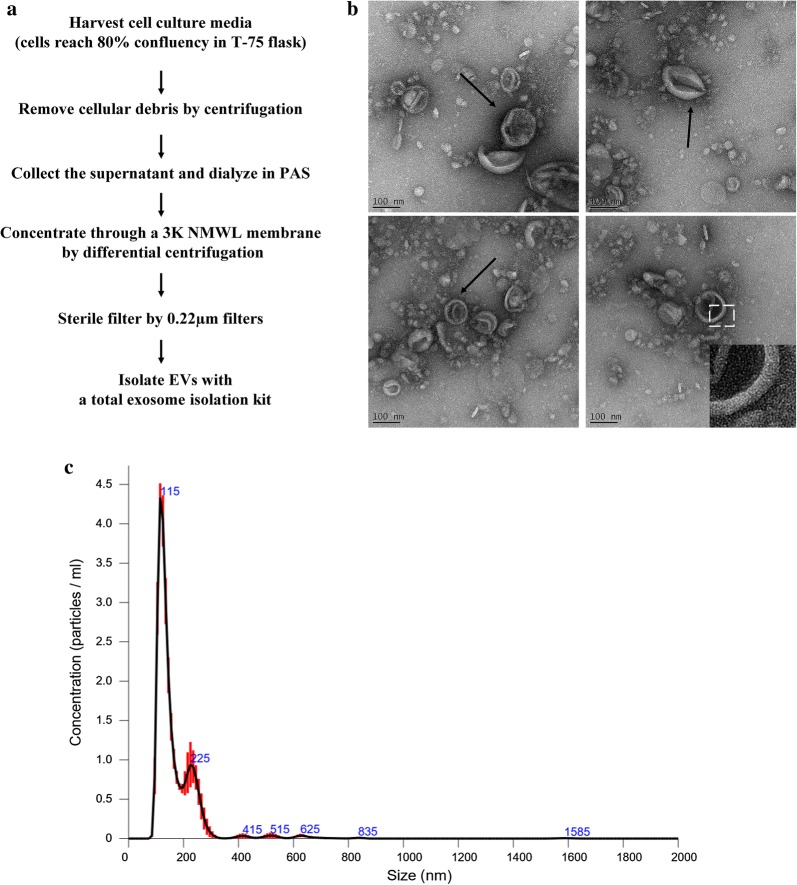
Purified EVs from A. castellanii were confirmed by electron microscopy and nanoparticle tracking analysis. The functional roles of parasite-derived EVs in the cytotoxicity to and immune response of host cells were examined. The protein composition in EVs from A. castellanii was identified and quantified by LC-MS/MS analysis.
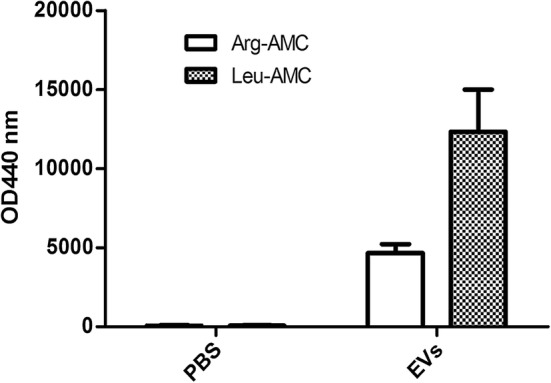
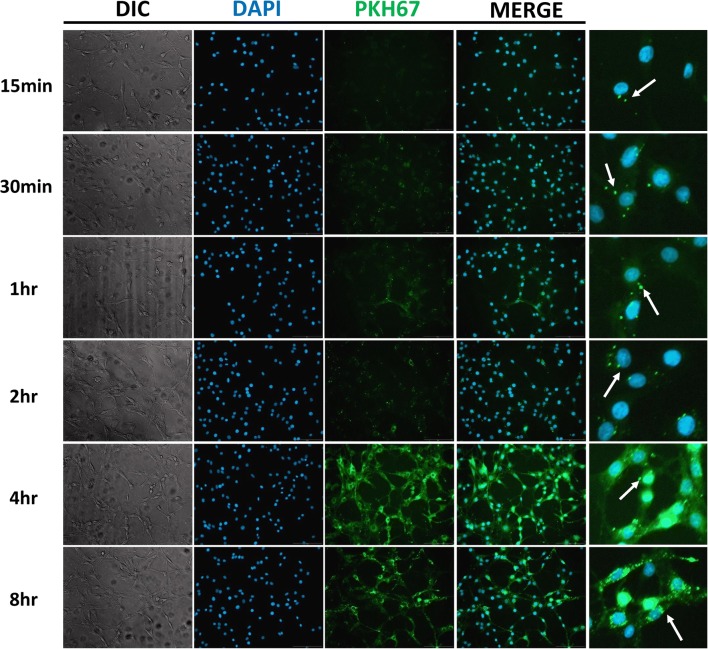
EVs from A. castellanii fused with rat glioma C6 cells. The parasite-derived EVs induced an immune response from human THP-1 cells and a cytotoxic effect in C6 cells. Quantitative proteomic analysis identified a total of 130 proteins in EVs. Among the identified proteins, hydrolases (50.2%) and oxidoreductases (31.7%) were the largest protein families in EVs. Furthermore, aminopeptidase activities were confirmed in EVs from A. castellanii.
The proteomic profiling and functional characterization of EVs from A. castellanii provide an in-depth understanding of the molecules packaged into EVs and their potential mechanisms mediating the pathogenesis of this parasite.
致病原生动物利用细胞外囊泡(EVs)进行细胞间通讯和宿主操纵。棘阿米巴属是一种自由生活的原生动物,可能导致严重的角膜炎和致命的肉芽肿性脑炎。尽管已经证明几种分泌分子在棘阿米巴的发病机制中起关键作用,但寄生虫衍生的 EV 的功能和成分远未被理解。
通过电子显微镜和纳米颗粒跟踪分析证实了来自棘阿米巴的纯化 EV。检查寄生虫衍生的 EV 在宿主细胞的细胞毒性和免疫反应中的功能作用。通过 LC-MS/MS 分析鉴定和定量 EV 中的蛋白质组成。
棘阿米巴的 EV 与大鼠神经胶质瘤 C6 细胞融合。寄生虫衍生的 EV 诱导人 THP-1 细胞的免疫反应和 C6 细胞的细胞毒性作用。定量蛋白质组学分析鉴定了 EV 中的总共 130 种蛋白质。在鉴定的蛋白质中,水解酶(50.2%)和氧化还原酶(31.7%)是 EV 中最大的蛋白质家族。此外,还证实了棘阿米巴的 EV 中存在氨肽酶活性。
棘阿米巴 EV 的蛋白质组学分析和功能表征提供了对包装到 EV 中的分子及其潜在机制的深入了解,这些机制介导了寄生虫的发病机制。