Princeton Neuroscience Institute, Princeton University, Princeton, NJ, 08544, USA.
Department of Psychology, Princeton University, Princeton, NJ, 08544, USA.
Nat Commun. 2019 Oct 9;10(1):4592. doi: 10.1038/s41467-019-12588-6.
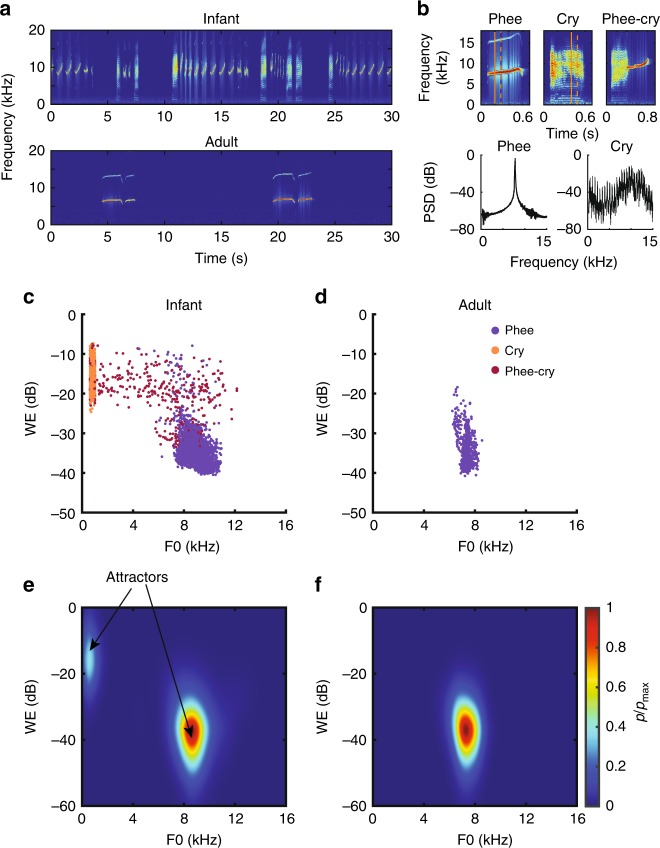
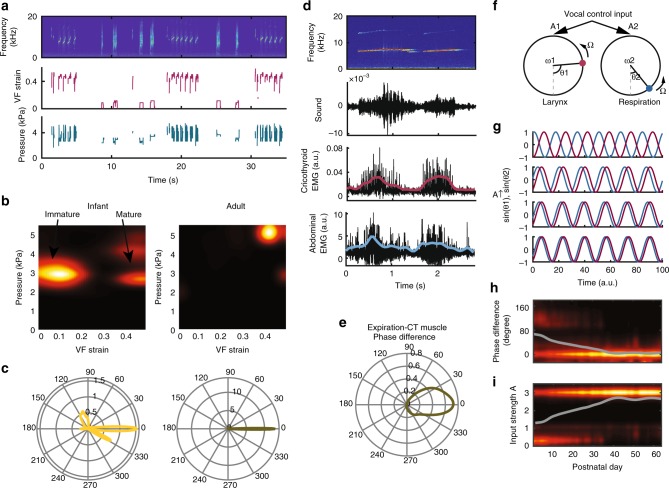
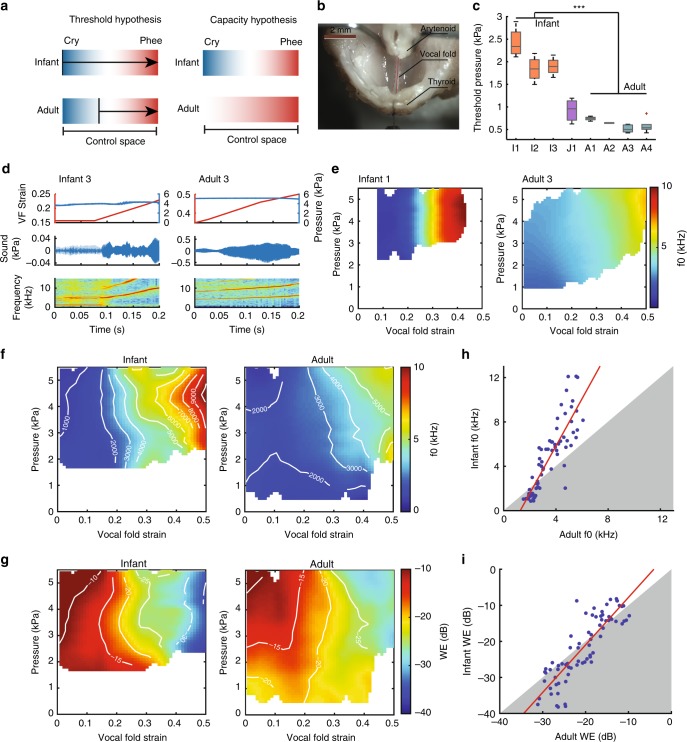
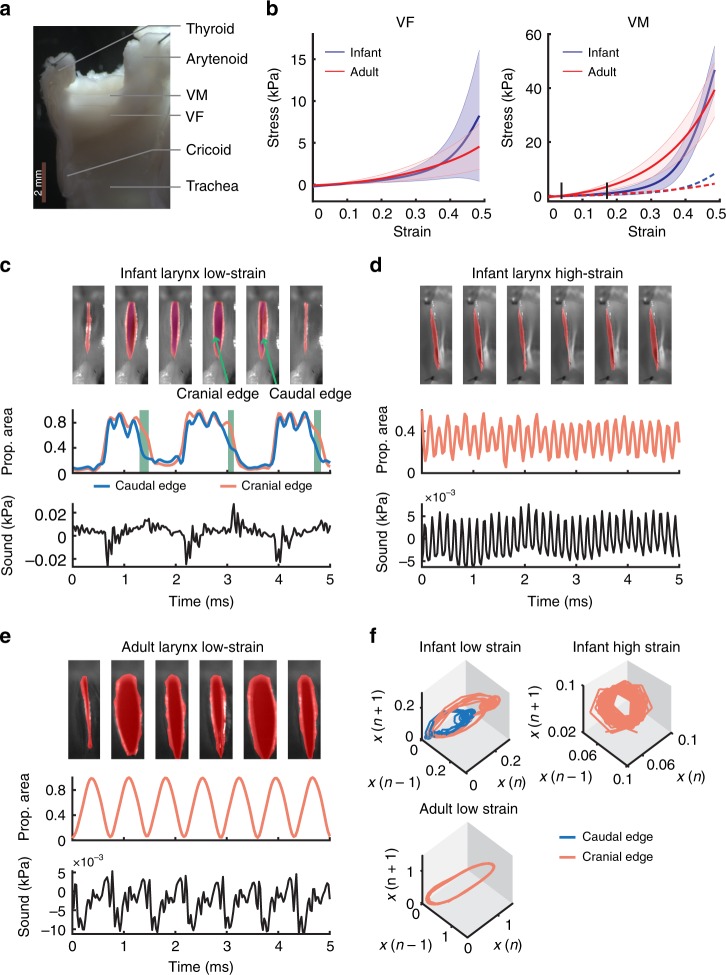
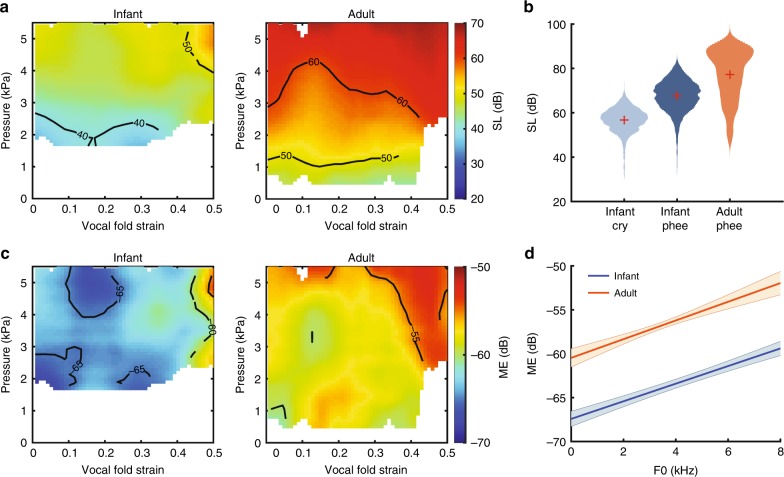
Across vertebrates, progressive changes in vocal behavior during postnatal development are typically attributed solely to developing neural circuits. How the changing body influences vocal development remains unknown. Here we show that state changes in the contact vocalizations of infant marmoset monkeys, which transition from noisy, low frequency cries to tonal, higher pitched vocalizations in adults, are caused partially by laryngeal development. Combining analyses of natural vocalizations, motorized excised larynx experiments, tensile material tests and high-speed imaging, we show that vocal state transition occurs via a sound source switch from vocal folds to apical vocal membranes, producing louder vocalizations with higher efficiency. We show with an empirically based model of descending motor control how neural circuits could interact with changing laryngeal dynamics, leading to adaptive vocal development. Our results emphasize the importance of embodied approaches to vocal development, where exploiting biomechanical consequences of changing material properties can simplify motor control, reducing the computational load on the developing brain.
在脊椎动物中,出生后发育过程中发声行为的逐渐变化通常仅归因于发育中的神经回路。不断变化的身体如何影响发声发育尚不清楚。在这里,我们表明,婴猴叫声的状态变化部分是由喉的发育引起的,婴猴的叫声在出生后从嘈杂、低频的哭声转变为成年时的音调、更高的音调叫声。通过对自然发声的分析、机动切除的喉实验、拉伸材料测试和高速成像,我们表明,发声状态的转变是通过从声带到声门尖端膜的声源转换来实现的,从而产生更高效率的更响亮的发声。我们通过基于经验的下行运动控制模型表明,神经回路如何与不断变化的喉动力学相互作用,从而导致适应性发声发育。我们的研究结果强调了采用体现发声发育的方法的重要性,在这种方法中,利用材料特性变化产生的生物力学后果可以简化运动控制,从而降低发育中大脑的计算负荷。