Division of Biostatistics and Epidemiology, Cincinnati Children's Hospital Medical Center, Cincinnati, OH, USA.
The Heart Institute, Cincinnati Children's Hospital Medical Center, Cincinnati, OH, USA.
Int J Obes (Lond). 2020 May;44(5):1164-1172. doi: 10.1038/s41366-019-0461-6. Epub 2019 Oct 9.
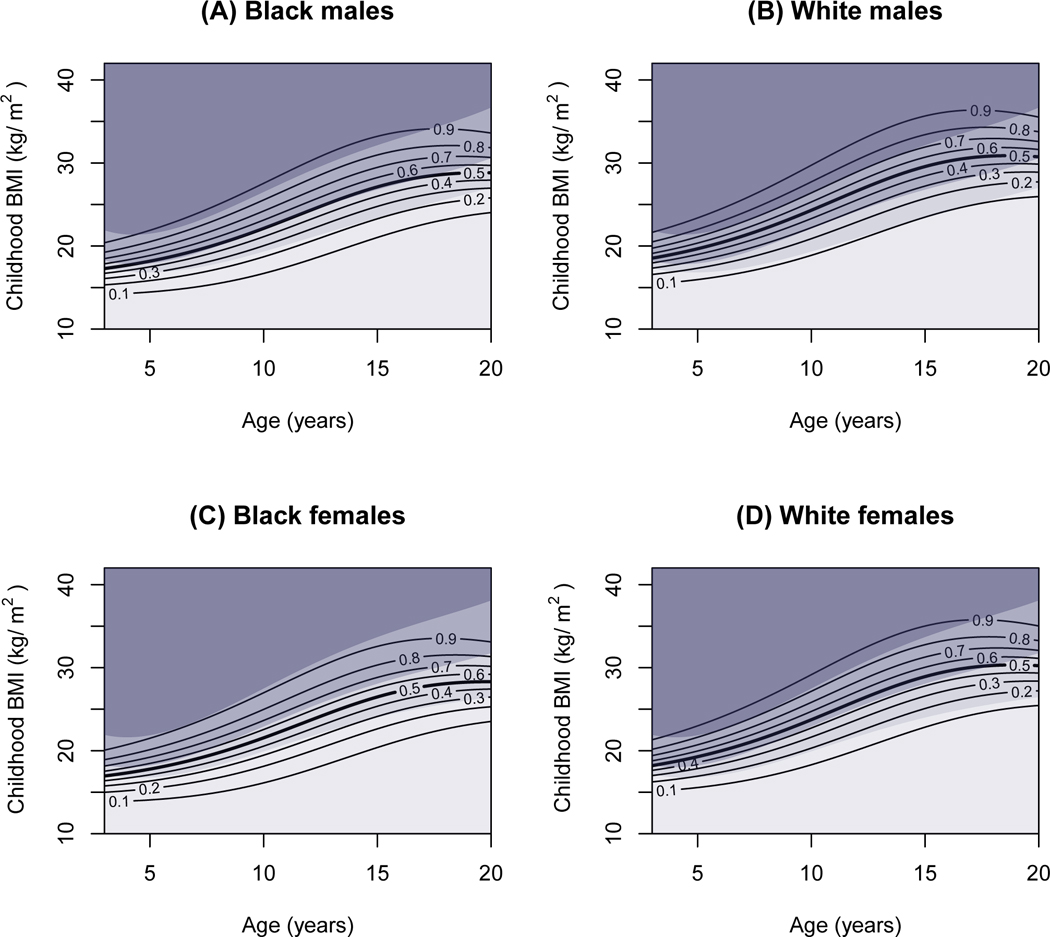
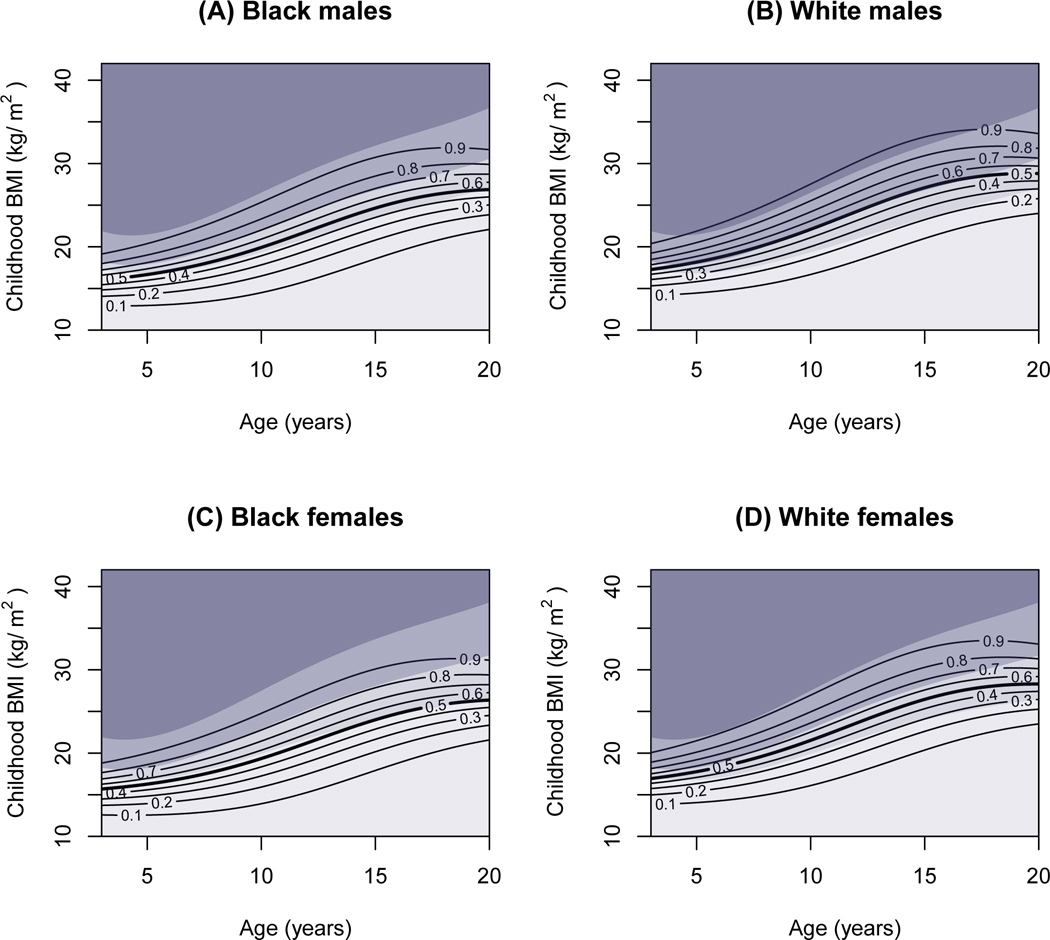
Adult class II/III obesity (BMI ≥ 35 kg/m) has significant adverse health outcomes. Early prevention and treatment are critical, but prospective childhood risk estimates are lacking. This study aimed to define the prospective risk of adult class II/III obesity, using childhood BMI.
Children ages 3-19 years enrolled in cohorts of the International Childhood Cardiovascular Cohort (i3C) consortium with measured BMI assessments in childhood and adulthood were included. Prospective risk of adult class II/III obesity was modeled based on childhood age, sex, race, and BMI.
A total of 12,142 individuals (44% male, 85% white) were assessed at median age 14 [Interquartile range, IQR: 11, 16] and 33 [28, 39] years. Class II/III adult obesity developed in 6% of children with normal weight; 29% of children with overweight; 56% of children with obesity; and 80% of children with severe obesity. However, 38% of the 1440 adults with class II/III obesity (553/1440) were normal weight as children. Prospective risk of adult class II/III obesity varied by age, sex, and race within childhood weight status classifications, and is notably higher for girls, black participants, and those in the United States. The risk of class II/III obesity increased with older adult age.
Children with obesity or severe obesity have a substantial risk of adult class II/III obesity, and observed prospective risk estimates are now presented by age, sex, race, and childhood BMI. Clinical monitoring of children's BMI for adult class II/III obesity risk may be especially important for females and black Americans.
成人 II/III 类肥胖(BMI≥35kg/m²)对健康有显著的不良影响。早期预防和治疗至关重要,但缺乏儿童期前瞻性风险评估。本研究旨在通过儿童期 BMI 定义成人 II/III 类肥胖的前瞻性风险。
本研究纳入了国际儿童心血管队列(i3C)联盟中年龄在 3-19 岁的队列儿童,这些儿童在儿童期和成年期都接受了 BMI 测量。基于儿童年龄、性别、种族和 BMI,对成人 II/III 类肥胖的前瞻性风险进行建模。
共有 12142 人(44%为男性,85%为白人)在平均年龄为 14 岁(中位数[四分位距,IQR]:11,16)和 33 岁(28,39)时接受了评估。体重正常的儿童中,有 6%发展为成年 II/III 类肥胖;超重儿童中,有 29%;肥胖儿童中,有 56%;严重肥胖儿童中,有 80%。然而,1440 名成年 II/III 类肥胖患者中有 38%(553/1440)儿童期体重正常。儿童期体重状况分类内,成年 II/III 类肥胖的前瞻性风险因年龄、性别和种族而异,女孩、黑人参与者和美国参与者的风险更高。成年 II/III 类肥胖的风险随着年龄的增长而增加。
肥胖或严重肥胖的儿童成年后患 II/III 类肥胖的风险较大,现根据年龄、性别、种族和儿童 BMI 呈现了观察到的前瞻性风险估计值。对儿童 BMI 进行监测以评估成年 II/III 类肥胖风险,对于女性和美国黑人可能尤为重要。