School of Psychology, University of Surrey, Guilford, UK.
Department of Psychology and Human Development, UCL Institute of Education, University College London, London, UK.
Dev Sci. 2020 Jul;23(4):e12909. doi: 10.1111/desc.12909. Epub 2019 Nov 6.
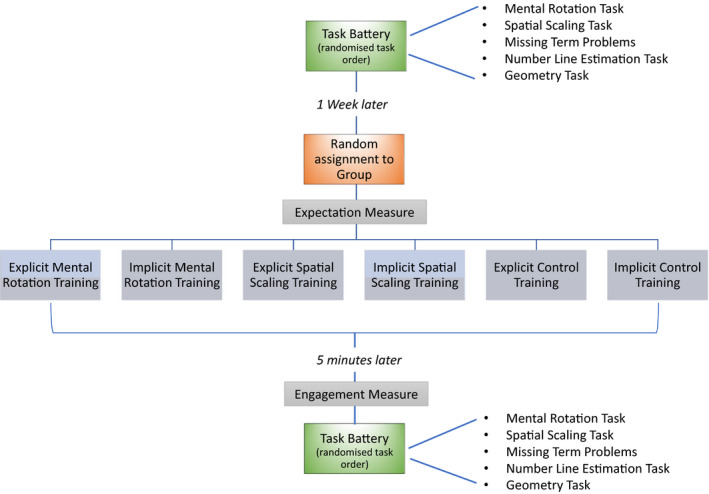
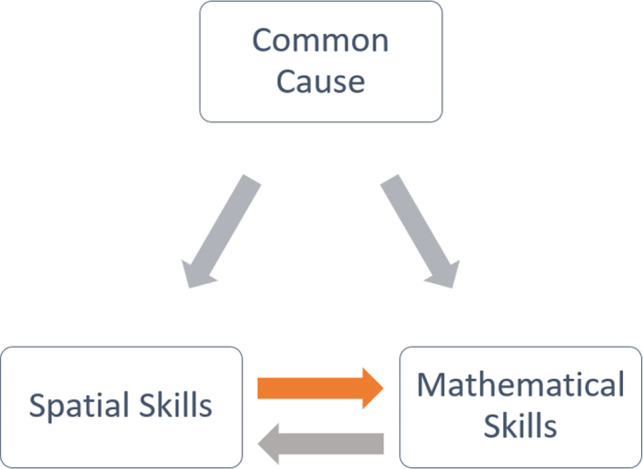
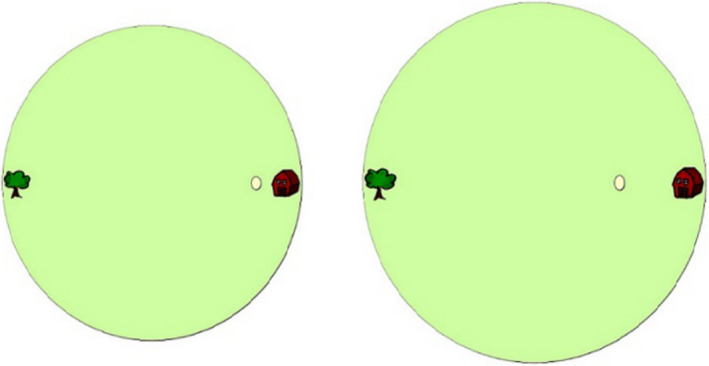
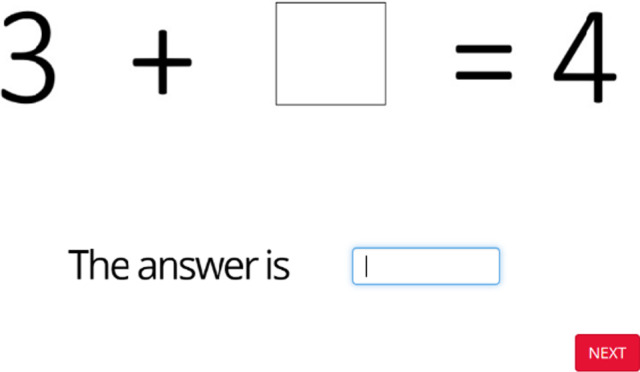
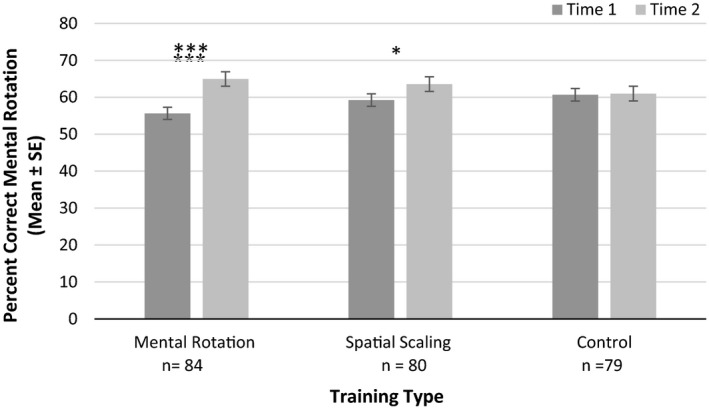
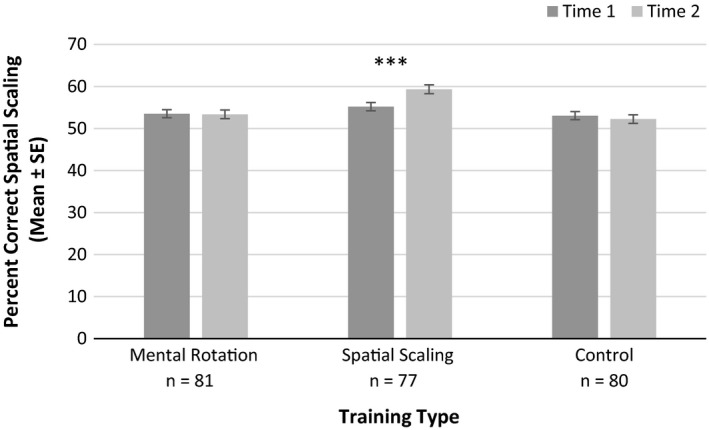
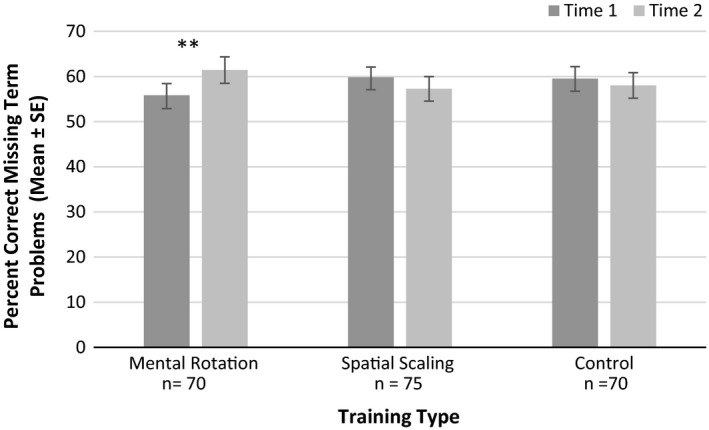
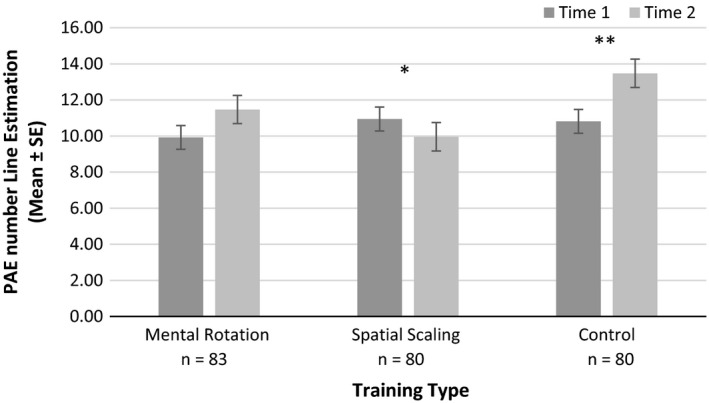
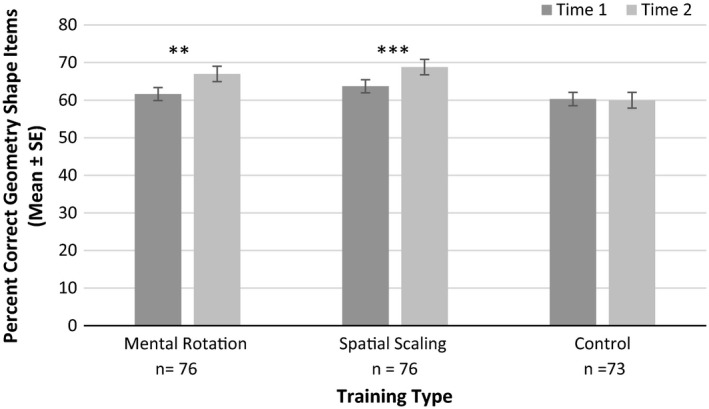
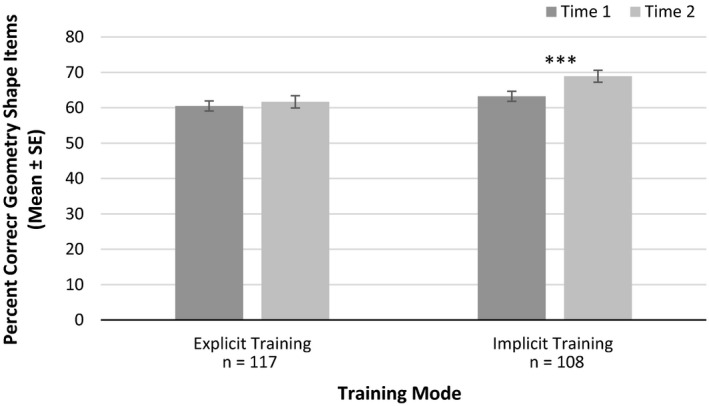
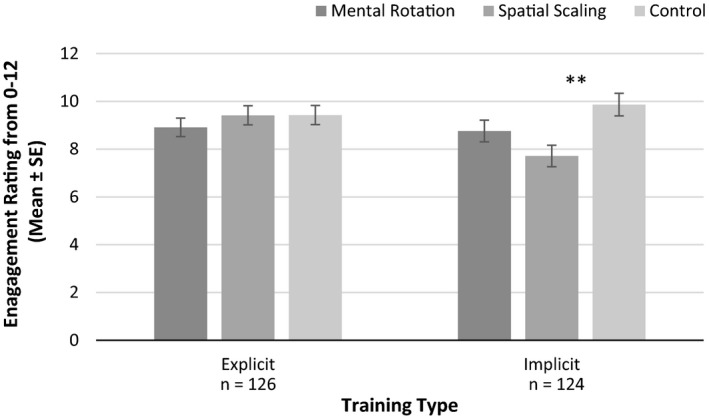
There is evidence that spatial thinking is malleable, and that spatial and mathematical skills are associated (Mix et al. [2016] Journal of Experimental Psychology: General, 145, 1206; Mix et al. [2017] Journal of Cognition and Development, 18, 465; Uttal et al. [2013] Psychological Bulletin, 139, 352). However, few studies have investigated transfer of spatial training gains to mathematics outcomes in children, and no known studies have compared different modes of spatial instruction (explicit vs. implicit instruction). Based on a sample of 250 participants, this study compared the effectiveness of explicit and implicit spatial instruction in eliciting near transfer (to the specific spatial skills trained), intermediate transfer (to untrained spatial skills) and far transfer (to mathematics domains) at age 8. Spatial scaling and mental rotation skills were chosen as training targets as previous studies have found, and proposed explanations for, associations between these skills and mathematics in children of this age (Journal of Experimental Psychology: General, 145, 2016 and 1206). In this study, spatial training led to near, intermediate and far transfer of gains. Mental visualization and proportional reasoning were proposed to explain far transfer from mental rotation and spatial scaling skills respectively. For most outcomes, except for geometry, there was no difference in the effectiveness of implicit (practice with feedback) compared to explicit instruction (instructional videos). From a theoretical perspective, the study identified a specific causal effect of spatial skills on mathematics skills in children. Practically, the results also highlight the potential of instructional videos as a method of introducing spatial thinking into the classroom.
有证据表明,空间思维是可塑的,空间和数学技能是相关的(Mix 等人,[2016]《实验心理学杂志:综合》,145,1206;Mix 等人,[2017]《认知发展杂志》,18,465;Uttal 等人,[2013]《心理学公报》,139,352)。然而,很少有研究调查空间训练收益对儿童数学成绩的迁移,也没有已知的研究比较不同模式的空间教学(显性与隐性教学)。本研究基于 250 名参与者的样本,比较了显性和隐性空间教学在引发近迁移(特定训练的空间技能)、中间迁移(未训练的空间技能)和远迁移(数学领域)方面的效果,年龄为 8 岁。空间缩放和心理旋转技能被选为训练目标,因为之前的研究已经发现了这些技能与这个年龄段儿童数学之间的关联,并提出了一些解释(《实验心理学杂志:综合》,145,2016 和 1206)。在这项研究中,空间训练导致了收益的近迁移、中间迁移和远迁移。心理可视化和比例推理分别被提出来解释心理旋转和空间缩放技能的远迁移。对于除了几何之外的大多数结果,隐性(带反馈的练习)与显性教学(教学视频)相比,效果没有差异。从理论角度来看,该研究确定了儿童空间技能对数学技能的特定因果影响。从实践角度来看,结果还强调了教学视频作为在课堂中引入空间思维的一种方法的潜力。