School of Chemical & Biotechnology, SASTRA University, Tamil Nadu, India.
Department of Advanced Zoology & Biotechnology, Ramakrishna Mission Vivekananda College, Mylapore, Chennai, 600004, India.
Sci Rep. 2019 Oct 11;9(1):14684. doi: 10.1038/s41598-019-51059-2.
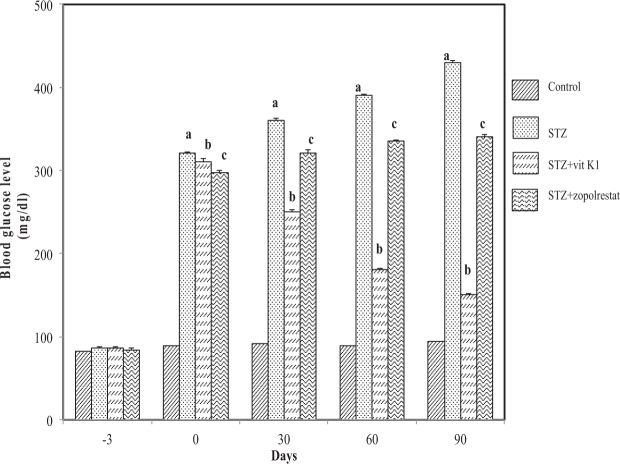
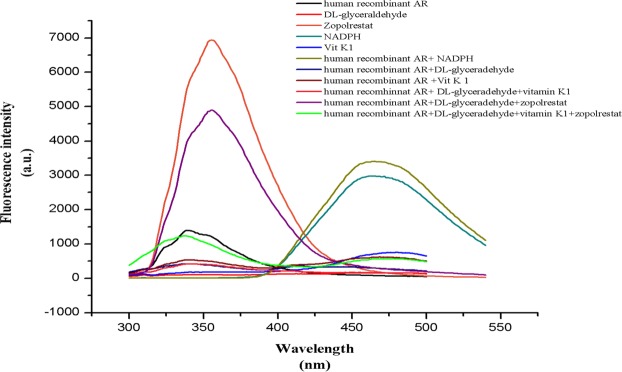
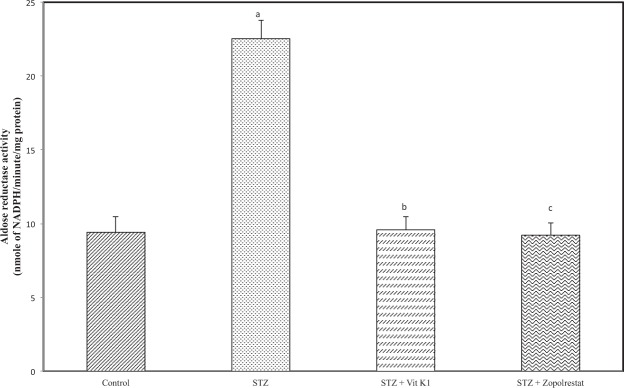
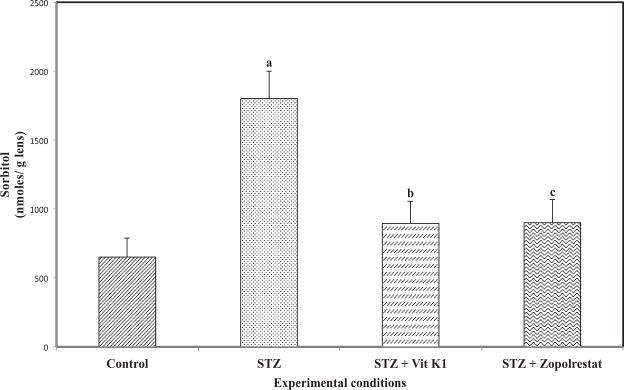
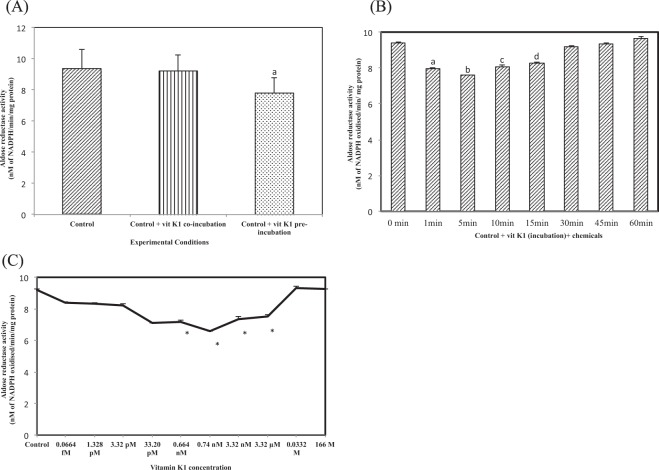
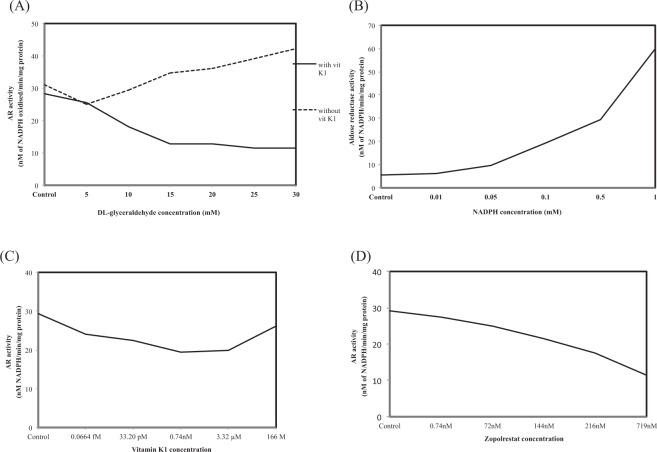
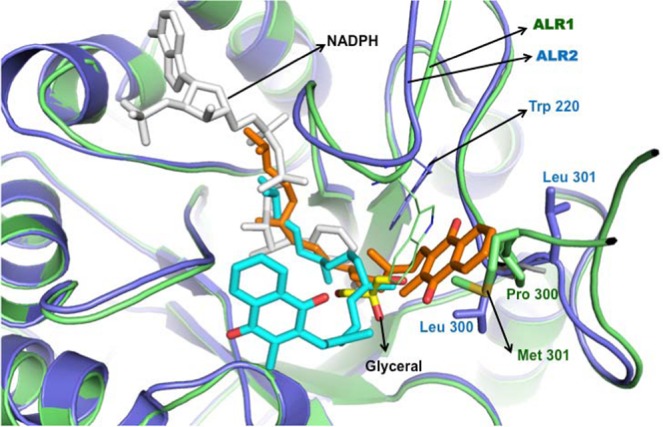
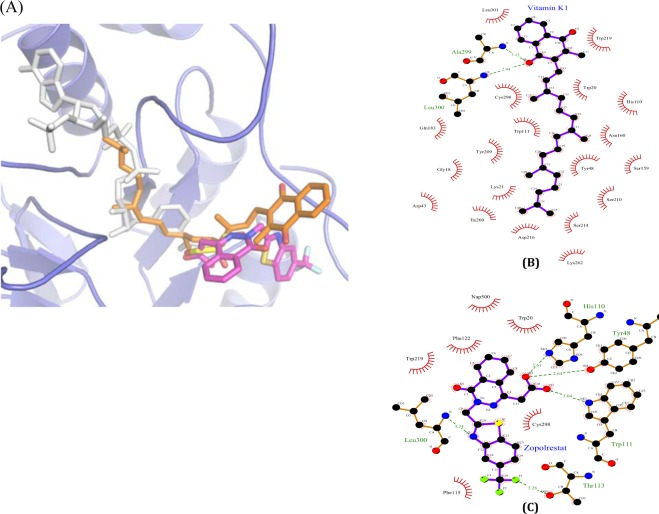
This study investigated the potential of vitamin K1 as a novel lens aldose reductase inhibitor in a streptozotocin-induced diabetic cataract model. A single, intraperitoneal injection of streptozotocin (STZ) (35 mg/kg) resulted in hyperglycemia, activation of lens aldose reductase 2 (ALR2) and accumulation of sorbitol in eye lens which could have contributed to diabetic cataract formation. However, when diabetic rats were treated with vitamin K1 (5 mg/kg, sc, twice a week) it resulted in lowering of blood glucose and inhibition of lens aldose reductase activity because of which there was a corresponding decrease in lens sorbitol accumulation. These results suggest that vitamin K1 is a potent inhibitor of lens aldose reductase enzyme and we made an attempt to understand the nature of this inhibition using crude lens homogenate as well as recombinant human aldose reductase enzyme. Our results from protein docking and spectrofluorimetric analyses clearly show that vitamin K1 is a potent inhibitor of ALR2 and this inhibition is primarily mediated by the blockage of DL-glyceraldehyde binding to ALR2. At the same time docking also suggests that vitamin K1 overlaps at the NADPH binding site of ALR2, which probably shows that vitamin K1 could possibly bind both these sites in the enzyme. Another deduction that we can derive from the experiments performed with pure protein is that ALR2 has three levels of affinity, first for NADPH, second for vitamin K1 and third for the substrate DL-glyceraldehyde. This was evident based on the dose-dependency experiments performed with both NADPH and DL-glyceraldehyde. Overall, our study shows the potential of vitamin K1 as an ALR2 inhibitor which primarily blocks enzyme activity by inhibiting substrate interaction of the enzyme. Further structural studies are needed to fully comprehend the exact nature of binding and inhibition of ALR2 by vitamin K1 that could open up possibilities of its therapeutic application.
本研究旨在探讨维生素 K1 作为一种新型晶状体醛糖还原酶抑制剂在链脲佐菌素诱导的糖尿病白内障模型中的潜力。单次腹腔注射链脲佐菌素(STZ)(35mg/kg)可导致高血糖、晶状体醛糖还原酶 2(ALR2)激活以及眼晶状体中山梨醇积累,这可能导致糖尿病性白内障形成。然而,当糖尿病大鼠用维生素 K1(5mg/kg,sc,每周两次)治疗时,血糖降低,晶状体醛糖还原酶活性受到抑制,因此晶状体山梨醇积累相应减少。这些结果表明,维生素 K1 是一种有效的晶状体醛糖还原酶抑制剂,我们试图通过粗晶状体匀浆和重组人醛糖还原酶来了解这种抑制的性质。我们的蛋白对接和荧光分析结果清楚地表明,维生素 K1 是 ALR2 的有效抑制剂,这种抑制主要是通过阻止 DL-甘油醛与 ALR2 的结合来介导的。同时,对接还表明维生素 K1 与 ALR2 的 NADPH 结合位点重叠,这可能表明维生素 K1 可能在酶中同时结合这两个位点。我们从纯蛋白实验中得出的另一个推论是,ALR2 具有三个亲和力水平,首先是 NADPH,其次是维生素 K1,第三是底物 DL-甘油醛。这是基于对 NADPH 和 DL-甘油醛进行的剂量依赖性实验得出的。总的来说,我们的研究表明维生素 K1 作为 ALR2 抑制剂的潜力,它主要通过抑制酶的底物相互作用来阻断酶活性。进一步的结构研究需要充分理解维生素 K1 与 ALR2 的结合和抑制的确切性质,这可能为其治疗应用开辟可能性。