Lee So Min, Choi Eun Som, Ha Eunyoung, Ji Kon Young, Shin So Jin, Jung Jeeyoun
Clinical Medicine Division, Korea Institute of Oriental Medicine, Daejeon, South Korea.
Department of Obstetrics and Gynecology, Institute for Cancer Research, Keimyung University School of Medicine, Daegu, South Korea.
Front Pharmacol. 2019 Sep 25;10:1105. doi: 10.3389/fphar.2019.01105. eCollection 2019.
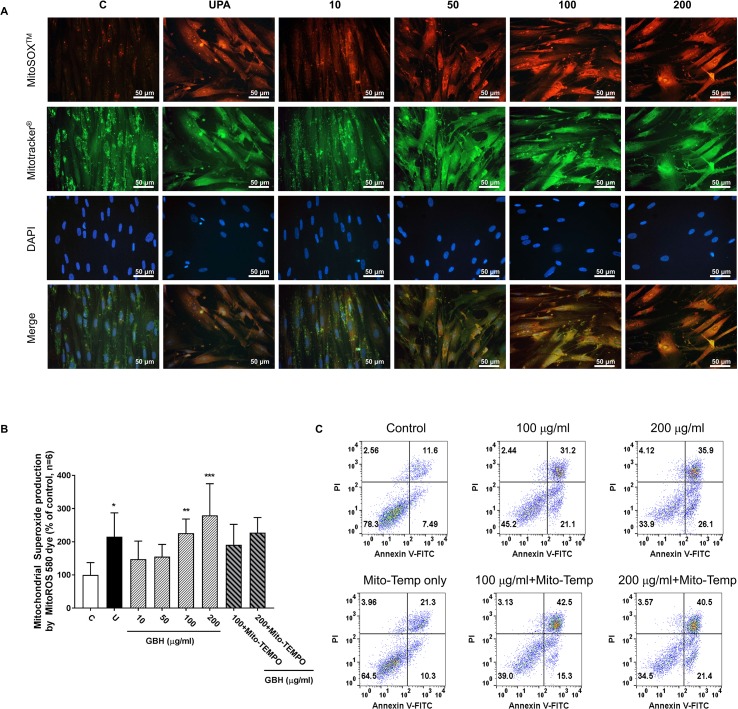
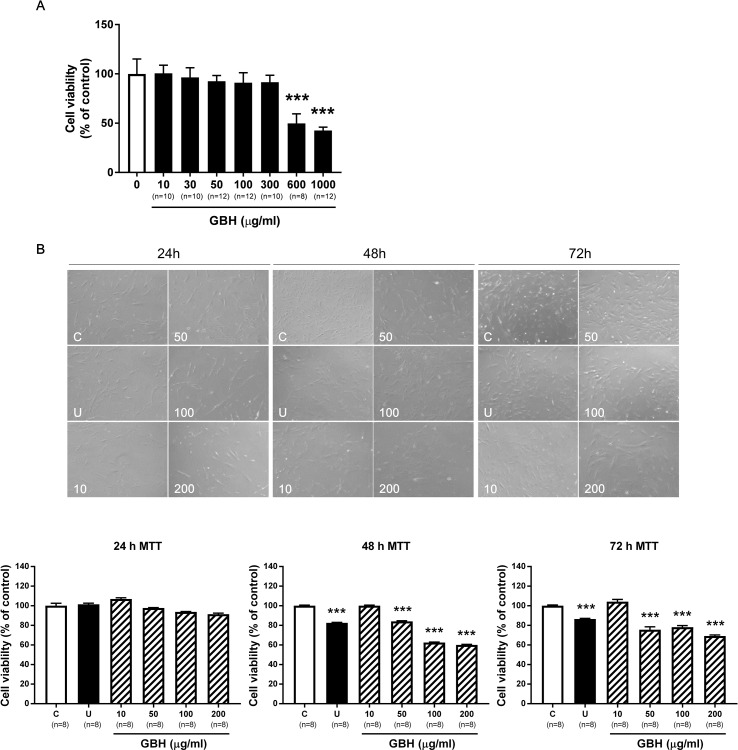
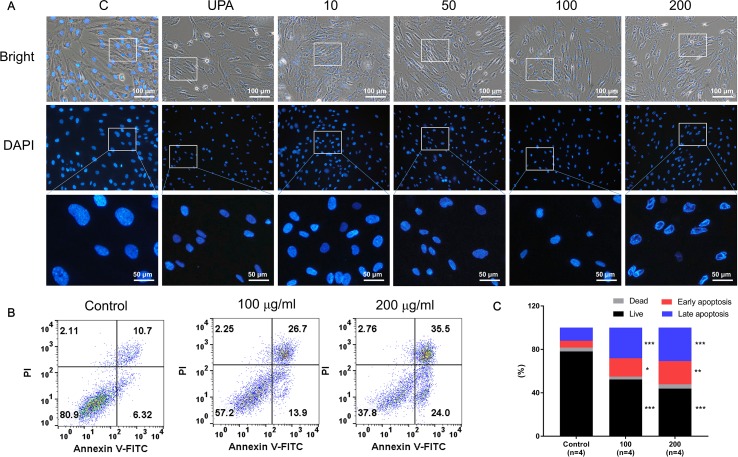
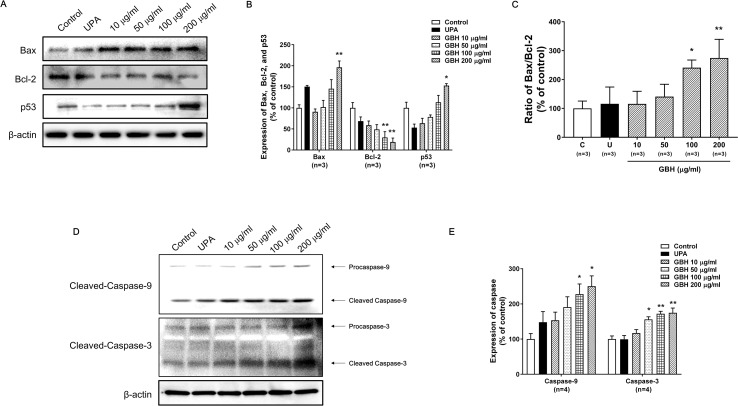
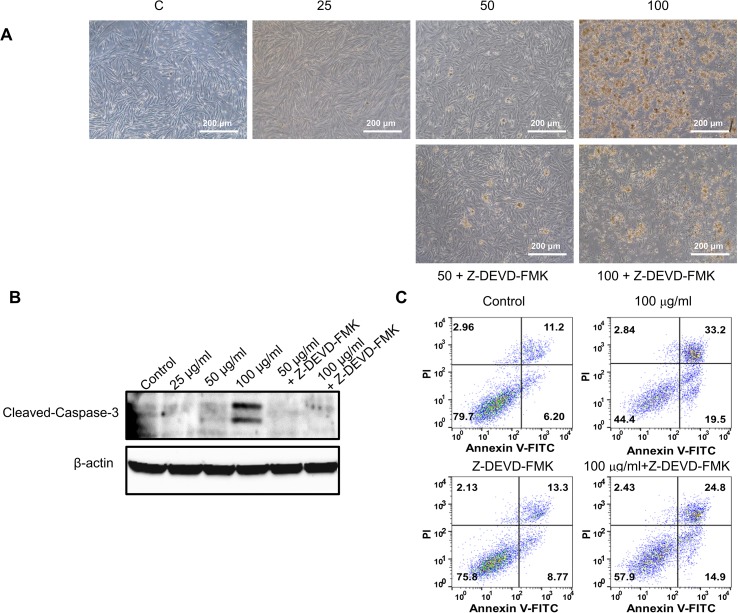
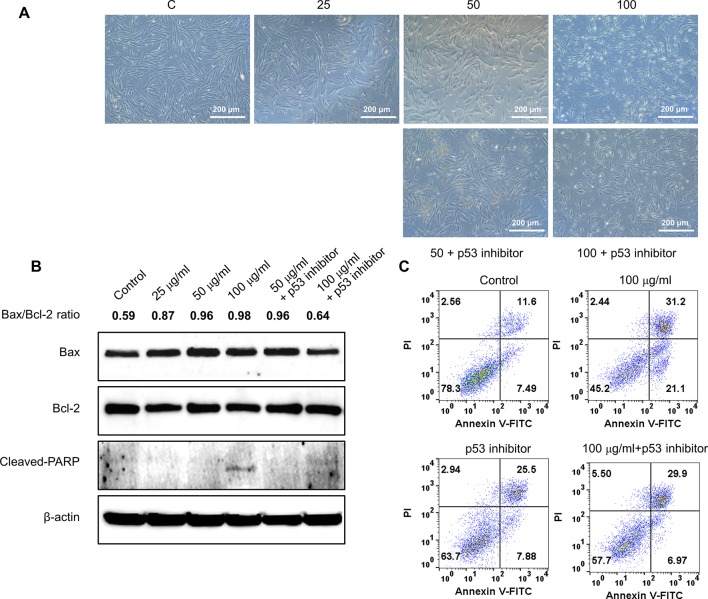
Uterine leiomyomas are the most common benign neoplasms in women of reproductive age. However, non-surgical treatments for uterine myomas have not been fully evaluated. In Korea and China, Gyejibongnyeong-hwan (GBH) is widely used to treat gynecological diseases. Thus, we investigated the effects of GBH in human uterine myoma cells (hUtMCs). The hUtMCs were collected from patients undergoing curative surgery. Cell viability was analyzed 3-(4,5-dimethylthiazol-2-yl)-2,5-diphenyltetrazolium bromide (MTT) assays. The expression levels of p53, Bax, Bcl-2, cleaved-caspase-3, and caspase-9 were determined by Western blotting. Apoptosis and ROS levels were evaluated by fluorescence microscopy. First, we determined the adequate concentration that did not affect normal cells, and then investigated the time-dependent anti-neoplastic effect of GBH to decide the appropriate treatment time under a non-toxic concentration. Cell viability and number were significantly reduced by GBH at 48 h in a dose-dependent manner (0-200 µg/ml). The ratio of Bax to Bcl2 and expression of p53, cleaved-caspase-3, and caspase-9 increased, representing GBH induced apoptosis in uterine leiomyomas. In addition, preliminary tests using pan-caspase inhibitor/p53 inhibitor with GBH rescued the GBH-mediated apoptotic effect. Furthermore, GBH significantly increased the mitochondrial ROS concentration, and preliminary test showed that mitochondria ROS scavenger reduced the percentages of early apoptosis cell. These results suggest that GBH may induce apoptosis of leiomyomas and demonstrated that GBH can be a potential therapeutic and/or preventive agent for uterine leiomyomas.
子宫平滑肌瘤是育龄女性最常见的良性肿瘤。然而,子宫肌瘤的非手术治疗尚未得到充分评估。在韩国和中国,桂皮防风丸(GBH)被广泛用于治疗妇科疾病。因此,我们研究了GBH对人子宫肌瘤细胞(hUtMCs)的影响。hUtMCs取自接受根治性手术的患者。通过3-(4,5-二甲基噻唑-2-基)-2,5-二苯基四氮唑溴盐(MTT)法分析细胞活力。通过蛋白质免疫印迹法测定p53、Bax、Bcl-2、裂解的半胱天冬酶-3和半胱天冬酶-9的表达水平。通过荧光显微镜评估细胞凋亡和活性氧水平。首先,我们确定了不影响正常细胞的合适浓度,然后研究了GBH的时间依赖性抗肿瘤作用,以确定在无毒浓度下的合适治疗时间。GBH在48小时时以剂量依赖性方式(0-200μg/ml)显著降低细胞活力和数量。Bax与Bcl2的比值以及p53、裂解的半胱天冬酶-3和半胱天冬酶-9的表达增加,表明GBH诱导子宫肌瘤细胞凋亡。此外,使用泛半胱天冬酶抑制剂/p53抑制剂与GBH进行的初步试验挽救了GBH介导的凋亡作用。此外,GBH显著增加线粒体活性氧浓度,初步试验表明线粒体活性氧清除剂降低了早期凋亡细胞的百分比。这些结果表明,GBH可能诱导平滑肌瘤细胞凋亡,并证明GBH可以成为子宫肌瘤潜在的治疗和/或预防药物。