Key Laboratory of Major Diseases in Children, Ministry of Education, National Key Discipline of Pediatrics (Capital Medical University), National Clinical Research Center for Respiratory Diseases, Beijing Key Laboratory of Pediatric Respiratory Infection Diseases, Beijing Pediatric Research Institute, Beijing Children's Hospital, Capital Medical University, Beijing, China.
Front Cell Infect Microbiol. 2019 Sep 23;9:325. doi: 10.3389/fcimb.2019.00325. eCollection 2019.
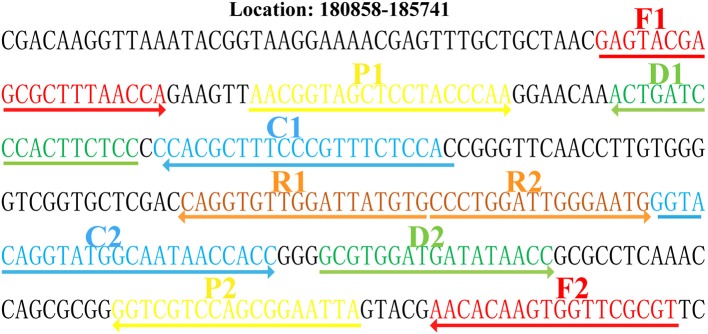
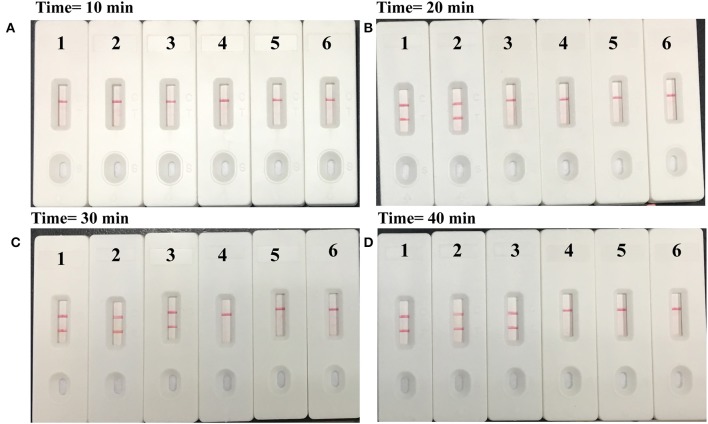
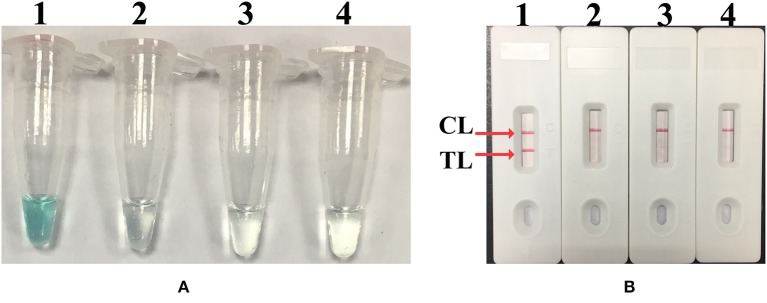
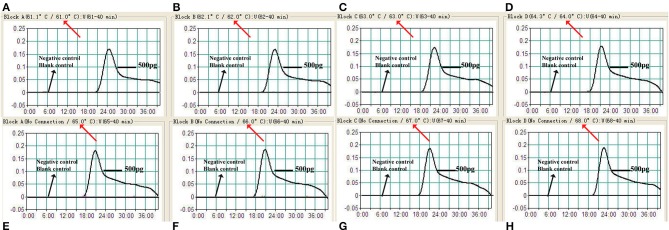
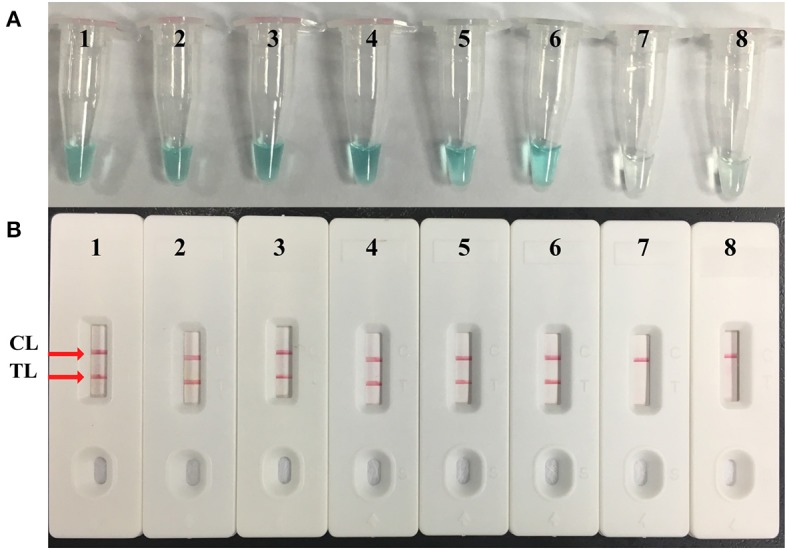
() is responsible for pneumonia, and is a causative agent of other respiratory tract infections (e.g., bronchiolitis and tracheobronchitis). Herein, we established and applied a multiple cross displacement amplification (MCDA) coupled with a nanoparticle-based lateral flow biosensor (LFB) assay (MCDA-LFB) for rapid, simple, and reliable detection of target pathogen. A set of 10 primers was designed based on -specific P1 gene, and optimal reaction conditions were found to be 30 min at 65°C. The detection results were visually reported using a biosensor within 2 min. The -MCDA-LFB method specifically detected only templates, and no cross-reactivity was generated from non- isolates. The analytical sensitivity for this assay was 50 fg of genomic templates in the pure cultures, as obtained from colorimetric indicator and real-time turbidimeter analysis. The assay was applied to 197 oropharyngeal swab samples collected from children highly suspected of infection, and compared to culture-based method and real-time PCR assay. The detection rates of using a culture-based method, real-time PCR assay, and MCDA-LFB assay were 8.1%, 33.0%, and 52.3%, respectively, which indicated that the MCDA-LFB assay was superior to the culture-based method and real-time PCR method for detection of target agent. Using this protocol, 25 min for rapid template extraction followed by MCDA reaction (30 min) combined with LFB detection (2 min) resulted in a total assay time of ~60 min. In conclusion, the MCDA-LFB assay established in this report was a simple, rapid, sensitive, and reliable assay to detect strains, and can be used as a potential diagnostic tool for in basic and clinical laboratories.
()是导致肺炎的病原体,也是其他呼吸道感染(如细支气管炎和气管支气管炎)的病原体。在此,我们建立并应用了一种多重交叉置换扩增(MCDA)与基于纳米颗粒的侧向流动生物传感器(LFB)检测方法(MCDA-LFB),用于快速、简单、可靠地检测目标病原体。根据 -特异性 P1 基因设计了一套 10 条引物,并找到了最佳反应条件为 65°C 下 30 分钟。通过生物传感器在 2 分钟内可进行目视检测结果报告。-MCDA-LFB 方法特异性检测仅为 模板,且与非分离株无交叉反应。该测定法的分析灵敏度为 50 fg 纯培养物中的基因组模板,通过比色指示剂和实时浊度计分析获得。该测定法应用于 197 份来自高度疑似感染儿童的咽拭子样本,与基于培养的方法和实时 PCR 测定法进行比较。基于培养的方法、实时 PCR 测定法和 MCDA-LFB 测定法检测 的检出率分别为 8.1%、33.0%和 52.3%,这表明 MCDA-LFB 测定法优于基于培养的方法和实时 PCR 方法检测目标剂。使用此方案,快速模板提取后进行 MCDA 反应(30 分钟),然后进行 LFB 检测(2 分钟),总检测时间约为 60 分钟。总之,本报告中建立的 MCDA-LFB 测定法是一种简单、快速、灵敏、可靠的检测方法,可以作为基础和临床实验室中检测 的潜在诊断工具。