Department of Molecular and Cell Biology, University of California, Berkeley, CA, USA.
Institute for Cellular and Molecular Biology, University of Texas, Austin, TX, USA.
Nat Microbiol. 2019 Dec;4(12):2538-2551. doi: 10.1038/s41564-019-0583-6. Epub 2019 Oct 14.
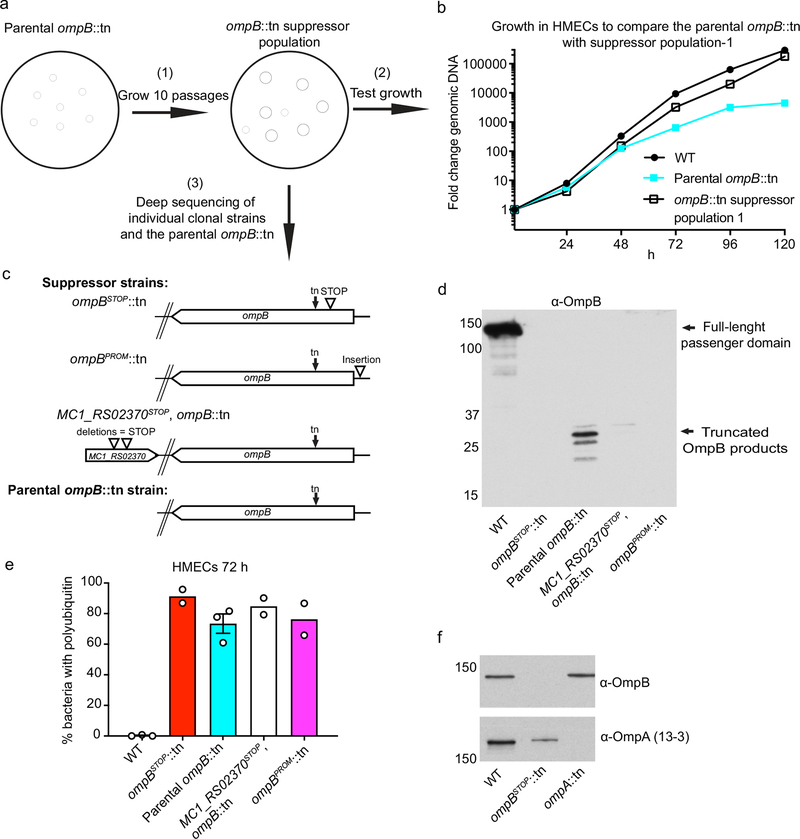
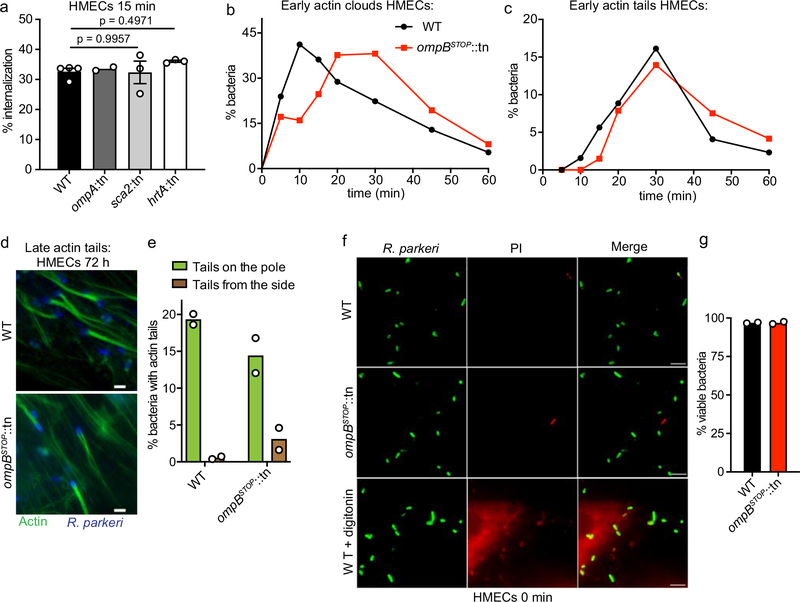
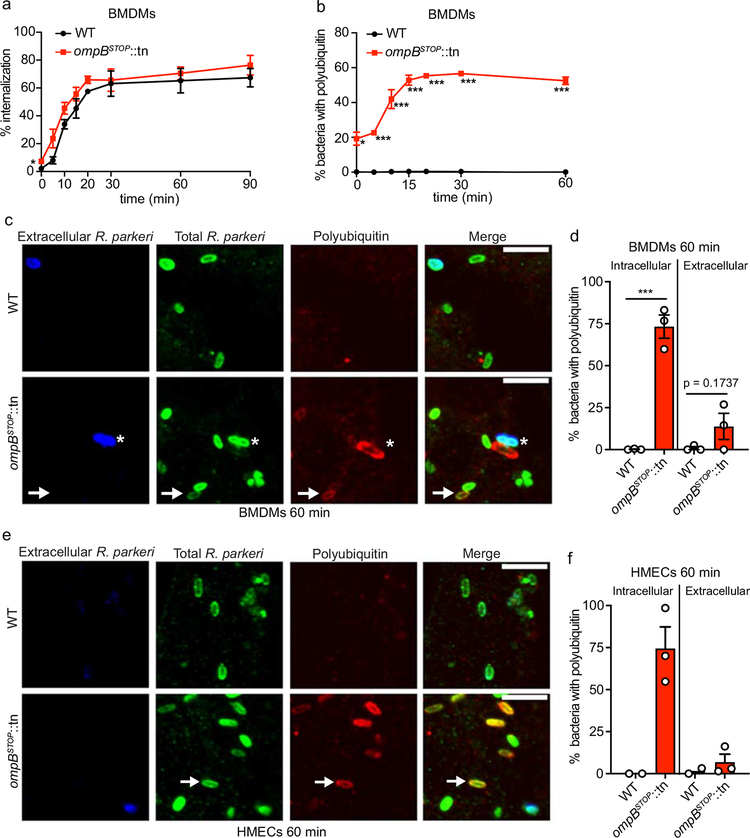
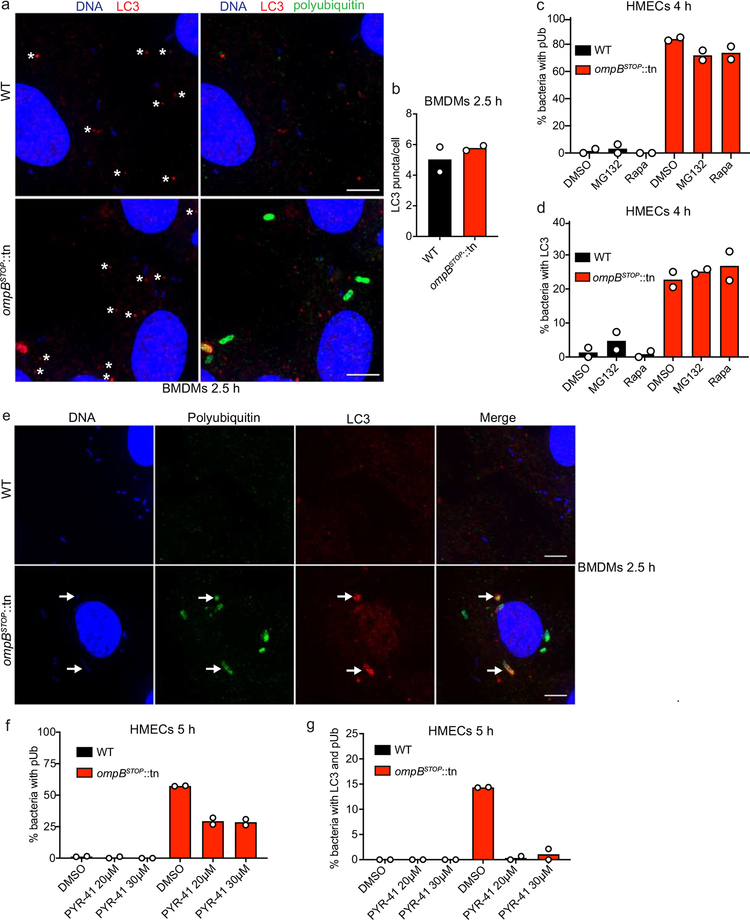
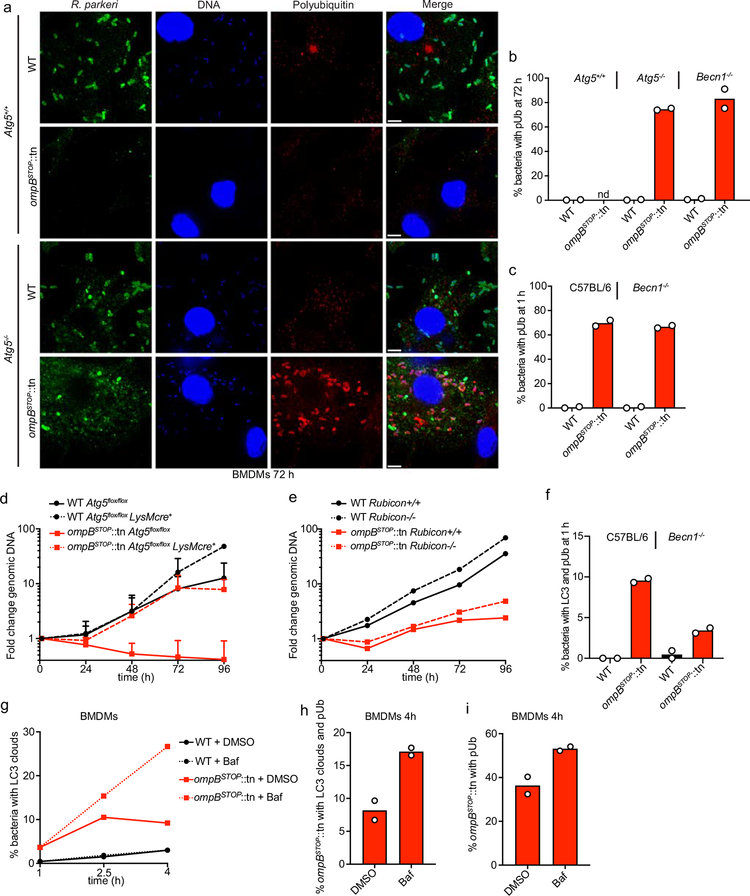
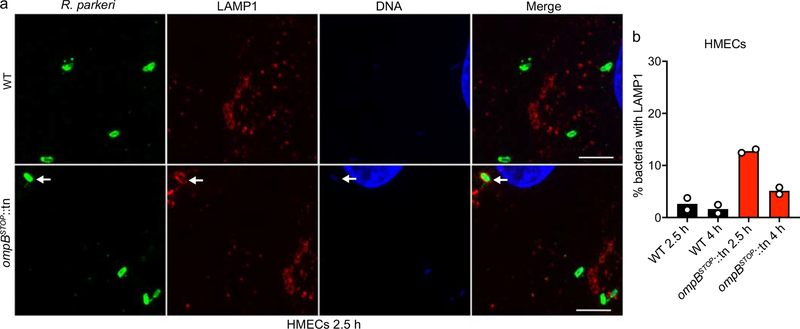
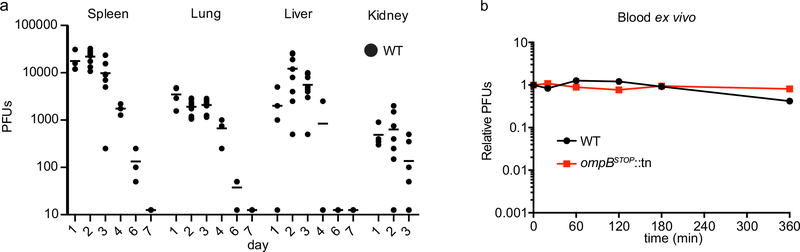
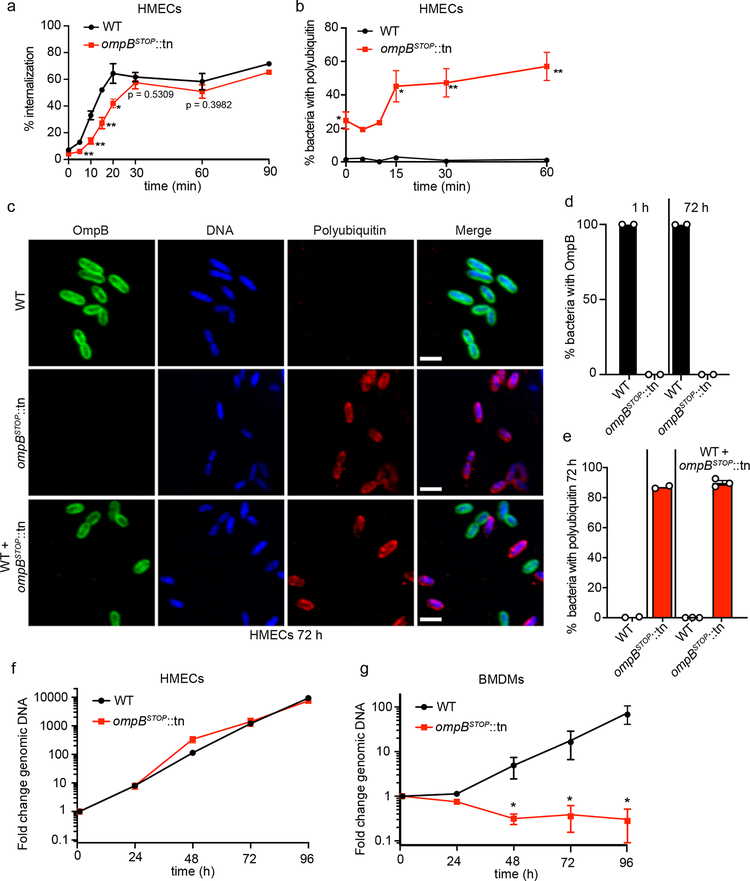
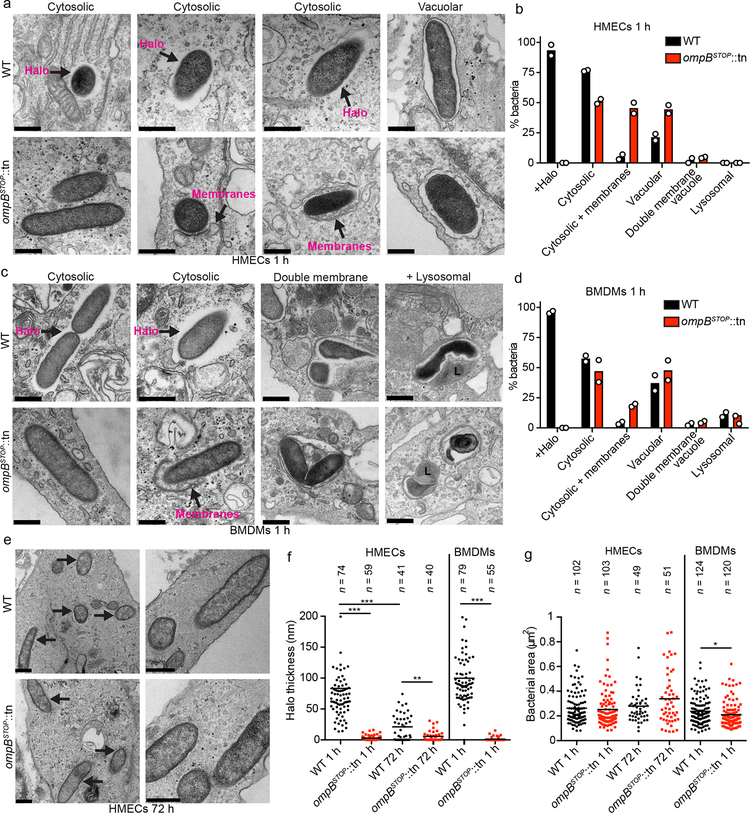
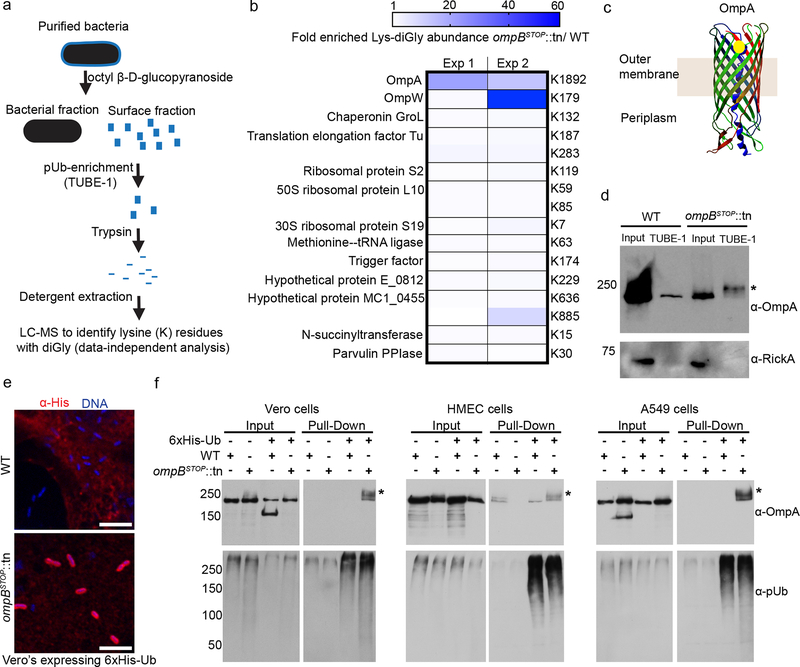
Rickettsia are obligate intracellular bacteria that evade antimicrobial autophagy in the host cell cytosol by unknown mechanisms. Other cytosolic pathogens block different steps of autophagy targeting, including the initial step of polyubiquitin-coat formation. One mechanism of evasion is to mobilize actin to the bacterial surface. Here, we show that actin mobilization is insufficient to block autophagy recognition of the pathogen Rickettsia parkeri. Instead, R. parkeri employs outer membrane protein B (OmpB) to block ubiquitylation of the bacterial surface proteins, including OmpA, and subsequent recognition by autophagy receptors. OmpB is also required for the formation of a capsule-like layer. Although OmpB is dispensable for bacterial growth in endothelial cells, it is essential for R. parkeri to block autophagy in macrophages and to colonize mice because of its ability to promote autophagy evasion in immune cells. Our results indicate that OmpB acts as a protective shield to obstruct autophagy recognition, thereby revealing a distinctive bacterial mechanism to evade antimicrobial autophagy.
立克次体是专性细胞内细菌,它们通过未知机制逃避宿主细胞质中的抗菌自噬。其他胞质病原体阻止自噬靶向的不同步骤,包括多泛素包裹形成的初始步骤。一种逃避机制是将肌动蛋白动员到细菌表面。在这里,我们表明肌动蛋白的动员不足以阻止病原体立克次体 parkeri 的自噬识别。相反,立克次体 parkeri 利用外膜蛋白 B (OmpB) 阻止细菌表面蛋白(包括 OmpA)的泛素化,以及随后被自噬受体识别。OmpB 对于形成类似胶囊的层也是必需的。尽管 OmpB 对于内皮细胞中的细菌生长不是必需的,但由于其促进免疫细胞中自噬逃避的能力,它对立克次体 parkeri 在巨噬细胞中阻断自噬和在小鼠中定殖是必不可少的。我们的结果表明,OmpB 充当保护盾以阻止自噬识别,从而揭示了一种独特的细菌机制来逃避抗菌自噬。