Department of Nutrition, Faculty of Public Health, Universitas Airlangga, Jl. Mulyorejo Kampus C, Surabaya 60115, Indonesia.
Department of Food, Nutrition, Dietetics & Health, Kansas State University, Manhattan, KS 66506, USA.
Int J Environ Res Public Health. 2019 Oct 3;16(19):3730. doi: 10.3390/ijerph16193730.
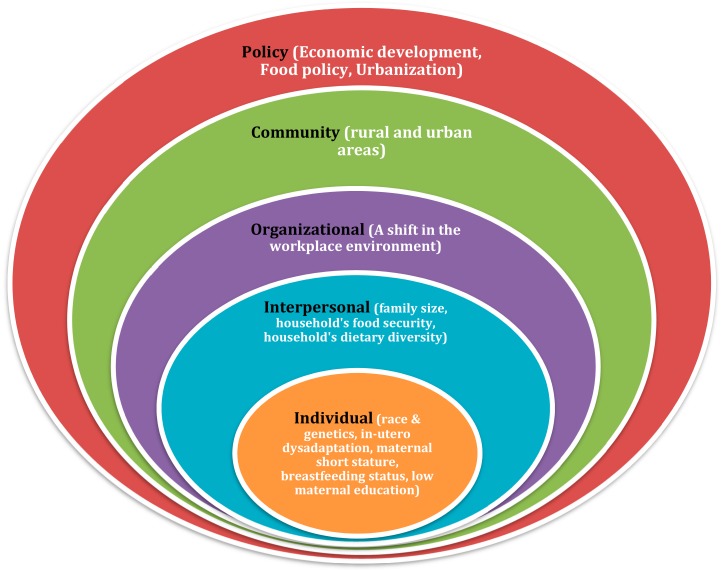
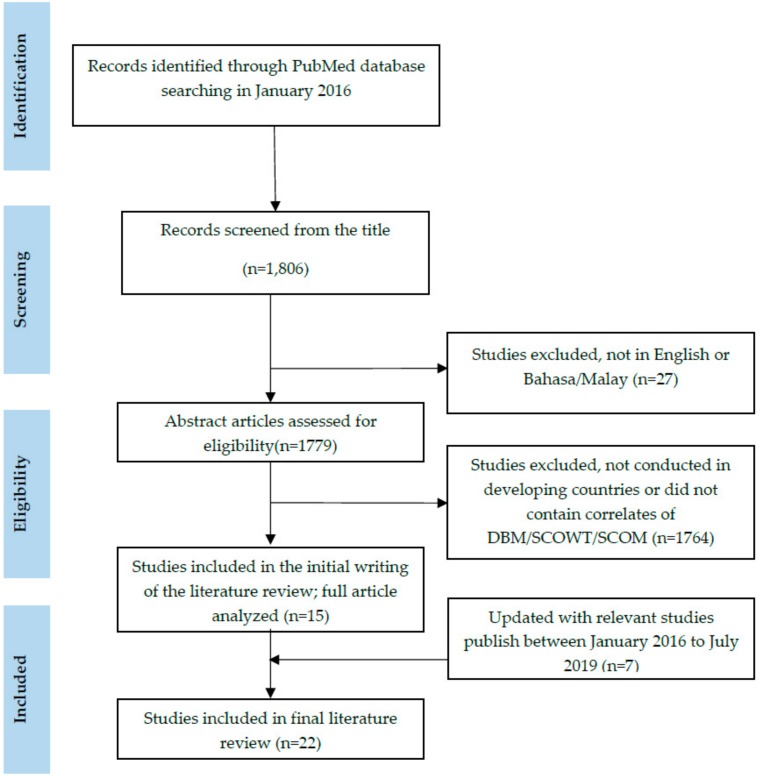
(1) Background: The double burden of malnutrition (DBM) is a complex problem involving the coexistence of under- and over-nutrition within the same individual, household or population. This review aimed to discuss the correlates of the double burden of malnutrition through the socio-ecological model (SEM); (2) Methods: The PubMed database was systematically searched for peer-reviewed articles related to the double burden of malnutrition. Information on correlates of the double burden of malnutrition was extracted for analysis and discussion in alignment with the levels of the socio-ecological model.; (3) Results and Discussion: The correlates of the double burden of malnutrition identified from previous literature were: Race/genetics; maternal short stature; breastfeeding status; low maternal education; family size; household food security; household dietary diversity; and rural and urban settings. In the absence of evidence linking factors in a certain level of the SEM and the double burden of malnutrition, we employed correlates of overweight status and obesity to complete this narrative. Potential intervention strategies were proposed in alignment with the targets and settings identified, based on the socio-ecological approach; (4) Conclusions: The double burden of malnutrition is a public health phenomenon associated with a variety of socio-ecological determinants. An integrated approach is needed to address the root causes of malnutrition in all its forms, and at all life stages.
(1)背景:营养不良的双重负担(DBM)是一个复杂的问题,涉及同一个体、家庭或人群中营养不足和营养过剩的共存。本综述旨在通过社会生态模型(SEM)讨论营养不良双重负担的相关因素;(2)方法:系统地在 PubMed 数据库中搜索了与营养不良双重负担相关的同行评审文章。提取了与营养不良双重负担相关的信息,以便根据社会生态模型的各个层次进行分析和讨论;(3)结果与讨论:从以往文献中确定的营养不良双重负担的相关因素包括:种族/遗传;母亲身材矮小;母乳喂养状况;母亲受教育程度低;家庭规模;家庭粮食安全;家庭饮食多样性;以及农村和城市环境。在没有证据将 SEM 某一层次的因素与营养不良双重负担联系起来的情况下,我们利用超重状况和肥胖的相关因素来完成这一叙述。根据社会生态方法,针对确定的目标和环境提出了潜在的干预策略;(4)结论:营养不良的双重负担是一种与多种社会生态决定因素相关的公共卫生现象。需要采取综合方法来解决所有形式的营养不良的根本原因,以及在所有生命阶段。