State Key Laboratory of Cotton Biology, Institute of Cotton Research, Chinese Academy of Agricultural Sciences, Key Laboratory of Cotton Genetic Improvement, Ministry of Agriculture, Anyang, 455000, Henan, China.
College of Plant Science & Technology, Huazhong Agricultural University, Wuhan, 430070, Hubei, China.
BMC Plant Biol. 2019 Oct 17;19(1):432. doi: 10.1186/s12870-019-2026-1.
Cotton fiber length and strength are both key traits of fiber quality, and fiber strength (FS) is tightly correlated with secondary cell wall (SCW) biosynthesis. The three-amino-acid-loop-extension (TALE) superclass homeoproteins are involved in regulating diverse biological processes in plants, and some TALE members has been identified to play a key role in regulating SCW formation. However, little is known about the functions of TALE members in cotton (Gossypium spp.).
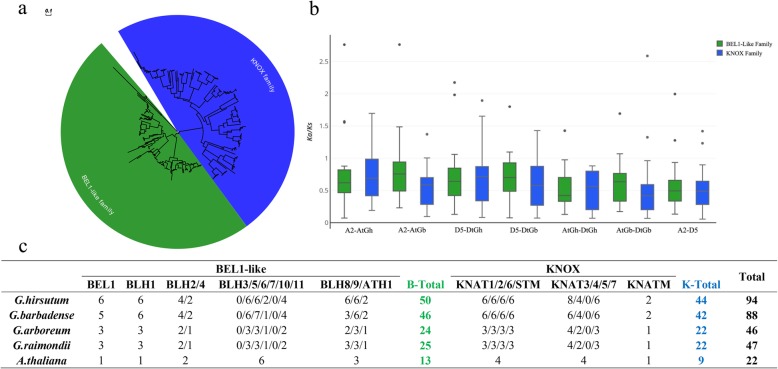
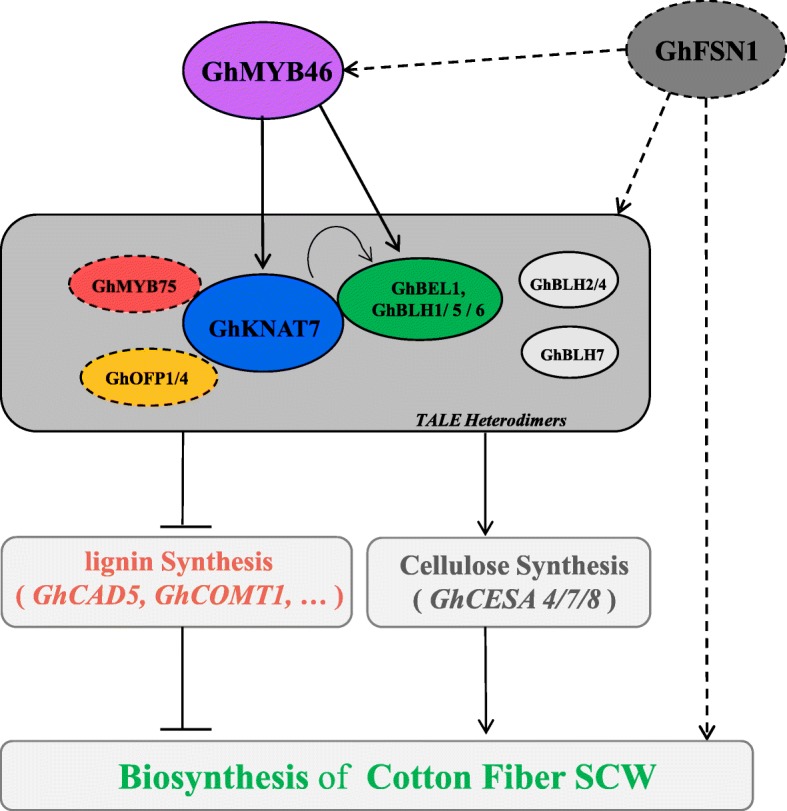
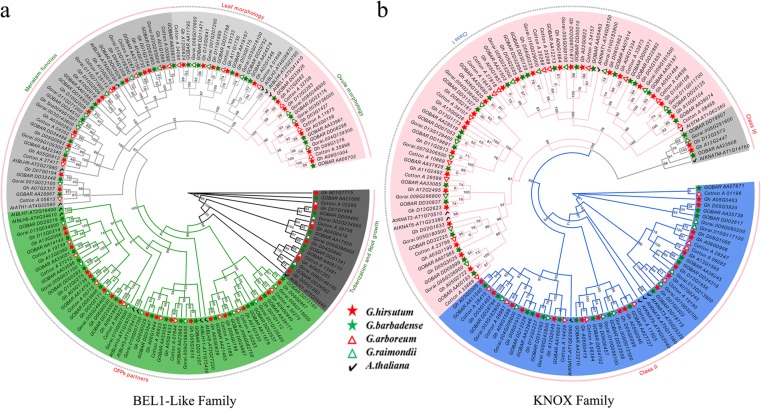
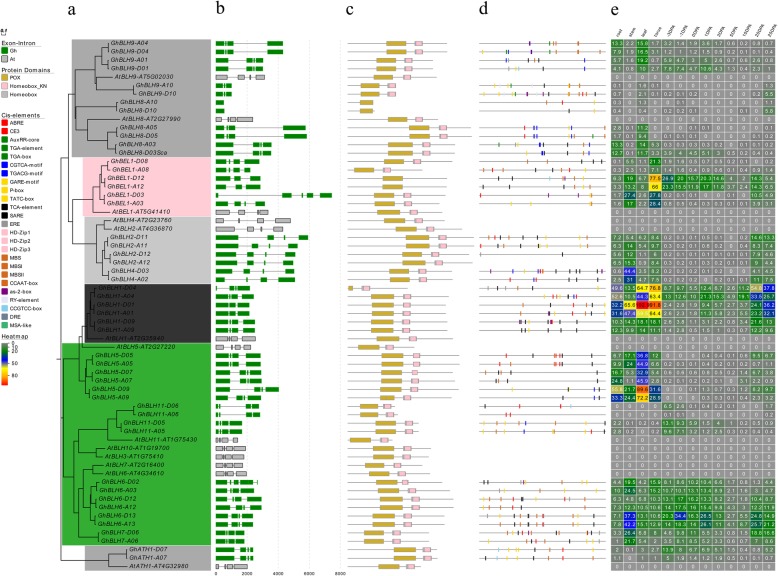
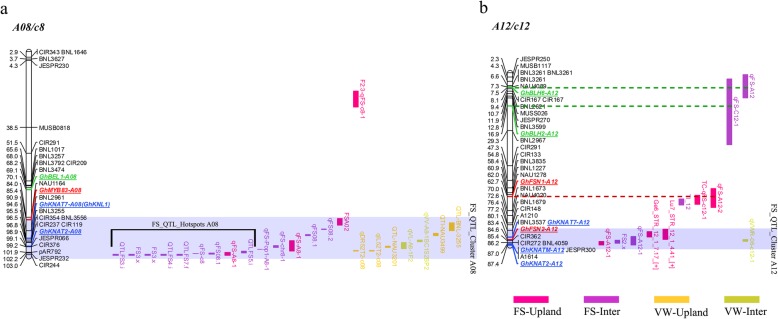
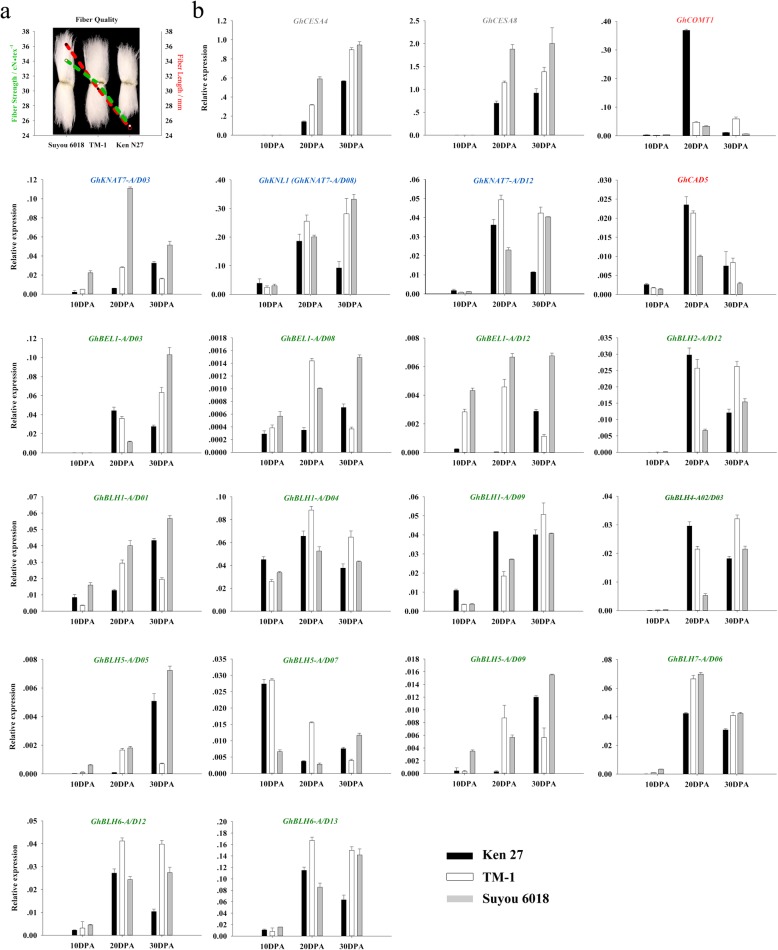
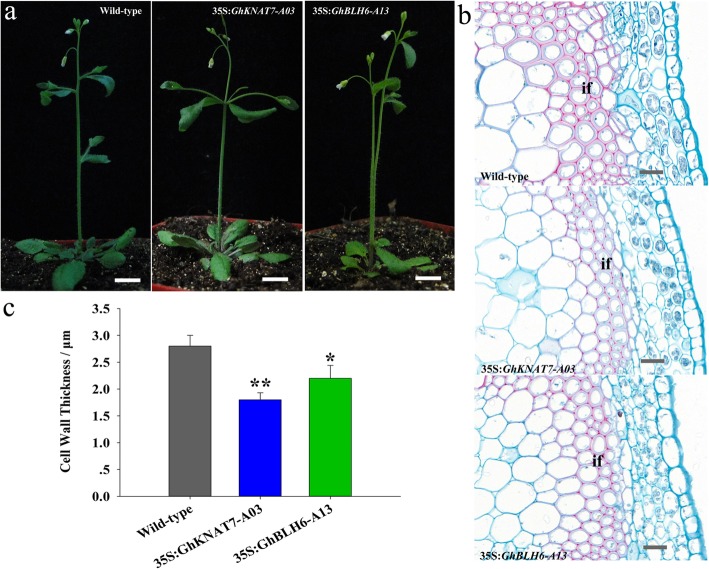
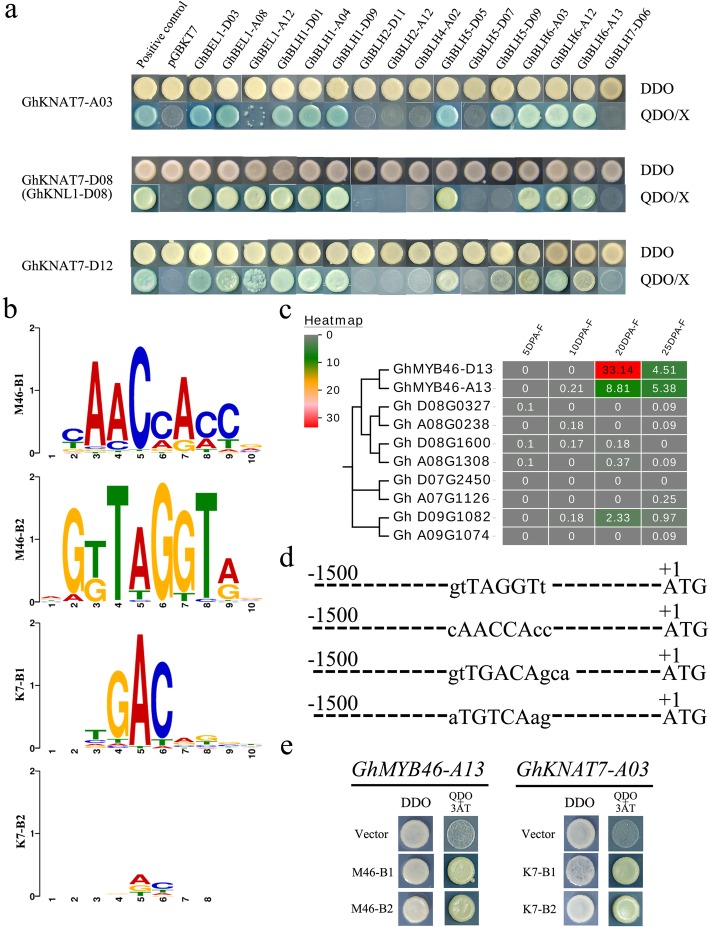
In the present study, based on gene homology, 46, 47, 88 and 94 TALE superfamily genes were identified in G. arboreum, G. raimondii, G. barbadense and G. hirsutum, respectively. Phylogenetic and evolutionary analysis showed the evolutionary conservation of two cotton TALE families (including BEL1-like and KNOX families). Gene structure analysis also indicated the conservation of GhTALE members under selection. The analysis of promoter cis-elements and expression patterns suggested potential transcriptional regulation functions in fiber SCW biosynthesis and responses to some phytohormones for GhTALE proteins. Genome-wide analysis of colocalization of TALE transcription factors with SCW-related QTLs revealed that some BEL1-like genes and KNAT7 homologs may participate in the regulation of cotton fiber strength formation. Overexpression of GhKNAT7-A03 and GhBLH6-A13 significantly inhibited the synthesis of lignocellulose in interfascicular fibers of Arabidopsis. Yeast two-hybrid (Y2H) experiments showed extensive heteromeric interactions between GhKNAT7 homologs and some GhBEL1-like proteins. Yeast one-hybrid (Y1H) experiments identified the upstream GhMYB46 binding sites in the promoter region of GhTALE members and defined the downstream genes that can be directly bound and regulated by GhTALE heterodimers.
We comprehensively identified TALE superfamily genes in cotton. Some GhTALE members are predominantly expressed during the cotton fiber SCW thicking stage, and may genetically correlated with the formation of FS. Class II KNOX member GhKNAT7 can interact with some GhBEL1-like members to form the heterodimers to regulate the downstream targets, and this regulatory relationship is partially conserved with Arabidopsis. In summary, this study provides important clues for further elucidating the functions of TALE genes in regulating cotton growth and development, especially in the fiber SCW biosynthesis network, and it also contributes genetic resources to the improvement of cotton fiber quality.
棉纤维长度和强度都是纤维质量的关键特性,纤维强度(FS)与次生细胞壁(SCW)生物合成密切相关。三氨基酸环延伸(TALE)超家族同源蛋白参与植物中多种生物过程的调节,一些 TALE 成员已被确定在调节 SCW 形成中发挥关键作用。然而,关于 TALE 成员在棉花(Gossypium spp.)中的功能知之甚少。
在本研究中,基于基因同源性,分别在 G. arboreum、G. raimondii、G. barbadense 和 G. hirsutum 中鉴定了 46、47、88 和 94 个 TALE 超家族基因。系统进化和进化分析表明,两个棉花 TALE 家族(包括 BEL1 样和 KNOX 家族)具有进化保守性。基因结构分析还表明,GhTALE 成员受到选择的保护。启动子顺式元件和表达模式分析表明,GhTALE 蛋白在纤维 SCW 生物合成和对一些植物激素的反应中具有潜在的转录调控功能。TALE 转录因子与 SCW 相关 QTL 共定位的全基因组分析表明,一些 BEL1 样基因和 KNAT7 同源物可能参与调节棉花纤维强度的形成。过表达 GhKNAT7-A03 和 GhBLH6-A13 显著抑制拟南芥间纤维木质素纤维素的合成。酵母双杂交(Y2H)实验表明,GhKNAT7 同源物与一些 GhBEL1 样蛋白之间存在广泛的异源二聚体相互作用。酵母单杂交(Y1H)实验鉴定了 GhTALE 成员启动子区中 GhMYB46 的上游结合位点,并确定了可以直接结合和受 GhTALE 异源二聚体调控的下游基因。
我们全面鉴定了棉花中的 TALE 超家族基因。一些 GhTALE 成员在棉纤维 SCW 增厚阶段表达丰度较高,可能与 FS 的形成存在遗传相关性。类 II KNOX 成员 GhKNAT7 可以与一些 GhBEL1 样成员相互作用形成异源二聚体,以调节下游靶标,这种调节关系与拟南芥部分保守。总之,本研究为进一步阐明 TALE 基因在调控棉花生长发育,特别是在纤维 SCW 生物合成网络中的功能提供了重要线索,为提高棉花纤维品质提供了遗传资源。