Wang Xiaoge, Kong Fanjin, Gao Liying, Shen Guifang, Duan Bing, Wang Zongwen, Xu Dongdong, Fan Degang, Deng Yongsheng, Han Zongfu
Institute of Industrial Crops, Shandong Academy of Agricultural Sciences, Jinan, Shandong, 250100, China.
BMC Plant Biol. 2024 Dec 23;24(1):1243. doi: 10.1186/s12870-024-05947-z.
Early-maturity cotton varieties have the potential to be cultivated in a wider geographical area, extending as far north as 46 °N in China, and confer to address the issue of competition for land between grain and cotton by reducing their whole growth period (WGP). Therefore, it is of great importance to develop cotton varieties with comprehensive early maturity and high yield following investigating the regulatory mechanism underlying early maturity and identifying early maturity-related genes.
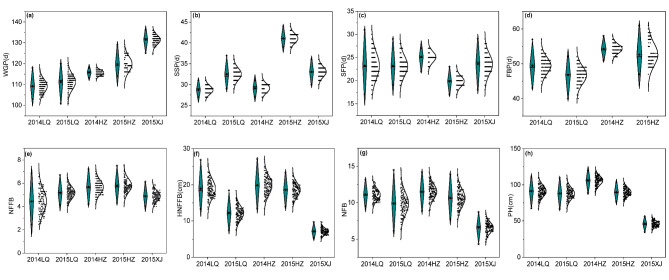
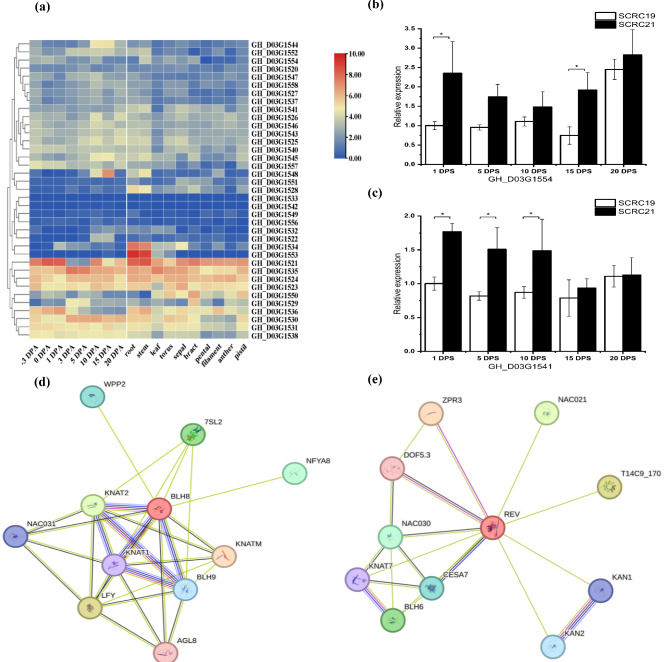
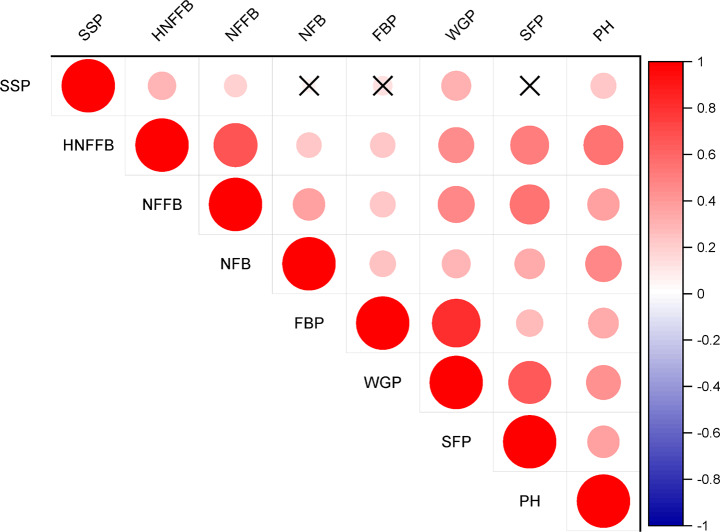
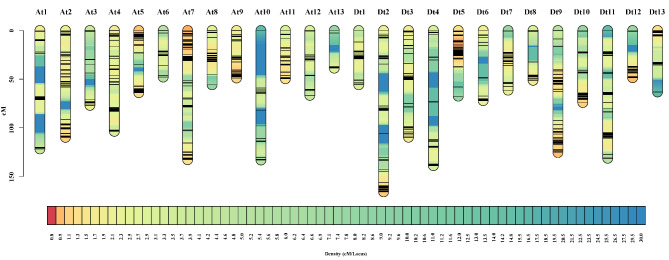
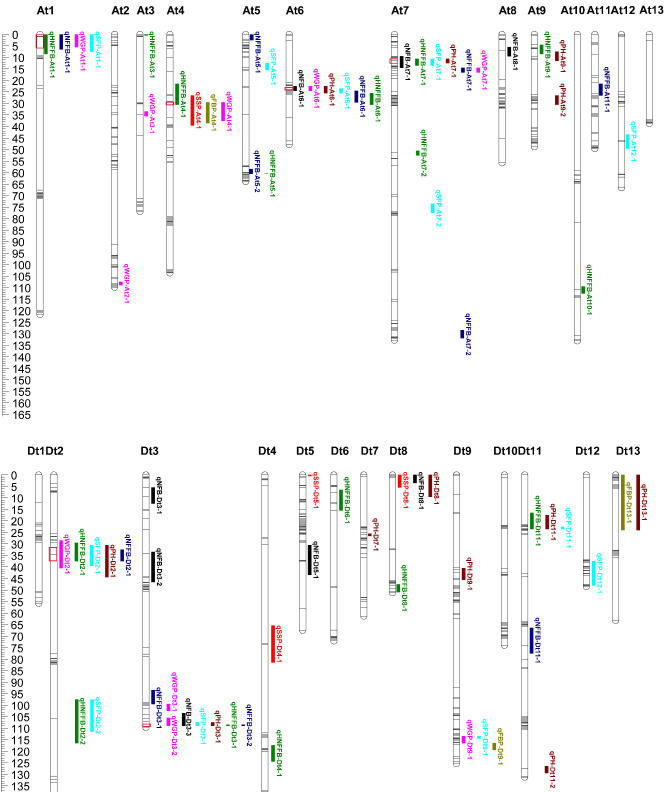
In this study, 'SCRC19' and 'SCRC21', two excellent cultivars with significantly different WGP, along with their recombinant inbred lines (RILs) consisting of 150 individuals were re-sequenced, yielding 4,092,677 high-quality single nucleotide polymorphisms (SNPs) and 794 bin markers across 26 chromosomes. A genetic map spanning 2213.71 cM was constructed using the 794 bin markers. Based on this map, we identified a total of 78 early maturity-related QTLs, including 12 QTLs for WGP, 4 for SSP, 12 for SFP, 3 for FBP, 11 for NFFB, 8 for NFB, 16 for HNFFB and 12 for PH. Six QTL clusters, each containing more than four traits, were identified. One particular QTL cluster, which had the largest number of QTLs, ranged from 108.5 cM to 109 cM on Dt3, and contained 39 genes. Through functional analysis, we highlighted two early maturity-related candidates of GH_D03G1554 and GH_D03G1541, which were annotated as a BEL1-like homeodomain protein 8 and a homeobox-leucine zipper family protein, respectively.
We have identified a QTL cluster related to six early maturity-associated traits on Dt3. Through annotation of genes from candidate region, we have identified two candidate genes, GH_D03G1554 and GH_D03G1541, whose expression levels in 'SCRC21' were significantly higher than those in 'SCRC19' at different stages of flower bud development. These candidate genes provide new insights into the study of early-maturity mechanism and offer potential genetic improvement of cotton.
早熟棉花品种有潜力在更广泛的地理区域种植,在中国可北至北纬46°,并且通过缩短其全生育期(WGP)有助于解决粮食与棉花争地的问题。因此,在研究早熟调控机制并鉴定早熟相关基因之后,培育具有综合早熟性和高产的棉花品种至关重要。
在本研究中,对两个全生育期差异显著的优良品种“SCRC19”和“SCRC21”及其由150个个体组成的重组自交系(RILs)进行了重测序,在26条染色体上产生了4,092,677个高质量单核苷酸多态性(SNP)和794个bin标记。利用这794个bin标记构建了一个跨度为2213.71 cM的遗传图谱。基于此图谱,我们共鉴定出78个与早熟相关的QTL,包括12个全生育期QTL、4个始节位QTL、12个始花节位QTL、3个开花期QTL、11个第一果枝节位QTL、8个果枝数QTL、16个单株果枝数QTL和12个株高QTL。鉴定出6个QTL簇,每个簇包含4个以上性状。一个特定的QTL簇,其QTL数量最多,位于Dt3染色体上108.5 cM至109 cM区间,包含39个基因。通过功能分析,我们突出了两个与早熟相关的候选基因GH_D03G1554和GH_D03G1541,它们分别被注释为类BEL1同源结构域蛋白8和同源异型框-亮氨酸拉链家族蛋白。
我们在Dt3染色体上鉴定出一个与六个早熟相关性状有关的QTL簇。通过对候选区域的基因注释,我们鉴定出两个候选基因GH_D03G1554和GH_D03G1541,它们在“SCRC21”中的表达水平在花芽发育的不同阶段显著高于“SCRC19”。这些候选基因为早熟机制的研究提供了新的见解,并为棉花的潜在遗传改良提供了依据。