University of Lille, Inserm, Institut Pasteur de Lille, U1177 - Drugs and Molecules for living Systems, F-59000, Lille, France.
Department of Pharmaceutical Chemistry, University of Vienna, Althanstrasse 14, 1090, Wien, Austria.
Sci Rep. 2019 Oct 21;9(1):15061. doi: 10.1038/s41598-019-51455-8.
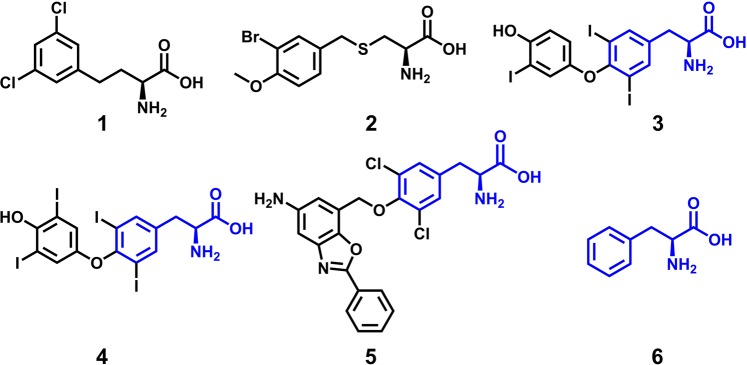
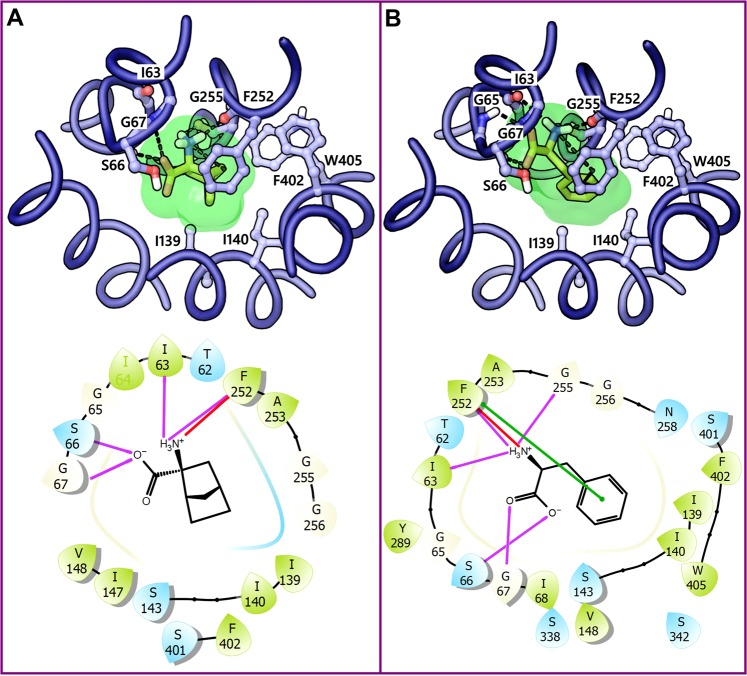
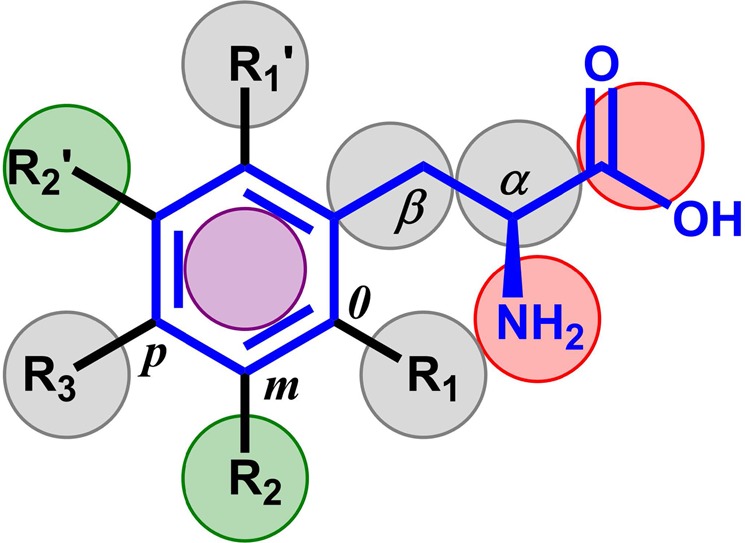
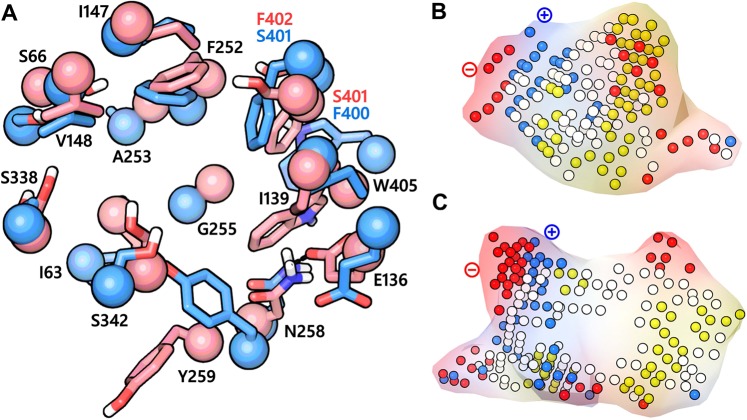
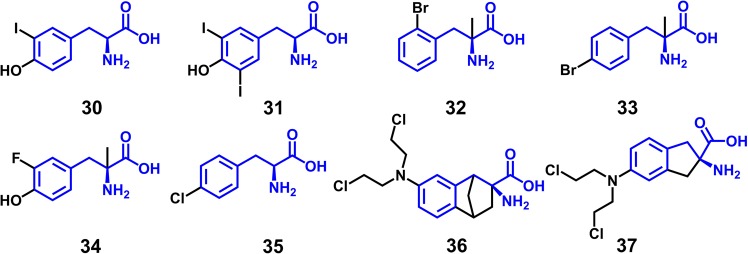
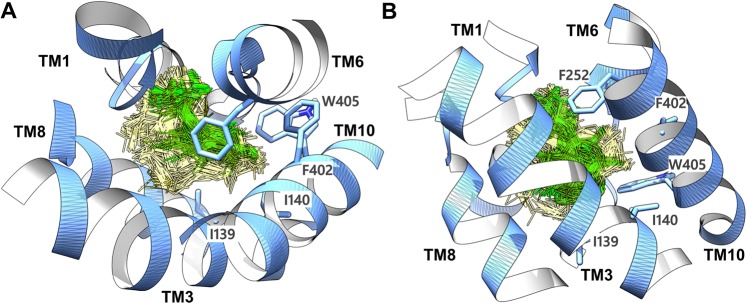
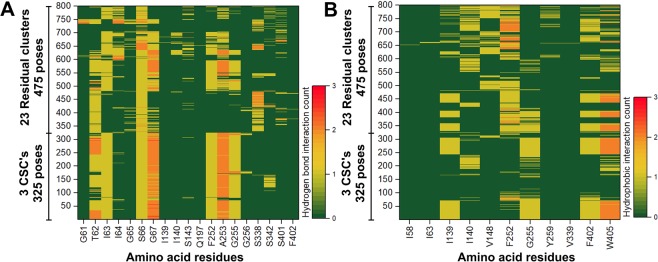
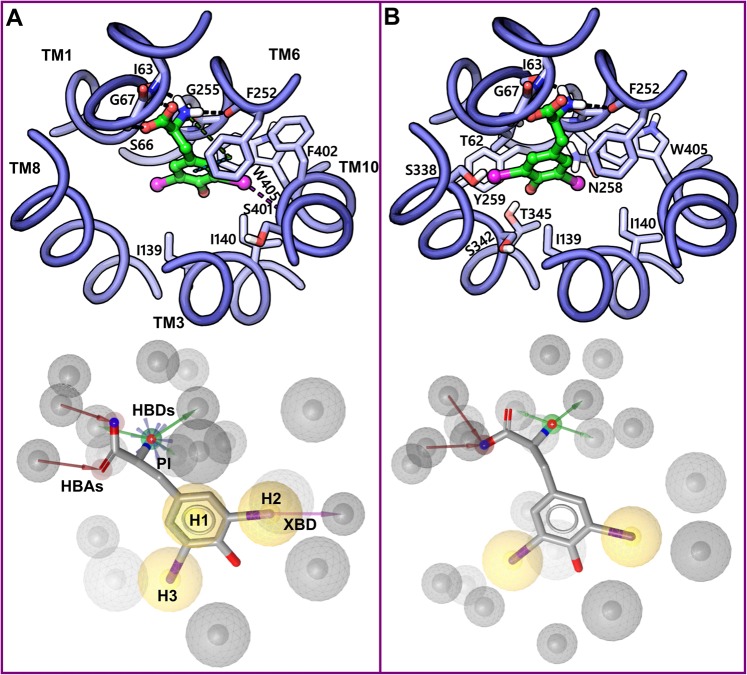
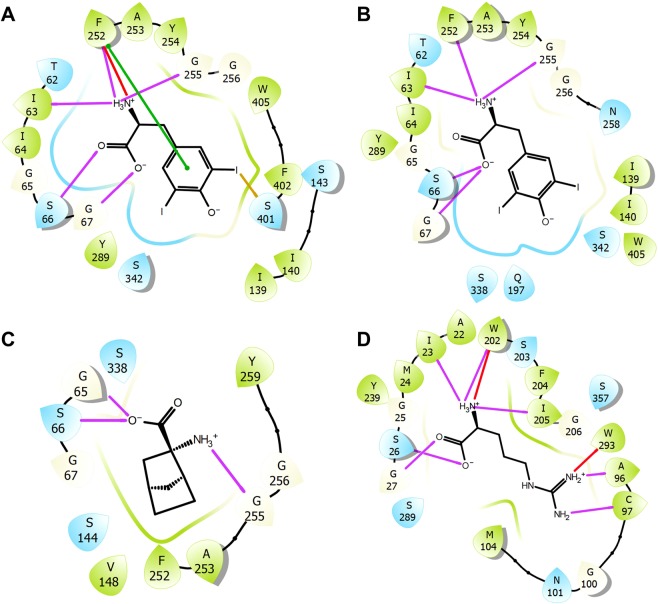
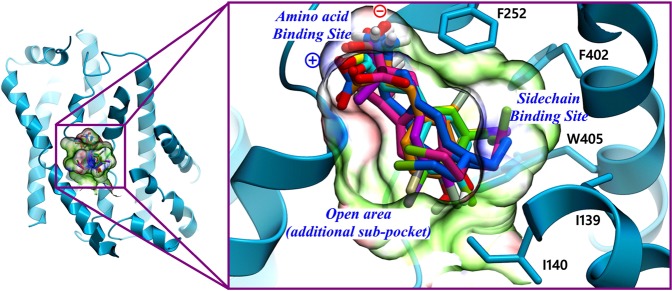
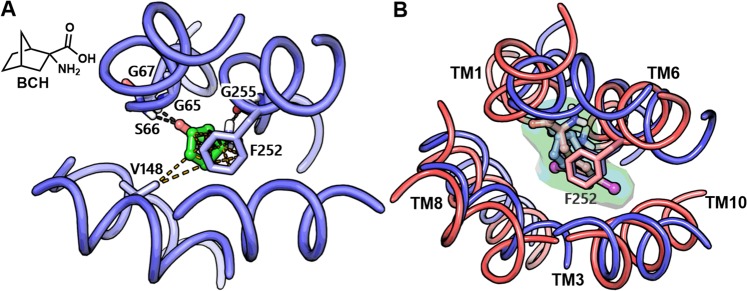
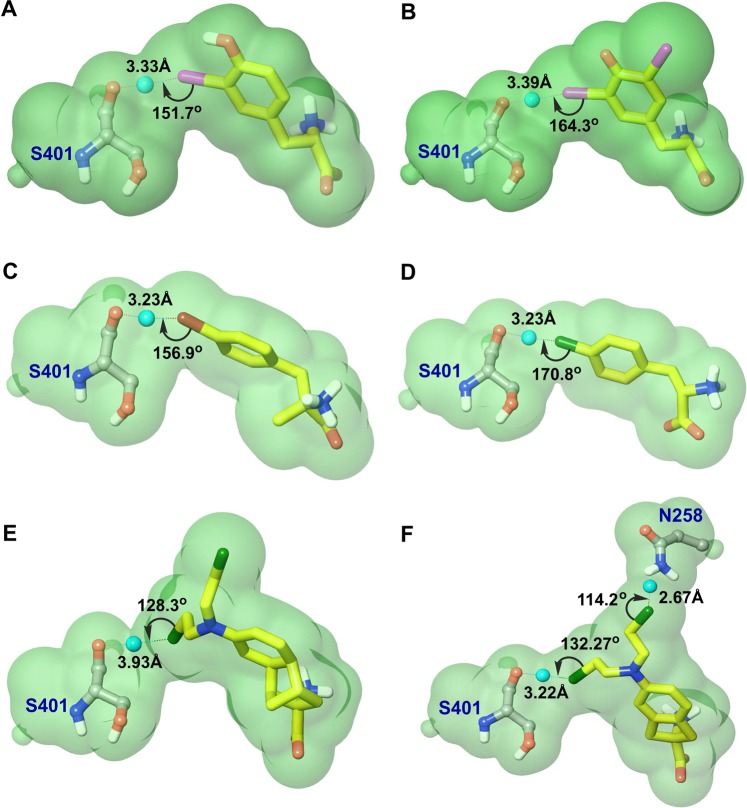
L-type Amino acid Transporter 1 (LAT1) plays a significant role in the growth and propagation of cancer cells by facilitating the cross-membrane transport of essential nutrients, and is an attractive drug target. Several halogen-containing L-phenylalanine-based ligands display high affinity and high selectivity for LAT1; nonetheless, their molecular mechanism of binding remains unclear. In this study, a combined in silico strategy consisting of homology modeling, molecular docking, and Quantum Mechanics-Molecular Mechanics (QM-MM) simulation was applied to elucidate the molecular basis of ligand binding in LAT1. First, a homology model of LAT1 based on the atomic structure of a prokaryotic homolog was constructed. Docking studies using a set of halogenated ligands allowed for deriving a binding hypothesis. Selected docking poses were subjected to QM-MM calculations to investigate the halogen interactions. Collectively, the results highlight the dual nature of the ligand-protein binding mode characterized by backbone hydrogen bond interactions of the amino acid moiety of the ligands and residues I63, S66, G67, F252, G255, as well as hydrophobic interactions of the ligand's side chains with residues I139, I140, F252, G255, F402, W405. QM-MM optimizations indicated that the electrostatic interactions involving halogens contribute to the binding free energy. Importantly, our results are in good agreement with the recently unraveled cryo-Electron Microscopy structures of LAT1.
L 型氨基酸转运蛋白 1(LAT1)通过促进必需营养素的跨膜转运,在癌细胞的生长和增殖中发挥重要作用,是一个有吸引力的药物靶点。一些含卤素的 L-苯丙氨酸基配体对 LAT1 表现出高亲和力和高选择性;然而,它们的结合分子机制仍不清楚。在这项研究中,应用了一种组合的计算策略,包括同源建模、分子对接和量子力学-分子力学(QM-MM)模拟,以阐明 LAT1 中配体结合的分子基础。首先,基于原核同源物的原子结构构建了 LAT1 的同源模型。使用一组卤代配体进行对接研究,得出了结合假设。选择的对接构象进行 QM-MM 计算,以研究卤素相互作用。总的来说,结果强调了配体-蛋白结合模式的双重性质,其特征是配体的氨基酸部分与残基 I63、S66、G67、F252、G255 之间的骨架氢键相互作用,以及配体侧链与残基 I139、I140、F252、G255、F402、W405 之间的疏水相互作用。QM-MM 优化表明,涉及卤素的静电相互作用有助于结合自由能。重要的是,我们的结果与最近揭示的 LAT1 低温电子显微镜结构非常吻合。