Center for Fatty Liver, Department of Gastroenterology, Xinhua Hospital Affiliated to Shanghai Jiaotong University School of Medicine, Shanghai, 200092, China.
Storr Liver Centre, Westmead Institute for Medical Research, the University of Sydney at Westmead Hospital, Westmead, NSW, 2145, Australia.
Lipids Health Dis. 2019 Oct 21;18(1):179. doi: 10.1186/s12944-019-1118-0.
Ceramide plays pathogenic roles in nonalcoholic fatty liver disease (NAFLD) via multiple mechanisms, and as such inhibition of ceramide de novo synthesis in the liver may be of therapeutically beneficial in patients with NAFLD. In this study, we aimed to explore whether inhibition of ceramide signaling by myriocin is beneficial in animal model of NAFLD via regulating autophagy.
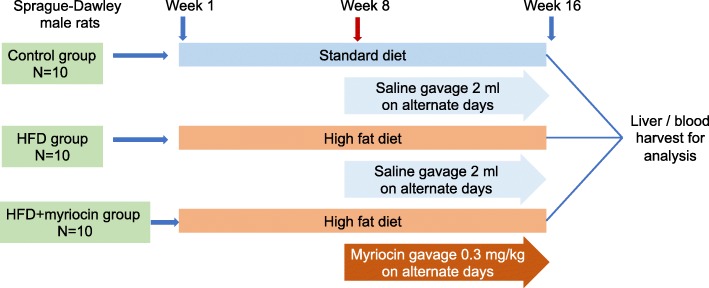
Sprague Dawley rats were randomly divided into three groups: standard chow (n = 10), high-fat diet (HFD) (n = 10) or HFD combined with oral administration of myriocin (0.3 mg/kg on alternate days for 8 weeks) (n = 10). Liver histology and autophagy function were measured. HepG2 cells were incubated with fatty acid with or without myriocin treatment. Lipid accumulation and autophagy markers in the HepG2 cells were analyzed. Serum ceramide changes were studied in 104 subjects consisting healthy adults, liver biopsy-proven patients with NAFLD and liver biopsy-proven patients with chronic hepatitis B (CHB).
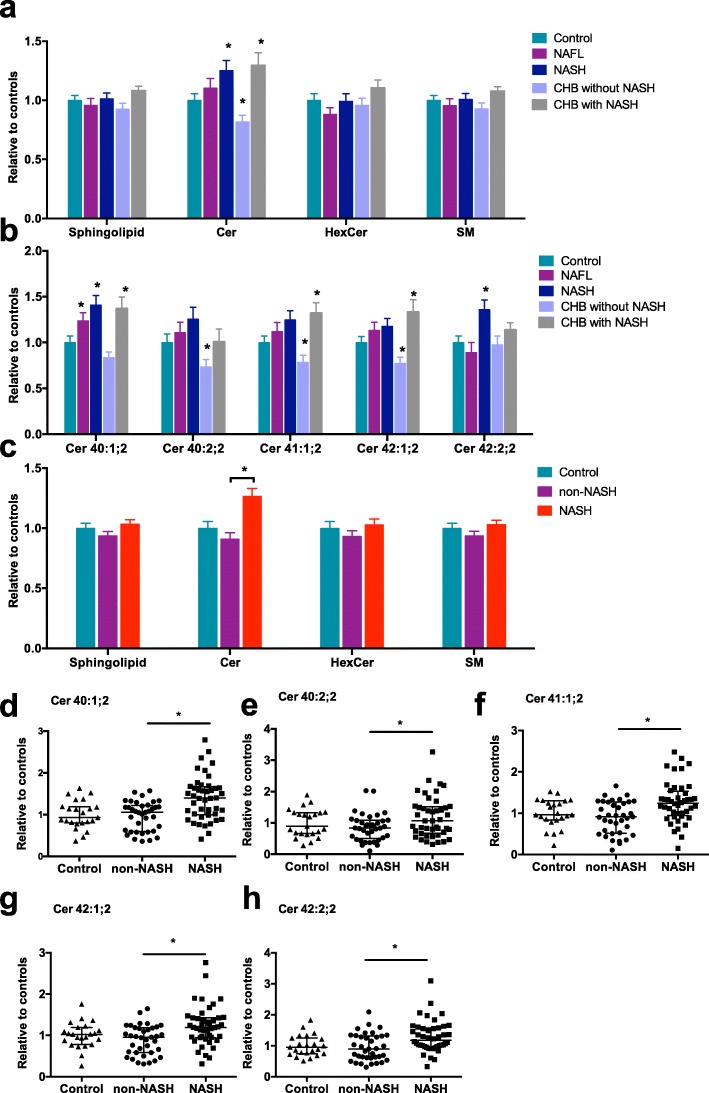
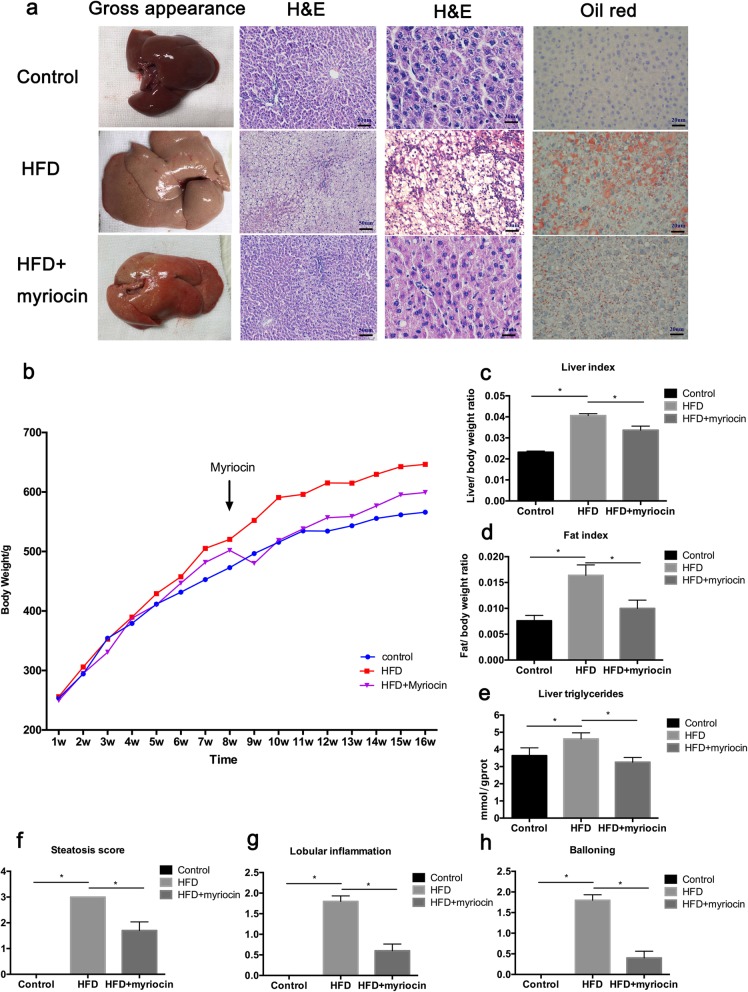
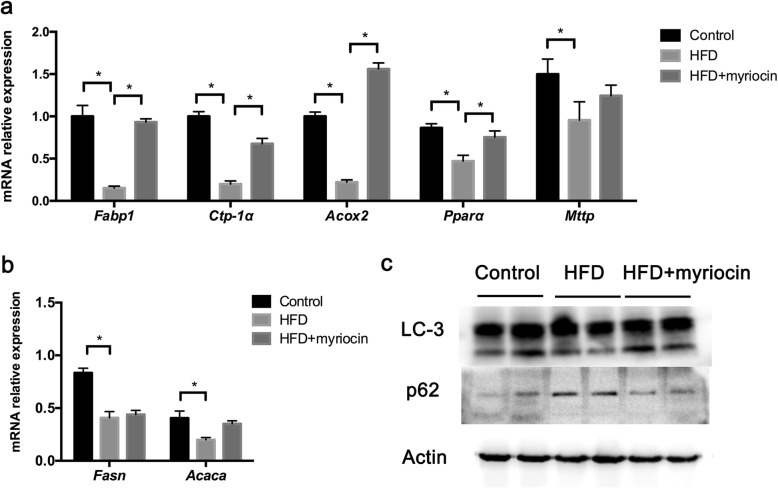
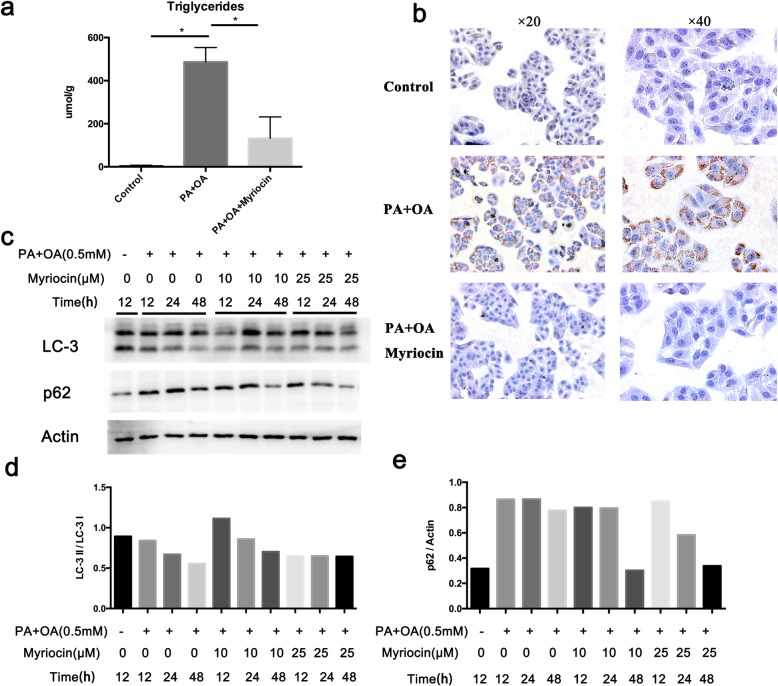
Myriocin reversed the elevated body weight and serum transaminases and alleviated dyslipidemia in HFD fed rats. Myriocin treatment significantly attenuated liver pathology including steatosis, lobular inflammation and ballooning. By qPCR analysis, it was revealed that myriocin corrected the expression pattern of fatty acid metabolism associated genes including Fabp1, Pparα, Cpt-1α and Acox-2. Further, myriocin also restored the impaired hepatic autophagy function in rats with HFD-induced NASH, and this has been verified in HepG2 cells. Among the sphingolipid species that we screened in lipidomic profiles, significantly increased ceramide was observed in NASH patients as compared to the controls and non-NASH patients, regardless of whether or not they have active CHB.
Ceramide may play an important regulatory role in the autophagy function in the pathogenesis of NASH. Hence, blockade of ceramide signaling by myriocin may be of therapeutically beneficial in NASH.
Registration ID: ChiCTR-DDT-13003983 . Data of registration: 13 May, 2013, retrospectively registered.
神经酰胺通过多种机制在非酒精性脂肪性肝病(NAFLD)中发挥致病作用,因此抑制肝脏中神经酰胺的从头合成可能对 NAFLD 患者具有治疗益处。在这项研究中,我们旨在通过调节自噬来探索通过抑制神经酰胺信号传导是否对 NAFLD 动物模型有益。
将 Sprague Dawley 大鼠随机分为三组:标准饲料(n = 10)、高脂肪饮食(HFD)(n = 10)或 HFD 联合隔日口服千里光素(0.3mg/kg,连续 8 周)(n = 10)。测量肝组织学和自噬功能。用脂肪酸孵育 HepG2 细胞,或用千里光素处理。分析 HepG2 细胞中的脂质积累和自噬标志物。在 104 名健康成年人、经肝活检证实的 NAFLD 患者和经肝活检证实的慢性乙型肝炎(CHB)患者中研究血清神经酰胺的变化。
千里光素逆转了 HFD 喂养大鼠的体重升高和血清转氨酶升高,并减轻了血脂异常。千里光素治疗显著减轻了肝组织病理学改变,包括脂肪变性、小叶炎症和气球样变。通过 qPCR 分析,发现千里光素纠正了脂肪酸代谢相关基因的表达模式,包括 Fabp1、Pparα、Cpt-1α 和 Acox-2。此外,千里光素还恢复了 HFD 诱导的 NASH 大鼠受损的肝自噬功能,这在 HepG2 细胞中得到了验证。在我们筛选的脂质组学谱中的神经酰胺种类中,与对照组和非 NASH 患者相比,NASH 患者的神经酰胺显著增加,无论他们是否患有活动性 CHB。
神经酰胺可能在 NASH 发病机制中的自噬功能中发挥重要调节作用。因此,通过千里光素阻断神经酰胺信号可能对 NASH 具有治疗益处。
注册号:ChiCTR-DDT-13003983。注册日期:2013 年 5 月 13 日,回顾性注册。