Van Reckem Emiel, Geeraerts Wim, Charmpi Christina, Van der Veken David, De Vuyst Luc, Leroy Frédéric
Research Group of Industrial Microbiology and Food Biotechnology (IMDO), Faculty of Sciences and Bioengineering Sciences, Vrije Universiteit Brussel, Brussels, Belgium.
Front Microbiol. 2019 Oct 9;10:2302. doi: 10.3389/fmicb.2019.02302. eCollection 2019.
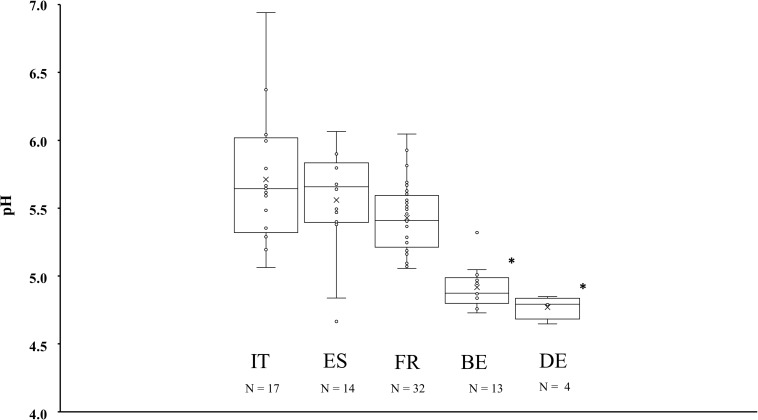
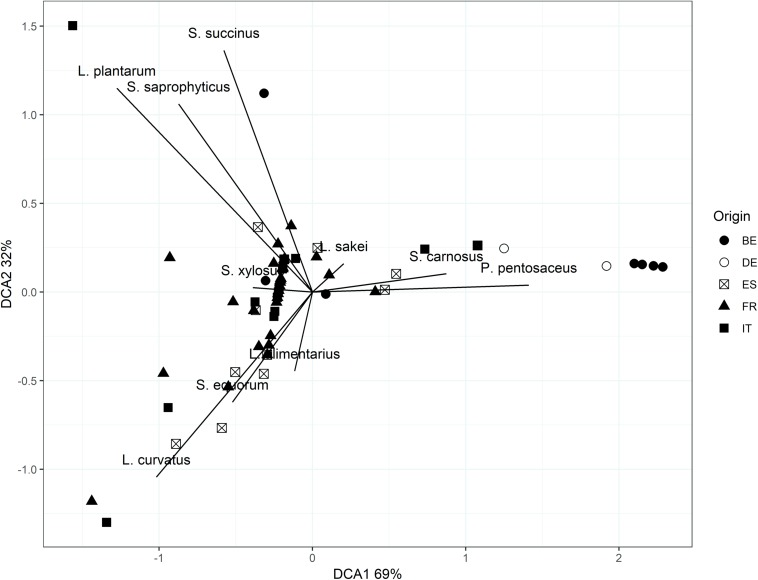
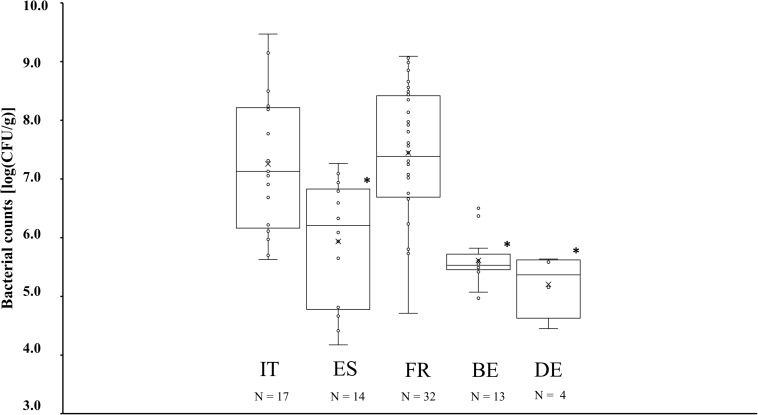
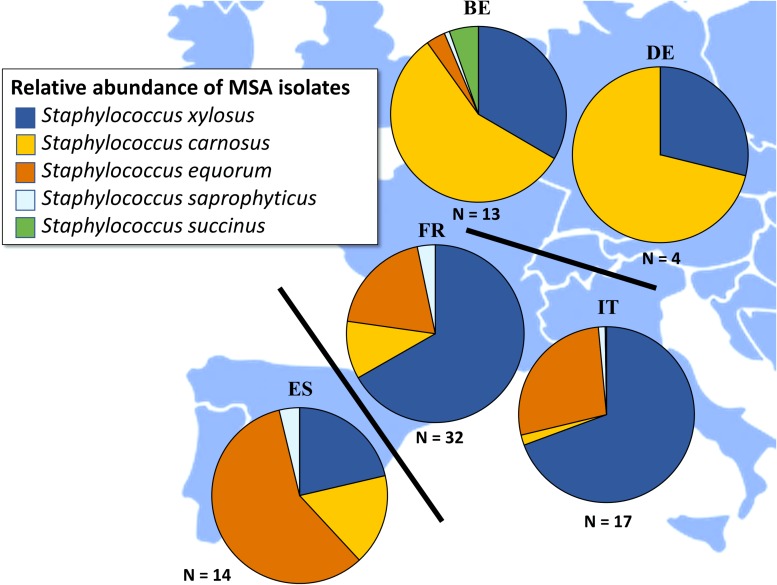
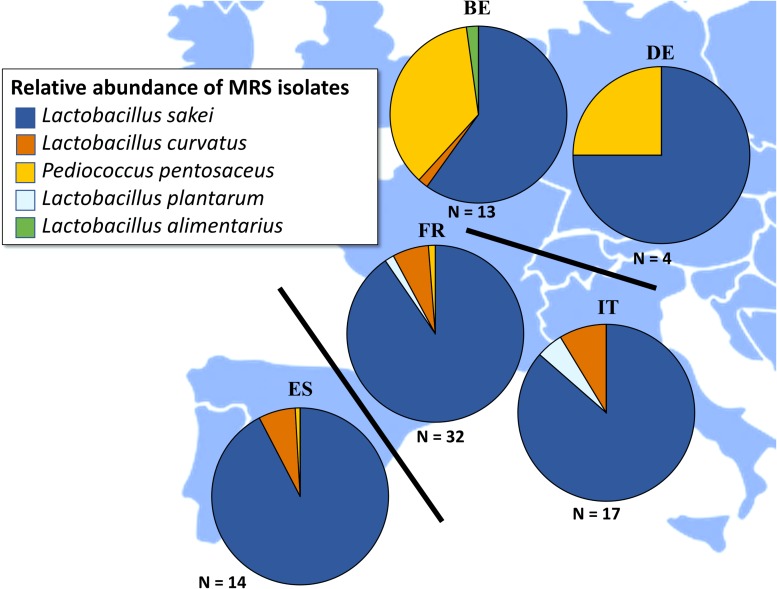
European fermented meat products are prepared according to a wide variety of different recipes and processing conditions, which can influence their fermentative microbiota. However, due to the diverse processing conditions applied across Europe, it remained unclear to which degree bacterial heterogeneity can be encountered in commercially available fermented meat products and whether this is linked to their geographical origin. Therefore, the bacterial species diversity of 80 fermented meat products available in the Belgian retail, coming from five different countries, was investigated. It was also assessed how this related to the country of origin and the key processing parameters pH and salt concentration. The samples originated from Belgium, France, Germany, Italy, and Spain. In general, Southern European fermented meat products commonly had a higher pH, with their lactic acid bacteria (LAB) communities being represented by and with mostly and governing over the coagulase-negative staphylococci (CNS) communities. Among these products, the Spanish variants showed a higher prevalence of , whereas was the prevailing CNS species in most French and Italian fermented meat products. In contrast, Northern European fermented meat products were generally more acidified and showed a higher prevalence of in their LAB communities, whereas represented the CNS communities. Non-parametric statistical tests indicated the impact of the geographical origin on the prevalence of the LAB and CNS species. The latter was likely due to the combination of differences in process technology as well as starter culture use.
欧洲发酵肉制品是根据各种各样不同的配方和加工条件制备的,这些条件会影响其发酵微生物群。然而,由于欧洲各地采用的加工条件多种多样,市售发酵肉制品中细菌的异质性程度以及这是否与其地理来源有关仍不清楚。因此,对来自五个不同国家、在比利时零售市场上可买到的80种发酵肉制品的细菌种类多样性进行了调查。还评估了这与原产国以及关键加工参数pH值和盐浓度之间的关系。这些样品来自比利时、法国、德国、意大利和西班牙。总体而言,南欧发酵肉制品的pH值通常较高,其乳酸菌(LAB)群落以……为代表,并且大多是……和……在凝固酶阴性葡萄球菌(CNS)群落中占主导地位。在这些产品中,西班牙变种的……患病率较高,而在大多数法国和意大利发酵肉制品中,……是主要的CNS菌种。相比之下,北欧发酵肉制品通常酸化程度更高,其LAB群落中……的患病率更高,而……代表CNS群落。非参数统计检验表明地理来源对LAB和CNS菌种患病率的影响。后者可能是由于加工技术差异以及发酵剂使用情况的综合作用。