Actalia, Food Safety Department, F-50000, Saint-Lô, France.
LCPME, UMR 7564 CNRS, University of Lorraine, F-54601, Villers-lès-Nancy, France.
Sci Rep. 2019 Oct 25;9(1):15312. doi: 10.1038/s41598-019-51750-4.
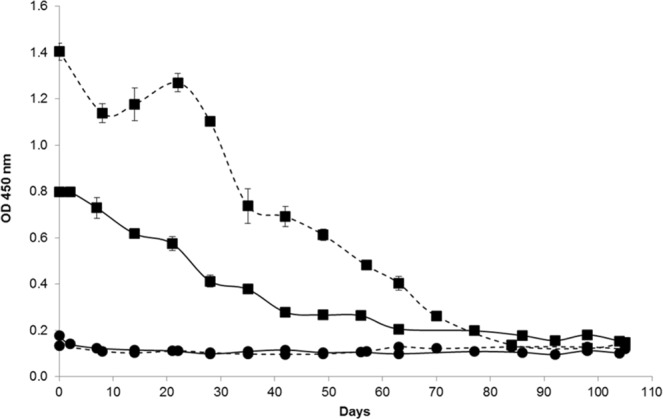
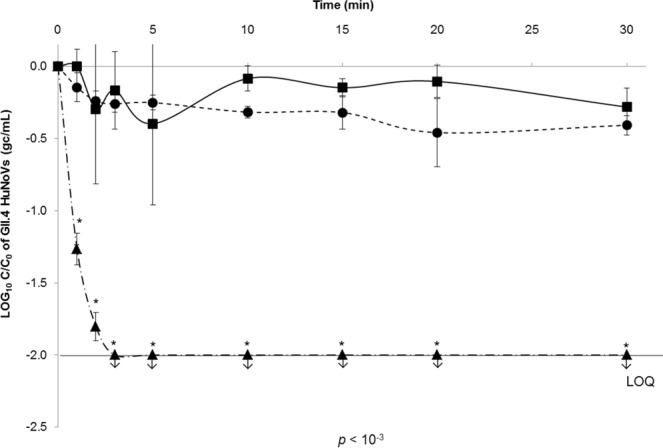
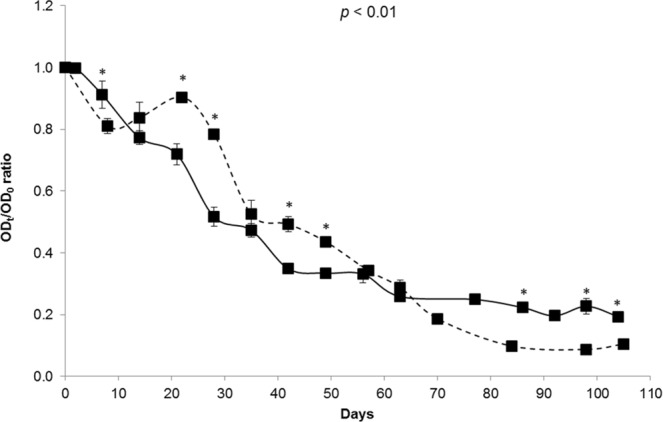
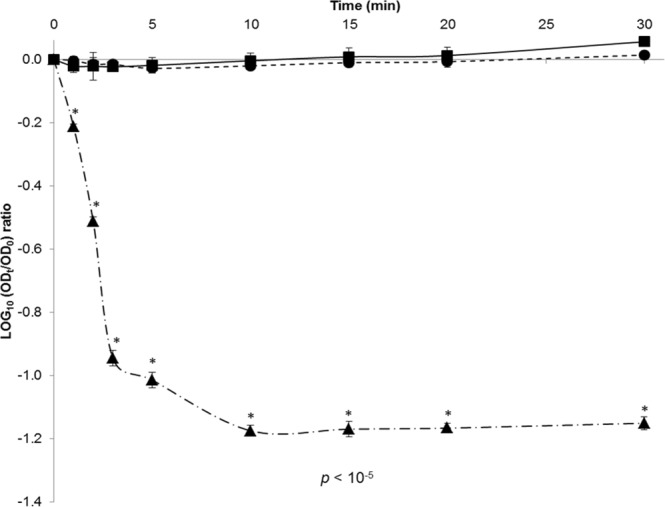
Human noroviruses (HuNoVs) are the leading cause of viral foodborne outbreaks worldwide. To date, no available methods can be routinely used to detect infectious HuNoVs in foodstuffs. HuNoVs recognize Histo-Blood Group Antigens (HBGAs) through the binding pocket (BP) of capsid protein VP1, which promotes infection in the host cell. In this context, the suitability of human HBGA-binding assays to evaluate the BP integrity of HuNoVs was studied on GII.4 virus-like particles (VLPs) and GII.4 HuNoVs during natural ageing at 20 °C and heat treatments. Our results demonstrate that this approach may reduce the over-estimation of potential infectious HuNoVs resulting from solely using the genome detection, even though some limitations have been identified. The specificity of HBGA-binding to the BP is clearly dependent on the HGBA type (as previously evidenced) and the ionic strength of the media without disturbing such interactions. This study also provides new arguments regarding the ability of VLPs to mimic HuNoV behavior during inactivation treatments. The BP stability of VLPs was at least 4.3 fold lower than that of HuNoVs at 20 °C, whereas capsids of both particles were disrupted at 72 °C. Thus, VLPs are relevant surrogates of HuNoVs for inactivation treatments inducing significant changes in the capsid structure.
人类诺如病毒(HuNoVs)是全球病毒性食源性疾病暴发的主要原因。迄今为止,尚无常规方法可用于检测食品中的传染性 HuNoVs。HuNoVs 通过衣壳蛋白 VP1 的结合口袋(BP)识别组织血型抗原(HBGA),从而促进宿主细胞的感染。在这种情况下,研究了人类 HBGA 结合测定法在 20°C 和热处理过程中用于评估 GII.4 病毒样颗粒(VLPs)和 GII.4 HuNoVs 的 BP 完整性的适用性。我们的结果表明,即使存在一些局限性,这种方法也可能减少由于仅使用基因组检测而导致的对潜在传染性 HuNoVs 的过度估计。HBGA 与 BP 的结合特异性显然取决于 HGBA 类型(如前所述)和介质的离子强度,而不会干扰这些相互作用。本研究还就 VLPs 在失活处理过程中模拟 HuNoV 行为的能力提供了新的论据。在 20°C 下,VLPs 的 BP 稳定性比 HuNoVs 至少低 4.3 倍,而两种颗粒的衣壳均在 72°C 下被破坏。因此,VLPs 是用于诱导衣壳结构发生重大变化的失活处理的 HuNoVs 的相关替代物。