University of Ulsan College of Medicine, Asan Medical Center, Department of Convergence Medicine, Seoul, South Korea.
University of Ulsan College of Medicine, Asan Medical Center, Department of Radiology and Research Institute of Radiology, Seoul, Korea.
Sci Rep. 2019 Oct 25;9(1):15352. doi: 10.1038/s41598-019-51832-3.
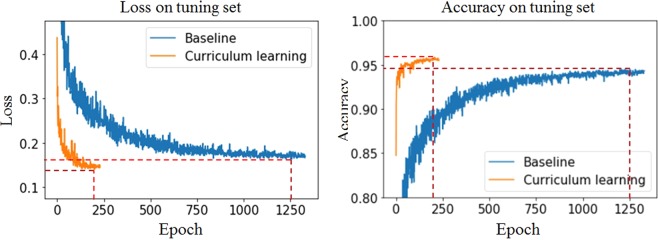
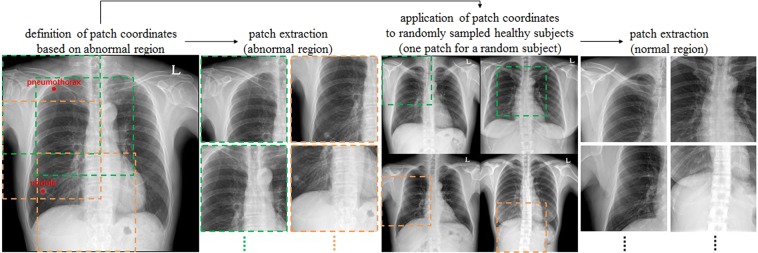
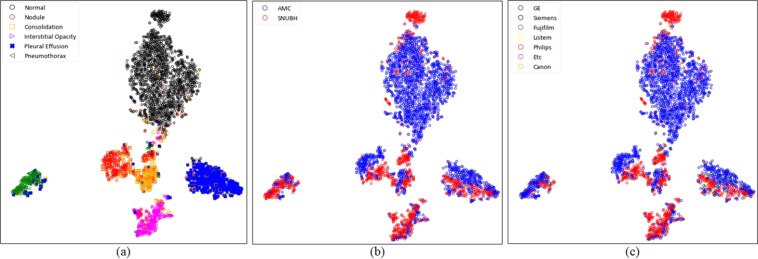
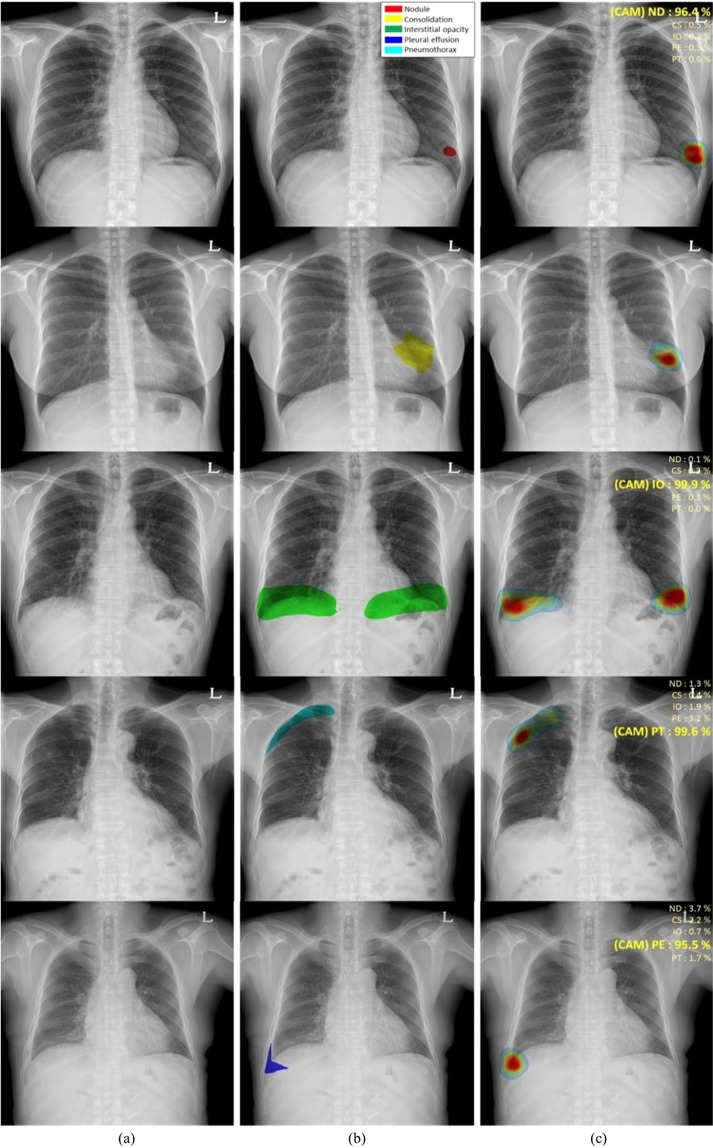
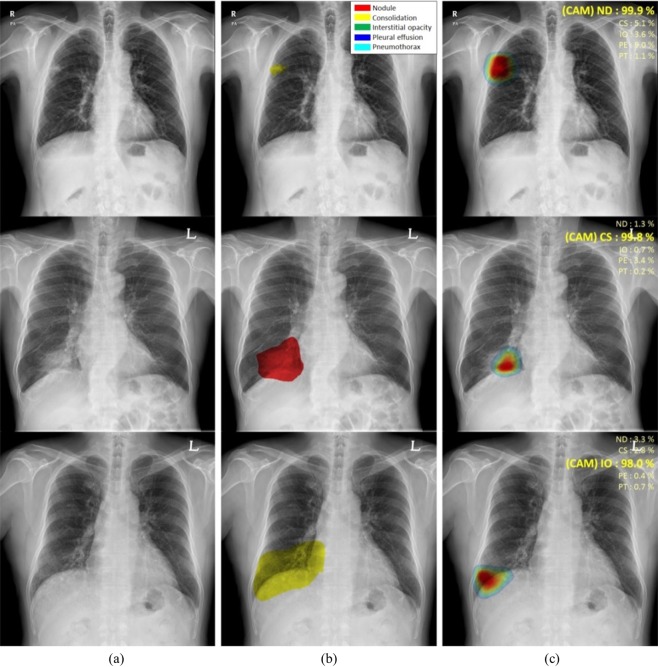
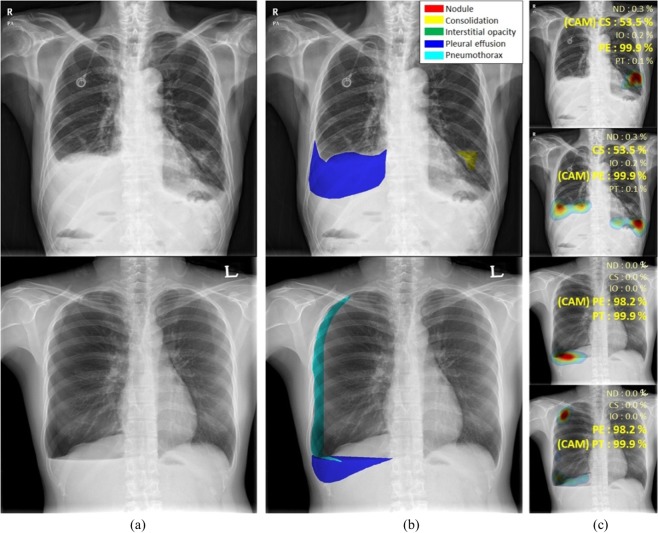
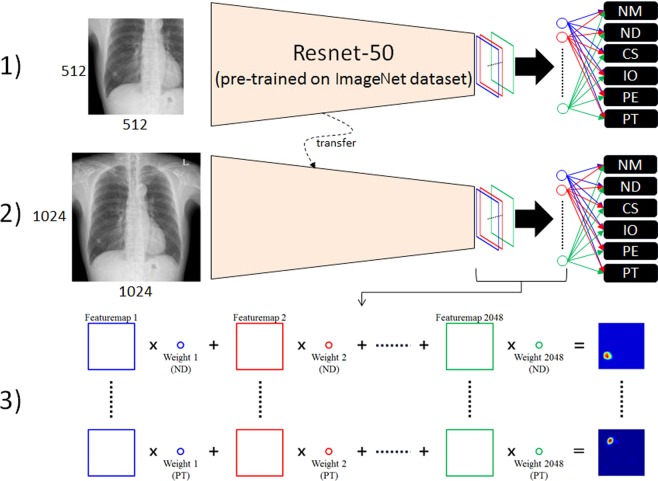
We evaluated the efficacy of a curriculum learning strategy using two steps to detect pulmonary abnormalities including nodule[s], consolidation, interstitial opacity, pleural effusion, and pneumothorax with chest-PA X-ray (CXR) images from two centres. CXR images of 6069 healthy subjects and 3417 patients at AMC and 1035 healthy subjects and 4404 patients at SNUBH were obtained. Our approach involved two steps. First, the regional patterns of thoracic abnormalities were identified by initial learning of patch images around abnormal lesions. Second, Resnet-50 was fine-tuned using the entire images. The network was weakly trained and modified to detect various disease patterns. Finally, class activation maps (CAM) were extracted to localise and visualise the abnormal patterns. For average disease, the sensitivity, specificity, and area under the curve (AUC) were 85.4%, 99.8%, and 0.947, respectively, in the AMC dataset and 97.9%, 100.0%, and 0.983, respectively, in the SNUBH dataset. This curriculum learning and weak labelling with high-scale CXR images requires less preparation to train the system and could be easily extended to include various diseases in actual clinical environments. This algorithm performed well for the detection and classification of five disease patterns in CXR images and could be helpful in image interpretation.
我们评估了一种使用两步法的课程学习策略的疗效,该策略用于从两个中心的胸部 PA X 射线(CXR)图像中检测肺异常,包括结节、实变、间质混浊、胸腔积液和气胸。我们的方法涉及两个步骤。首先,通过对异常病变周围的斑块图像进行初步学习,确定胸部异常的区域模式。其次,使用整个图像对 Resnet-50 进行微调。该网络进行了弱训练和修改,以检测各种疾病模式。最后,提取类激活图(CAM)以定位和可视化异常模式。对于常见疾病,在 AMC 数据集的灵敏度、特异性和曲线下面积(AUC)分别为 85.4%、99.8%和 0.947,在 SNUBH 数据集的灵敏度、特异性和 AUC 分别为 97.9%、100.0%和 0.983。这种使用大规模 CXR 图像的课程学习和弱标签需要较少的准备来训练系统,并且可以轻松扩展到实际临床环境中的各种疾病。该算法在 CXR 图像中五种疾病模式的检测和分类方面表现良好,有助于图像解释。