Xu Yihan, Guo Zhen, Huang Liangyu, Gong Jianfeng, Li Yi, Gu Lili, Shen Weisong, Zhu Weiming
Nanjing Medical University, Nanjing, China Research Institute of General Surgery, Jinling Hospital, Nanjing, China.
Research Institute of General Surgery, Jinling Hospital, Nanjing, China.
Therap Adv Gastroenterol. 2019 Oct 11;12:1756284819881301. doi: 10.1177/1756284819881301. eCollection 2019.
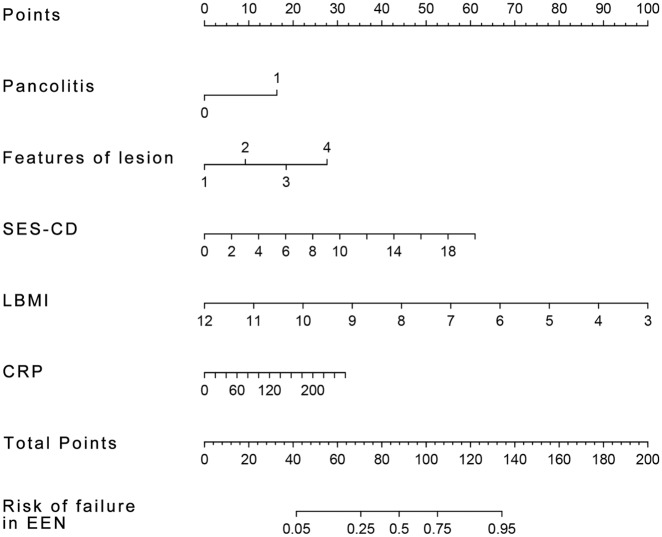
Isolated colonic Crohn's disease (cCD) responds less well to induction therapy with exclusive enteral nutrition (EEN) compared with ileal or ileocolonic disease in adult patients; therefore, we aimed to identify the factors that influence the response to EEN and develop a predictive nomogram model to optimize the use of EEN in cCD patients.
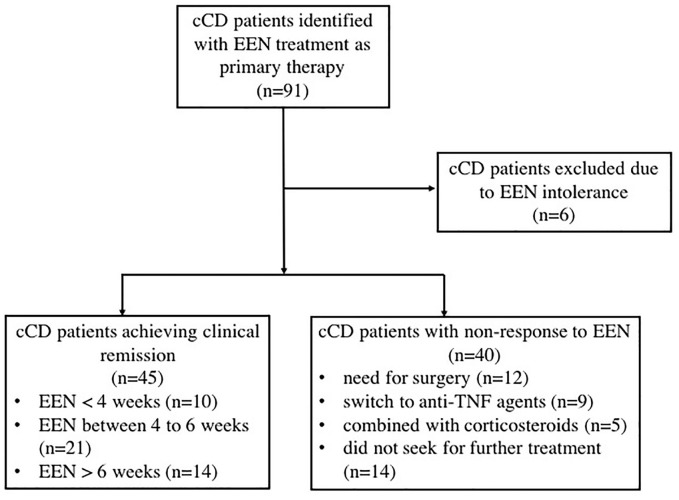
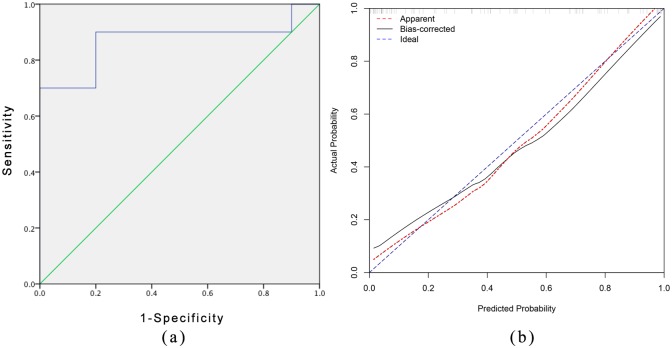
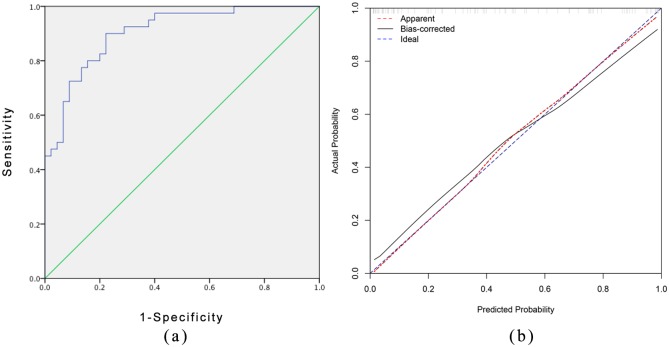
Eighty-five cCD patients treated with EEN as first-line therapy at our center between 1 June 2012 and 30 June 2018 were retrospectively analyzed as the primary cohort. The primary endpoint was clinical remission after EEN therapy. Potential predictive factors for the efficacy of EEN were assessed by univariate and multivariate analyses, and a nomogram to predict the response to EEN therapy in cCD patients was designed. Another 19 cCD patients were retrospectively included in the validation cohort to verify the accuracy of the nomogram model.
The clinical remission rates for the primary cohort and validation cohort were 52.9% and 47.4%, respectively. Pancolitis was the greatest contributor to the risk of failure to respond to EEN [odds ratio (OR) = 4.896; 95% confidence interval (CI) = 1.223-19.607; = 0.025], lean body mass index (LBMI), colonic lesion features, simple endoscopic scores for Crohn's disease, C-reactive protein before treatment and ∆prealbumin were also related to the efficacy of EEN in cCD. The nomogram model showed robust discrimination, with an area under the receiving operating characteristic curve of 0.906.
Several predictive factors for response to EEN therapy in cCD adult patients were identified, and a promising nomogram that can predict the effect of EEN in cCD was developed.
与成年患者的回肠或回结肠疾病相比,孤立性结肠克罗恩病(cCD)对全肠内营养(EEN)诱导治疗的反应较差;因此,我们旨在确定影响对EEN反应的因素,并开发一种预测列线图模型,以优化EEN在cCD患者中的使用。
回顾性分析2012年6月1日至2018年6月30日在本中心接受EEN作为一线治疗的85例cCD患者作为主要队列。主要终点是EEN治疗后的临床缓解。通过单因素和多因素分析评估EEN疗效的潜在预测因素,并设计了一个预测cCD患者对EEN治疗反应的列线图。另外19例cCD患者被回顾性纳入验证队列,以验证列线图模型的准确性。
主要队列和验证队列的临床缓解率分别为52.9%和47.4%。全结肠炎是对EEN无反应风险的最大因素[比值比(OR)=4.896;95%置信区间(CI)=1.223-19.607;P=0.025],瘦体重指数(LBMI)、结肠病变特征、克罗恩病简单内镜评分、治疗前C反应蛋白和前白蛋白变化也与EEN在cCD中的疗效相关。列线图模型显示出强大的区分能力,受试者工作特征曲线下面积为0.906。
确定了cCD成年患者对EEN治疗反应的几个预测因素,并开发了一种有前景的可预测EEN在cCD中效果的列线图。