Department of Cell Biology, Radboudumc, Nijmegen, Netherlands.
Department of Dermatology, Venerology, and Allergology, University of Würzburg, Germany.
J Exp Med. 2020 Jan 6;217(1). doi: 10.1084/jem.20181184.
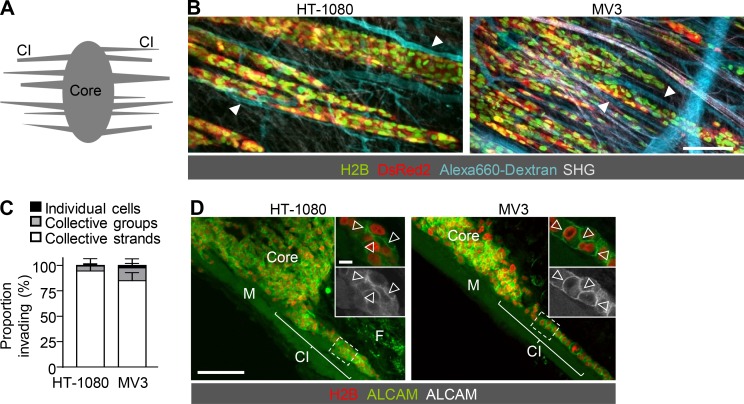
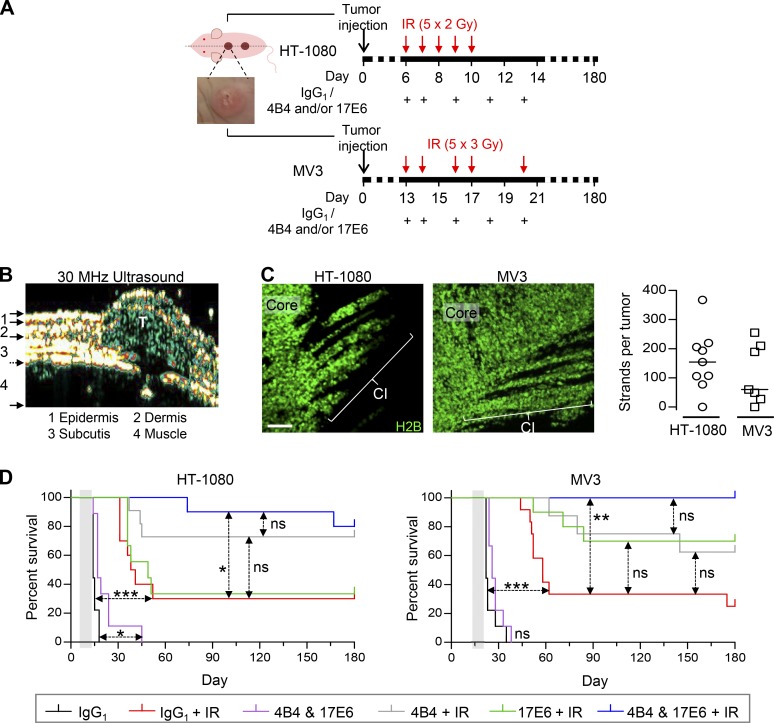
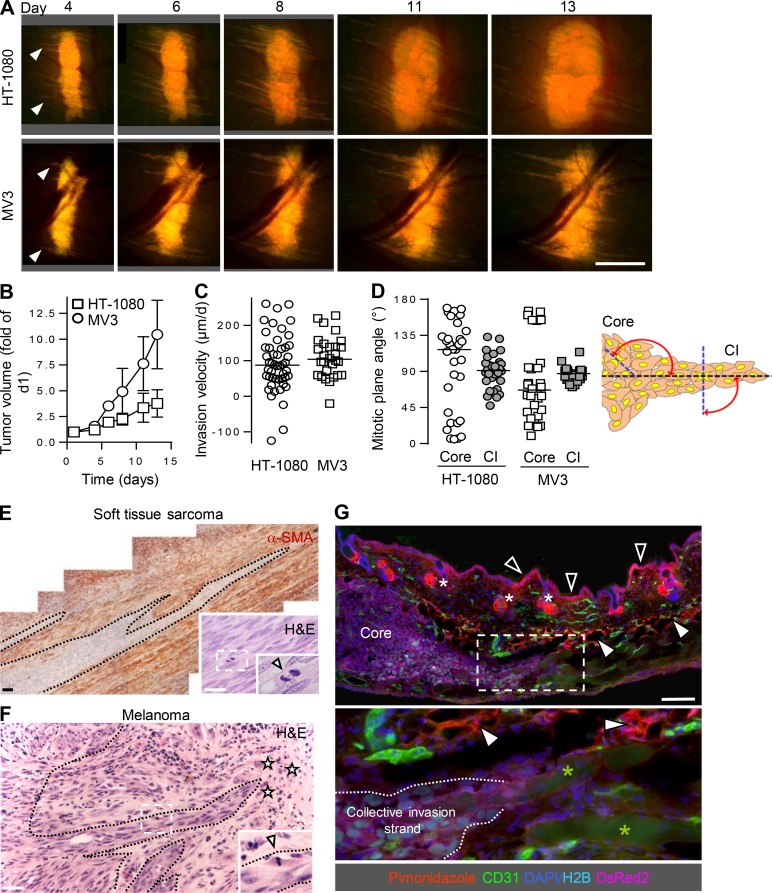
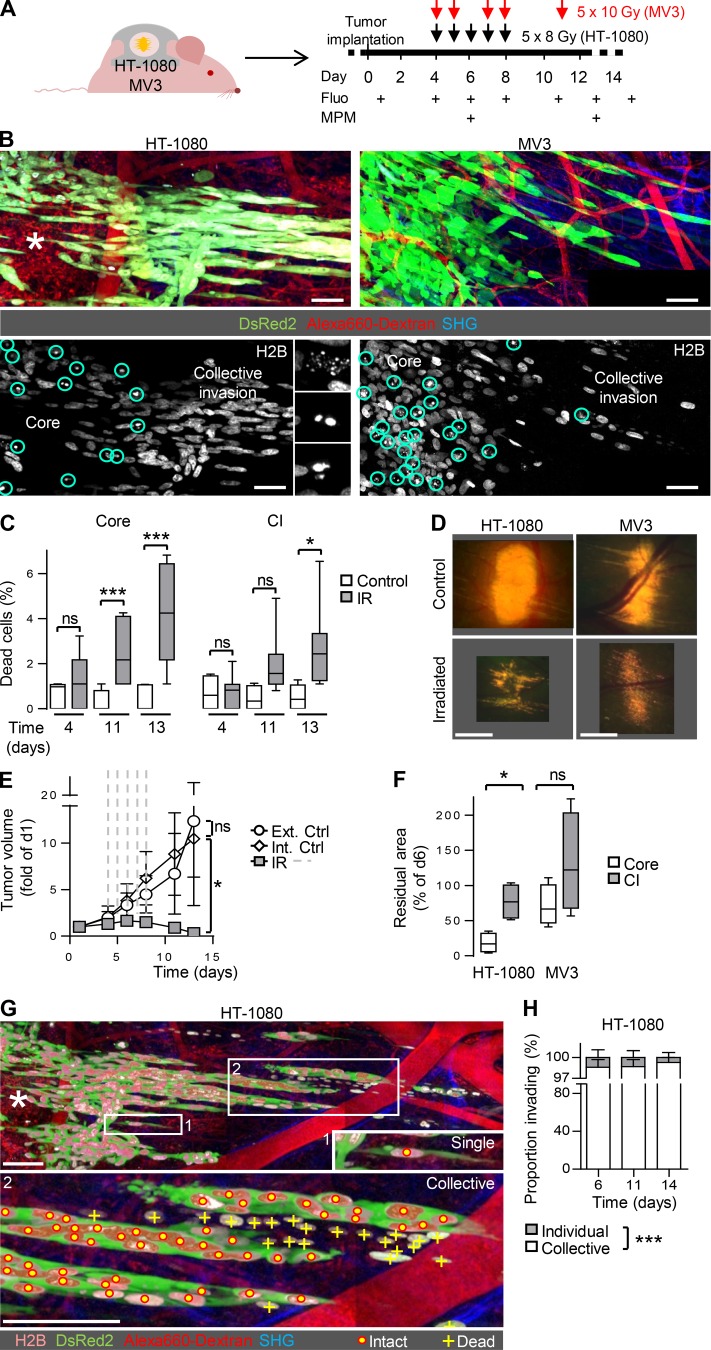
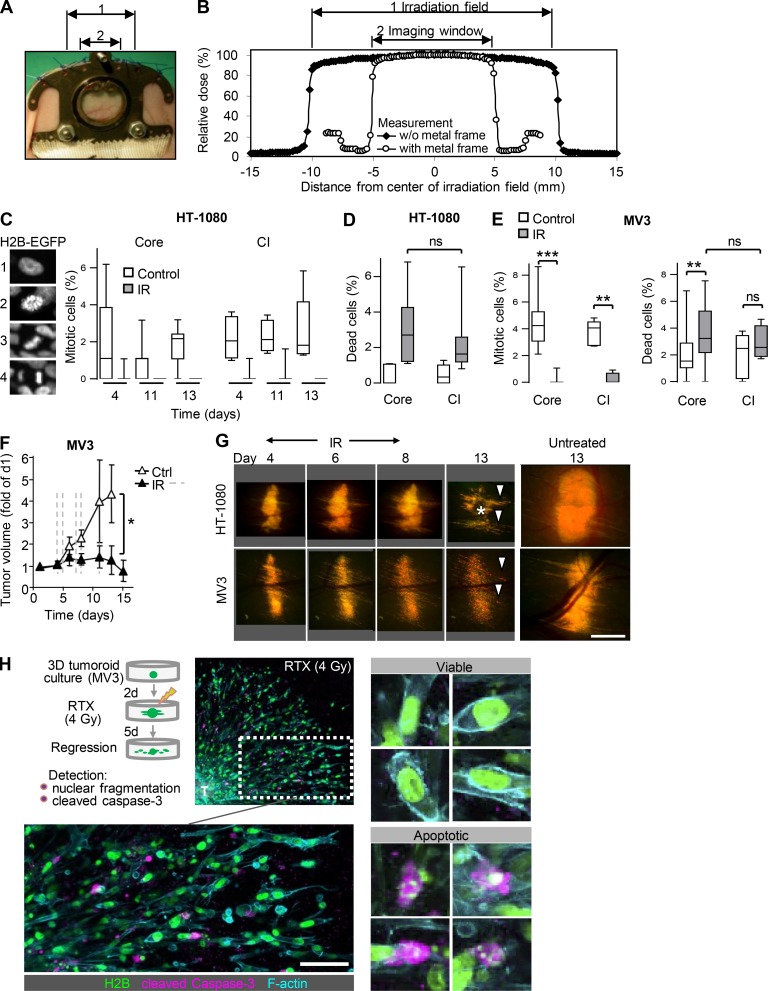
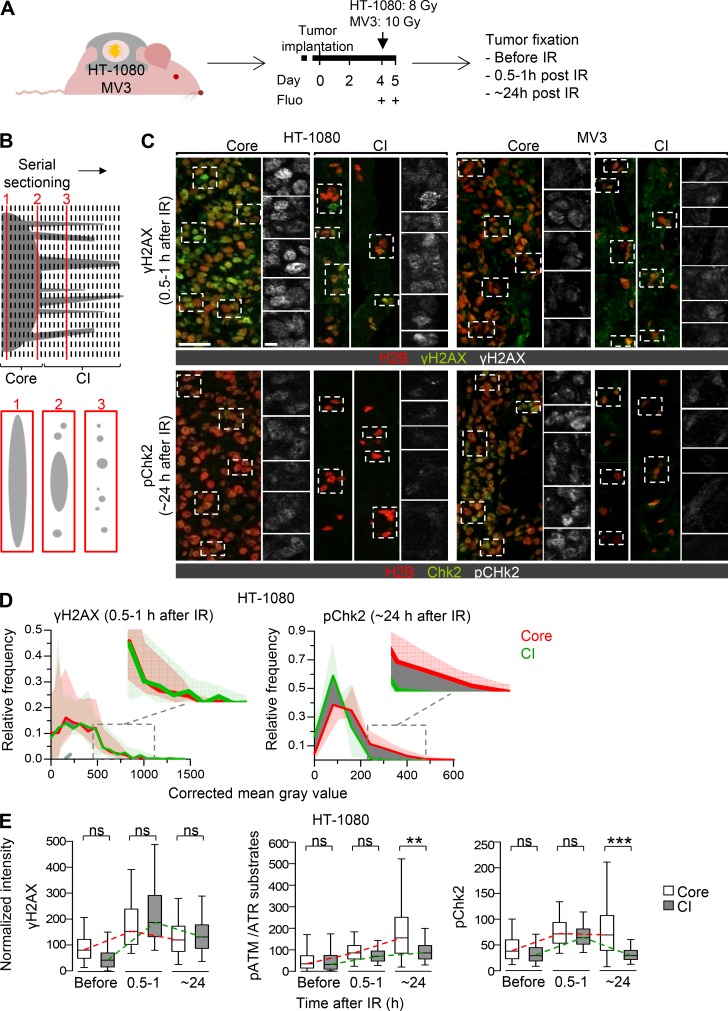
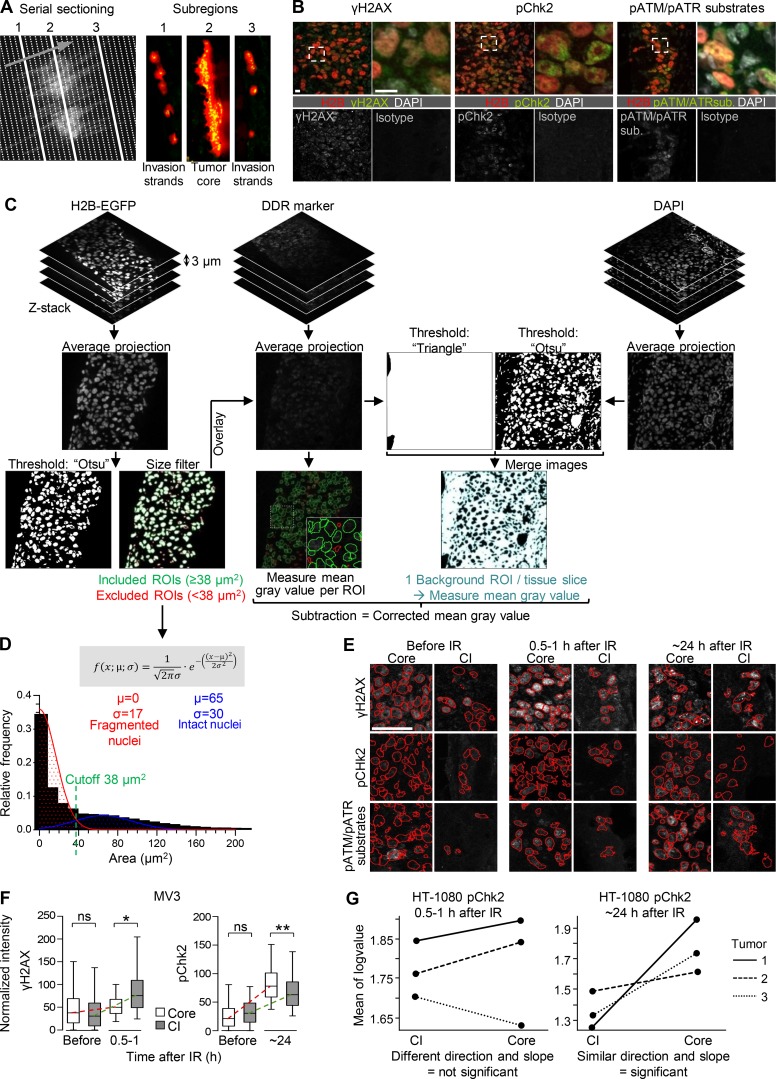
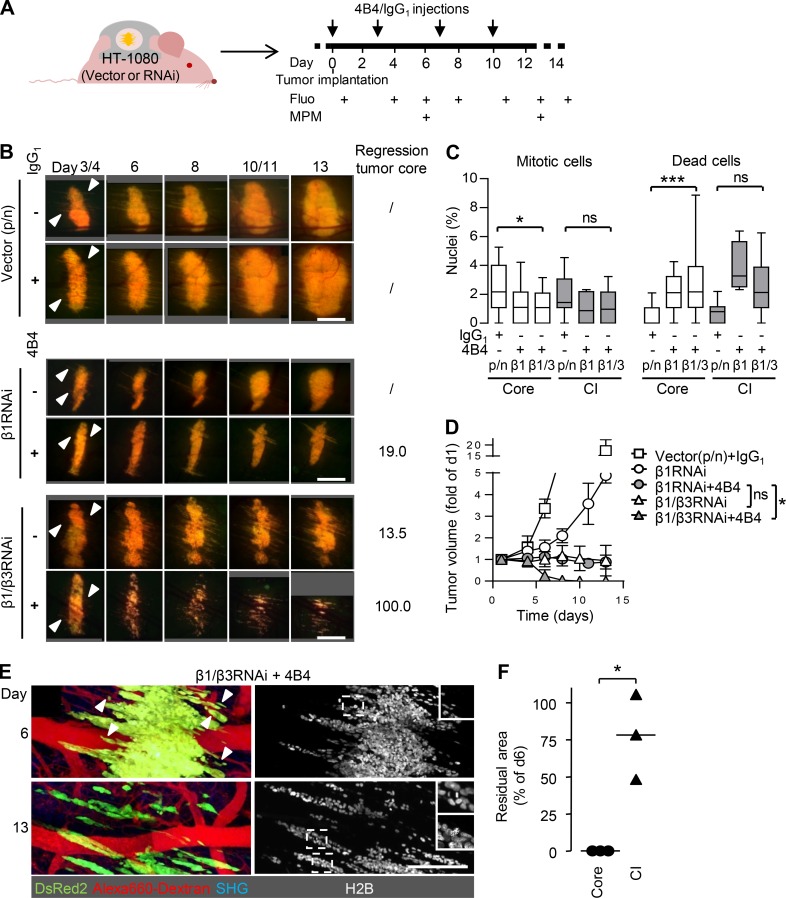
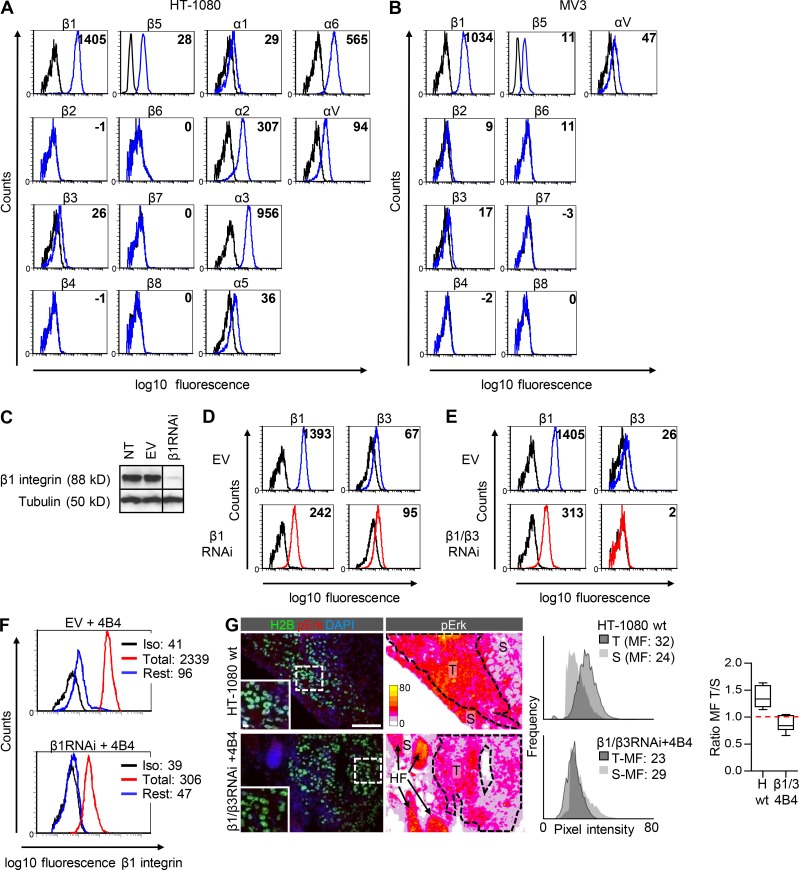
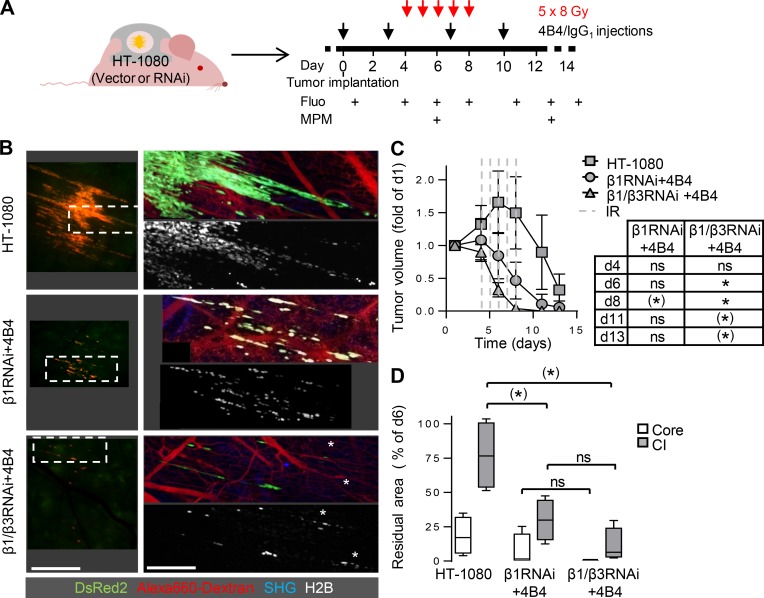
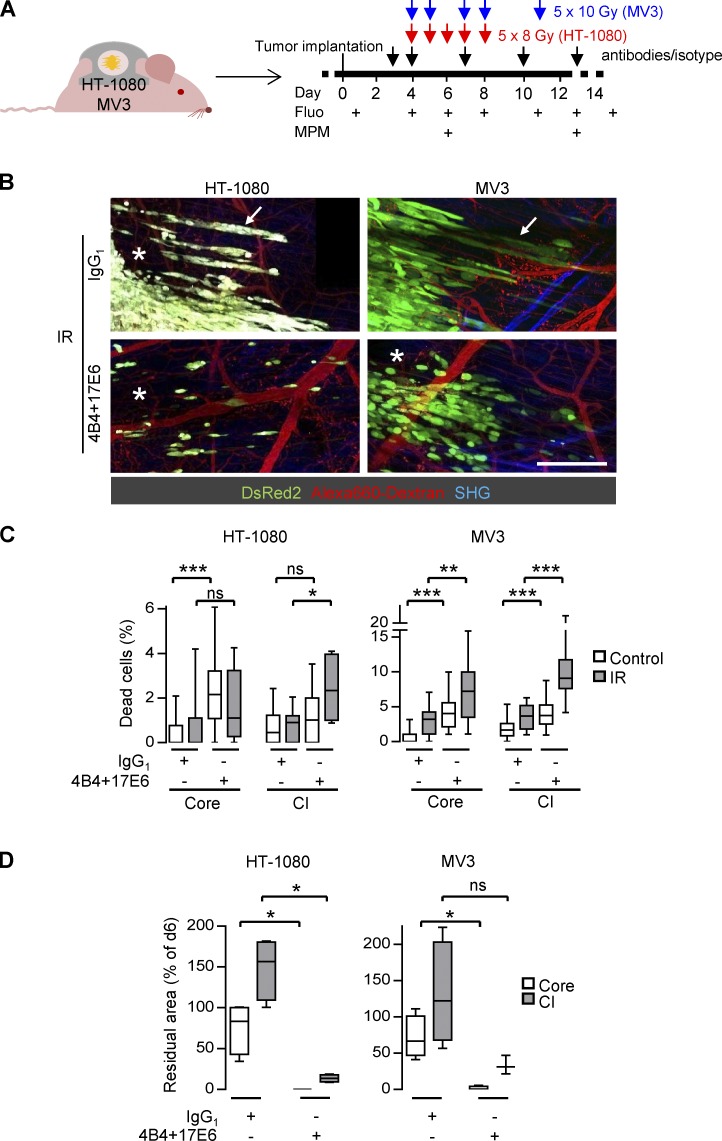
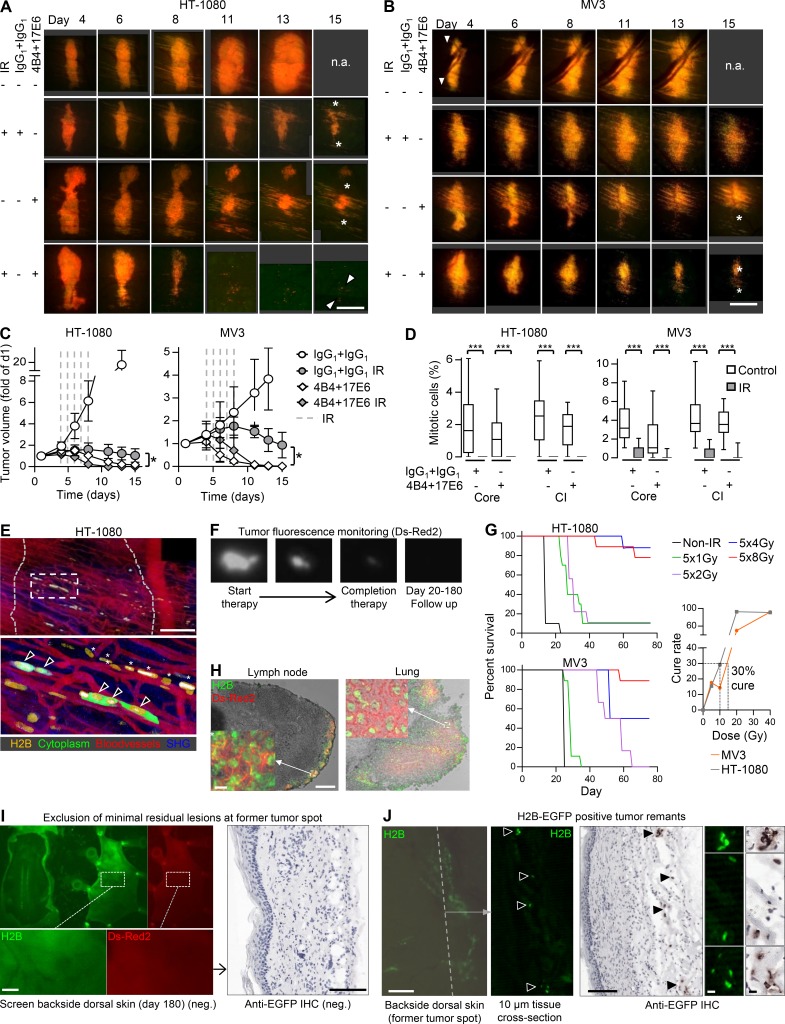
Cancer fatalities result from metastatic dissemination and therapy resistance, both processes that depend on signals from the tumor microenvironment. To identify how invasion and resistance programs cooperate, we used intravital microscopy of orthotopic sarcoma and melanoma xenografts. We demonstrate that these tumors invade collectively and that, specifically, cells within the invasion zone acquire increased resistance to radiotherapy, rapidly normalize DNA damage, and preferentially survive. Using a candidate-based approach to identify effectors of invasion-associated resistance, we targeted β1 and αVβ3/β5 integrins, essential extracellular matrix receptors in mesenchymal tumors, which mediate cancer progression and resistance. Combining radiotherapy with β1 or αV integrin monotargeting in invading tumors led to relapse and metastasis in 40-60% of the cohort, in line with recently failed clinical trials individually targeting integrins. However, when combined, anti-β1/αV integrin dual targeting achieved relapse-free radiosensitization and prevented metastatic escape. Collectively, invading cancer cells thus withstand radiotherapy and DNA damage by β1/αVβ3/β5 integrin cross-talk, but efficient radiosensitization can be achieved by multiple integrin targeting.
癌症死亡是由转移性扩散和治疗耐药引起的,这两个过程都依赖于肿瘤微环境的信号。为了确定侵袭和耐药程序如何合作,我们使用了原位肉瘤和黑色素瘤异种移植的活体显微镜检查。我们证明这些肿瘤集体侵袭,具体来说,侵袭区的细胞获得了对放射治疗的更高抗性,迅速使 DNA 损伤正常化,并优先存活。我们使用基于候选的方法来鉴定与侵袭相关的耐药性效应物,靶向β1 和 αVβ3/β5 整联蛋白,这是间质肿瘤中必不可少的细胞外基质受体,介导癌症进展和耐药性。在侵袭性肿瘤中结合放射治疗和β1 或 αV 整联蛋白单靶向治疗,导致 40-60%的队列复发和转移,与最近单独靶向整联蛋白的临床试验失败一致。然而,当联合使用时,抗β1/αV 整联蛋白双重靶向治疗实现了无复发的放射增敏作用,并防止了转移性逃逸。总的来说,侵袭性癌细胞通过β1/αVβ3/β5 整联蛋白的串扰来耐受放射治疗和 DNA 损伤,但通过多种整联蛋白靶向治疗可以实现有效的放射增敏作用。