Department of Laboratory Medicine, Central Hospital of Panyu District, Guangzhou, Guangdong 511400, China.
School of Chemistry and Molecular Biosciences, The University of Queensland, St. Lucia, QLD, Australia.
Biomed Res Int. 2019 Sep 29;2019:1212369. doi: 10.1155/2019/1212369. eCollection 2019.
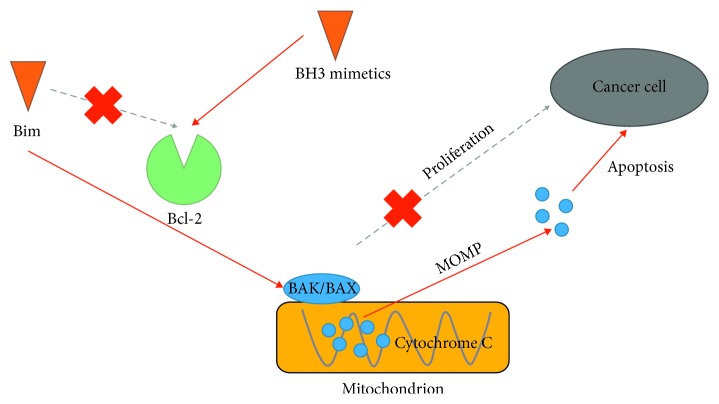
B-cell lymphoma 2 (Bcl-2) is a regulator protein involved in apoptosis. In the past few decades, this protein has been demonstrated to have high efficacy in cancer therapy, and several approaches targeting Bcl-2 have been tested clinically (e.g., oblimersen, ABT-737, ABT-263, obatoclax mesylate, and AT-101). This review reports potential Bcl-2 inhibitors according to current information on their underlying mechanism and the results of clinical trials. In addition, the function and mechanisms of other potentially valuable Bcl-2 inhibitors that did not show efficacy in clinical studies are also discussed. This summary of the development of Bcl-2 inhibitors provides worthwhile viewpoints on the use of biomedical approaches in future cancer therapy.
B 细胞淋巴瘤 2(Bcl-2)是一种参与细胞凋亡的调节蛋白。在过去的几十年中,已经证明这种蛋白在癌症治疗中具有很高的疗效,并且已经在临床上测试了几种针对 Bcl-2 的方法(例如,oblimersen、ABT-737、ABT-263、obatoclax 甲磺酸盐和 AT-101)。本综述根据其潜在机制和临床试验结果报告了潜在的 Bcl-2 抑制剂。此外,还讨论了在临床研究中未显示疗效的其他潜在有价值的 Bcl-2 抑制剂的功能和机制。Bcl-2 抑制剂的开发总结为未来癌症治疗中使用生物医学方法提供了有价值的观点。