School of Communication, University of Miami, Coral Gables, FL, USA.
Department of Communication Studies, University of Georgia, Athens, Georgia.
J Health Commun. 2019;24(12):865-877. doi: 10.1080/10810730.2019.1680773. Epub 2019 Oct 30.
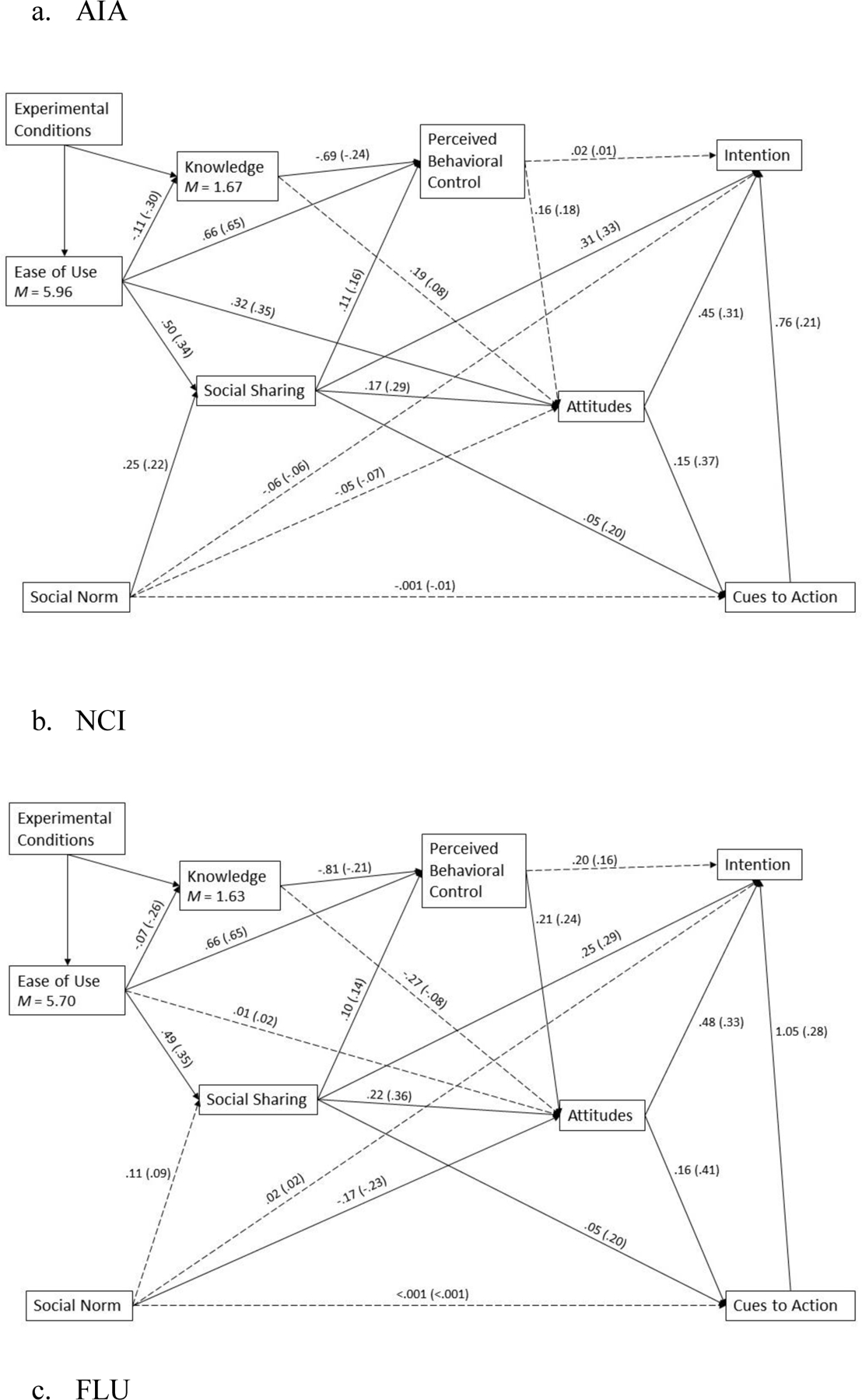
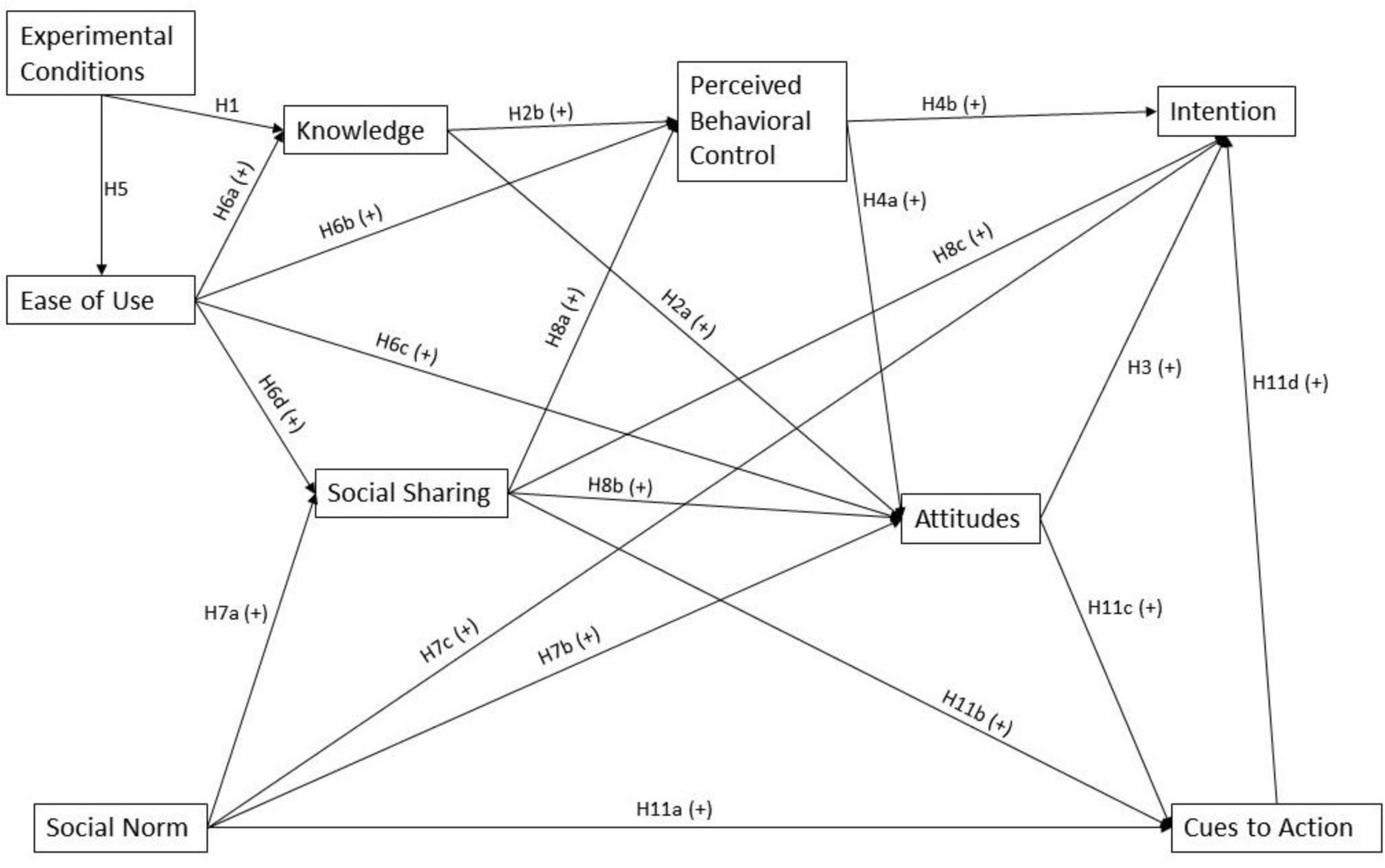
Enrollment rates for cancer clinical trials remain low, affecting the generalizability of new treatments. Research shows that many patients face significant challenges in understanding basic clinical trial vocabulary and making informed decisions about participation. Informational aids (IA) are developed to address these challenges and support decision making of cancer clinical trial participation. The present study proposed and tested a structural path model to explain the efficacy of three (i.e., interactive, non-interactive, non-cancer control) IAs. The results revealed that clinical trial participation intention was associated with attitudes and social constructs (i.e., social norm, social sharing, and cues to action). Ease of use, rather than knowledge, was the primary communication feature of IA that influenced the outcome variables. The path relations linking messages features, mediators, and outcome variables were different across all three IAs. The results therefore provide theoretical and practical implications for the use and development of IAs to support clinical trial accrual.
癌症临床试验的参与率仍然很低,影响了新治疗方法的推广性。研究表明,许多患者在理解基本临床试验词汇和做出参与决策方面面临重大挑战。信息辅助工具(IA)的开发旨在解决这些挑战并支持癌症临床试验参与的决策。本研究提出并测试了一个结构路径模型,以解释三种(即交互式、非交互式、非癌症对照)IA 的功效。结果表明,临床试验参与意向与态度和社会结构(即社会规范、社会分享和行动线索)有关。易用性而不是知识是影响结果变量的 IA 的主要沟通特征。消息特征、中介和结果变量之间的路径关系在所有三种 IA 中都不同。因此,这些结果为信息辅助工具的使用和开发提供了理论和实践意义,以支持临床试验的增加。