Rasouli Hamid Reza, Aliakbar Esfahani Ali, Abbasi Farajzadeh Mohsen
Trauma Research Center, Baqiyatallah University of Medical Sciences, Tehran, Iran.
Marine Medicine Research Center, Baqiyatallah University of Medical Sciences, Tehran, Iran.
BMC Emerg Med. 2019 Oct 30;19(1):62. doi: 10.1186/s12873-019-0275-9.
Emergency Department (ED) overcrowding adversely affects patients' health, accessibility, and quality of healthcare systems for communities. Several studies have addressed this issue. This study aimed to conduct a systematic review study concerning challenges, lessons and way outs of clinical emergencies at hospitals.
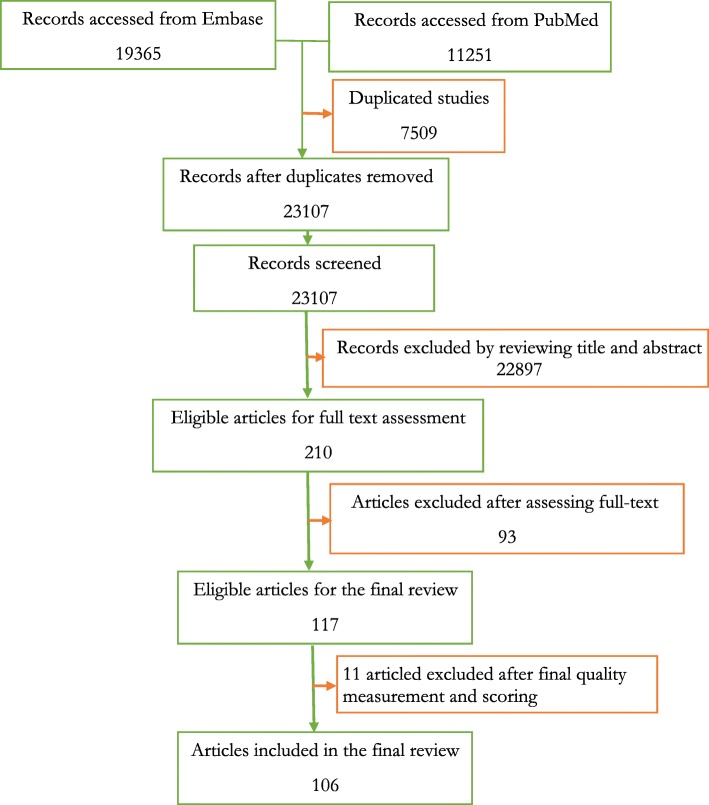
Original research articles on crowding of emergencies at hospitals published from 1st January 2007, and 1st August 2018 were utilized. Relevant studies from the PubMed and EMBASE databases were assessed using suitable keywords. Two reviewers independently screened the titles, abstracts and the methodological validity of the records using data extraction format before their inclusion in the final review. Discussions with the senior faculty member were used to resolve any disagreements among the reviewers during the assessment phase.
Out of the total 117 articles in the final record, we excluded 11 of them because of poor quality. Thus, this systematic review synthesized the reports of 106 original articles. Overall 14, 55 and 29 of the reviewed refer to causes, effects, and solutions of ED crowding, respectively. The review also included four articles on both causes and effects and another four on causes and solutions. Multiple individual patients and healthcare system related challenges, experiences and responses to crowding and its consequences are comprehensively synthesized.
ED overcrowding is a multi-facet issue which affects by patient-related factors and emergency service delivery. Crowding of the EDs adversely affected individual patients, healthcare delivery systems and communities. The identified issues concern organizational managers, leadership, and operational level actions to reduce crowding and improve emergency healthcare outcomes efficiently.
急诊科过度拥挤对患者健康、医疗服务可及性以及社区医疗系统质量产生不利影响。多项研究已探讨了这一问题。本研究旨在对医院临床急诊的挑战、经验教训及解决方法进行系统评价研究。
使用2007年1月1日至2018年8月1日发表的关于医院急诊拥挤情况的原始研究文章。通过合适的关键词对来自PubMed和EMBASE数据库的相关研究进行评估。两名评审员在将记录纳入最终评价之前,使用数据提取格式独立筛选记录的标题、摘要和方法学有效性。在评估阶段,与资深教员进行讨论以解决评审员之间的任何分歧。
在最终记录的117篇文章中,由于质量较差,我们排除了其中11篇。因此,本系统评价综合了106篇原始文章的报告。总体而言,所审查的文章中分别有14篇、55篇和29篇涉及急诊科拥挤的原因、影响和解决方案。该评价还包括4篇关于原因和影响的文章以及另外4篇关于原因和解决方案的文章。全面综合了多个与个体患者和医疗系统相关的挑战、应对拥挤情况及其后果的经验和措施。
急诊科过度拥挤是一个多方面的问题,受患者相关因素和急诊服务提供的影响。急诊科的拥挤对个体患者、医疗服务系统和社区产生了不利影响。所确定的问题涉及组织管理人员、领导层以及为有效减少拥挤和改善急诊医疗结果而采取的运营层面的行动。