Department of Physics, The Pennsylvania State University, University Park, Pennsylvania, United States of America.
Department of Biochemistry, Vanderbilt University Medical Center, Nashville, Tennessee, United States of America.
PLoS Comput Biol. 2019 Oct 31;15(10):e1007343. doi: 10.1371/journal.pcbi.1007343. eCollection 2019 Oct.
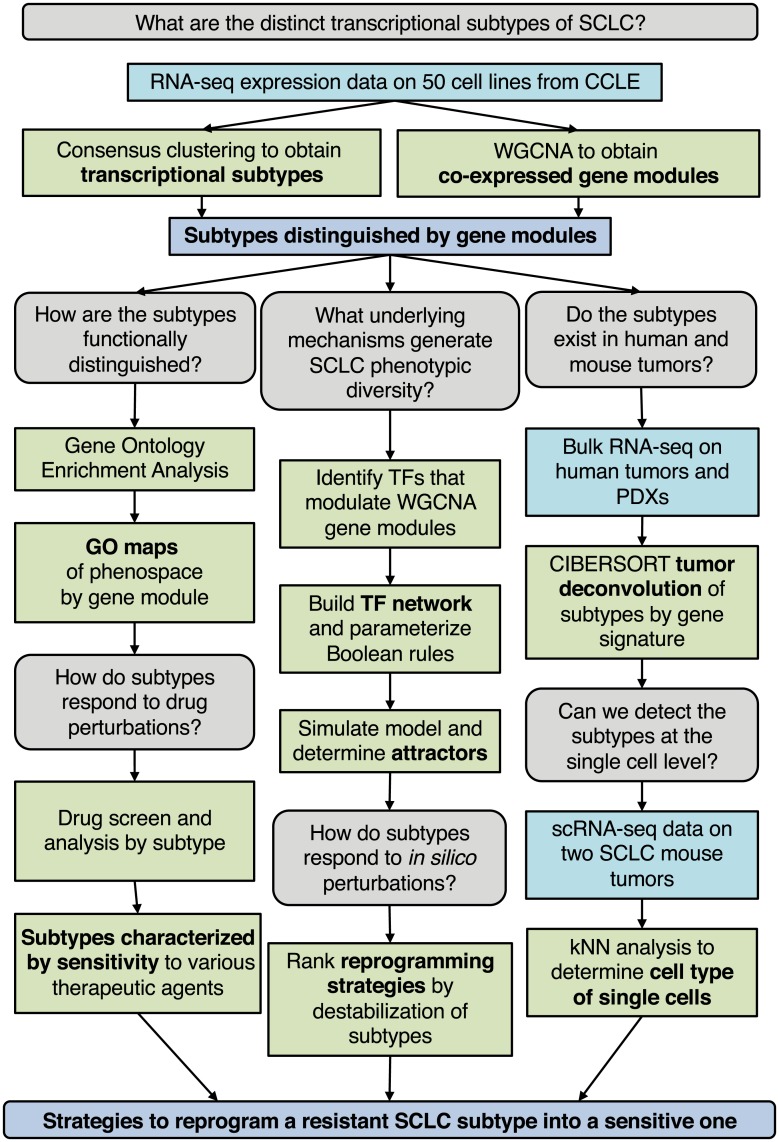
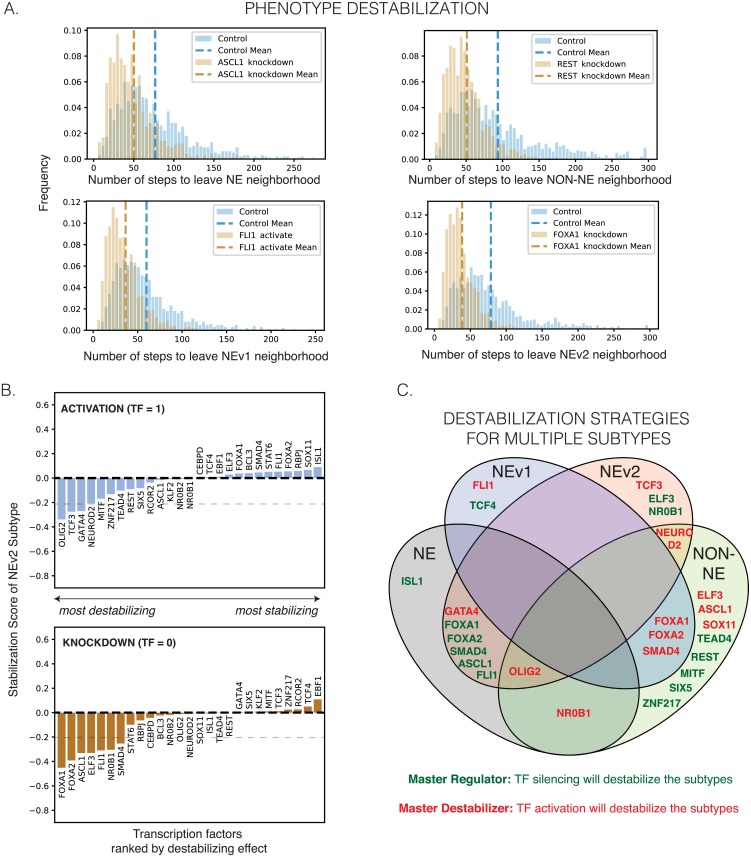
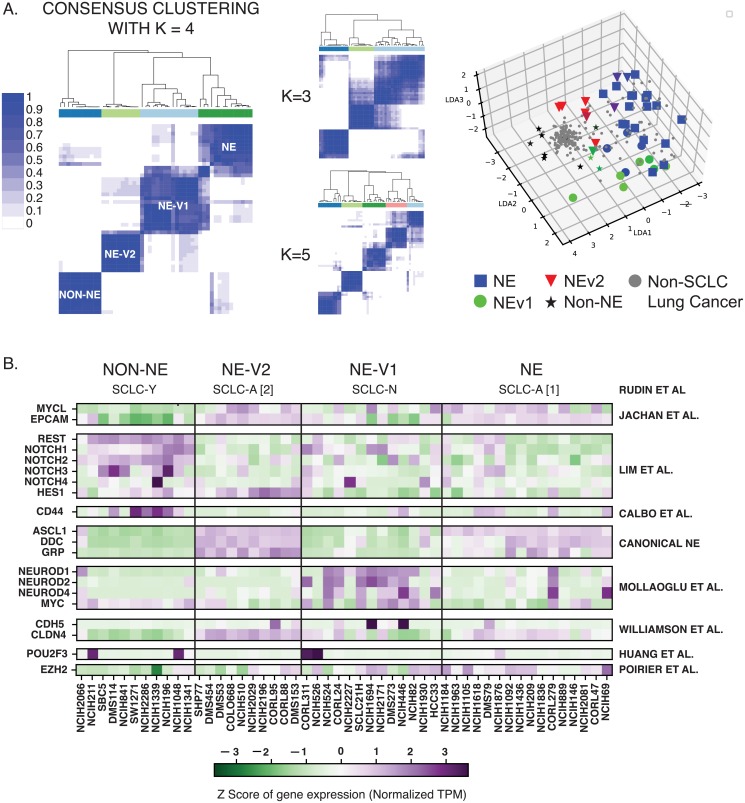
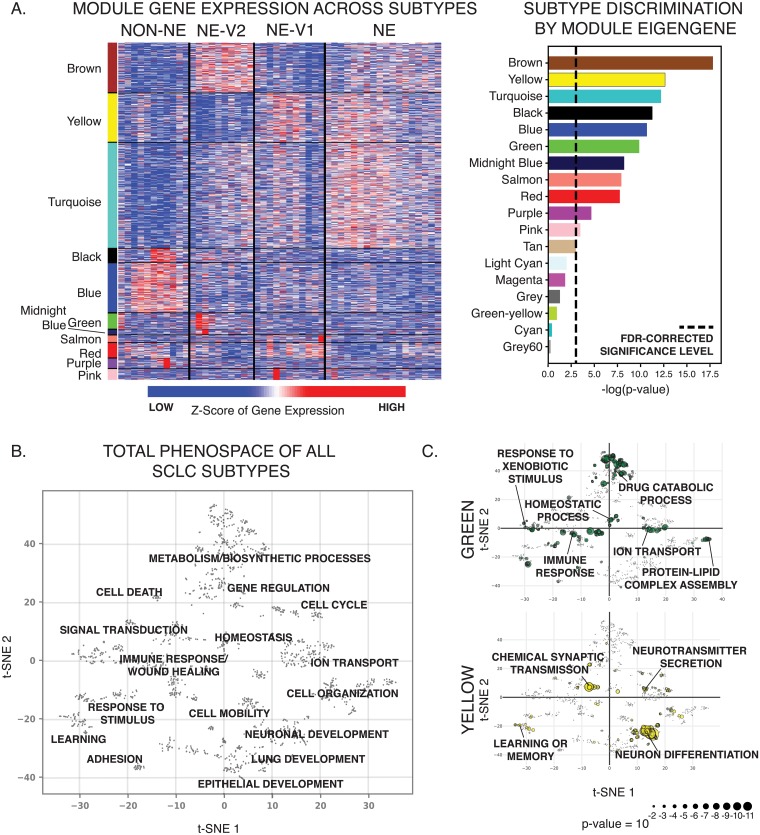
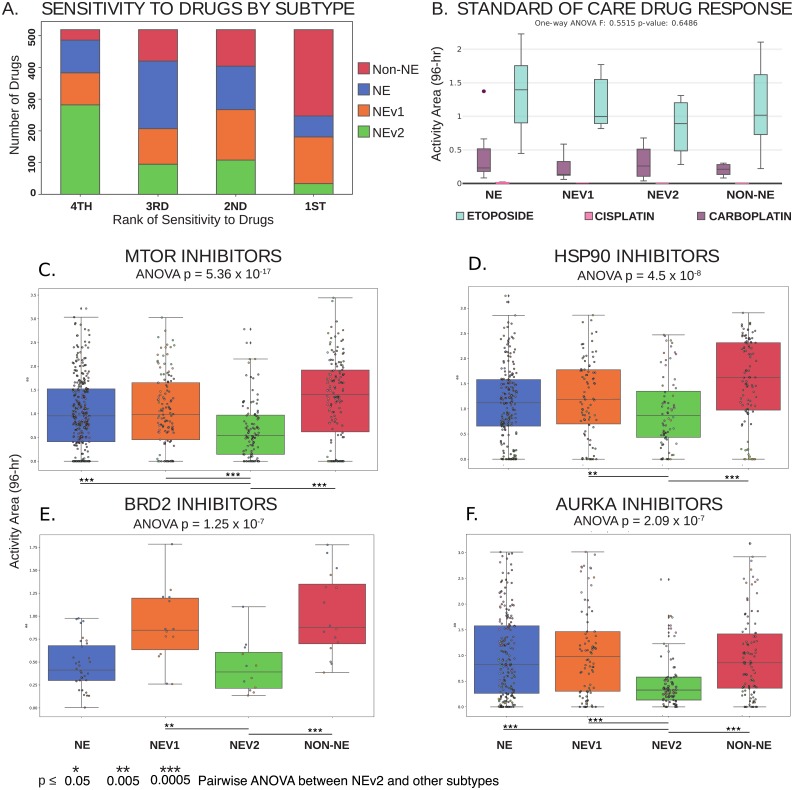
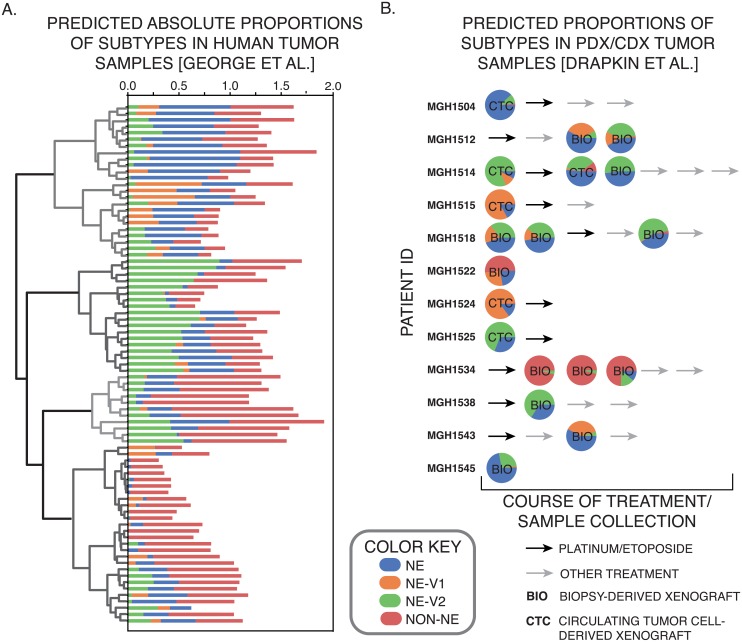
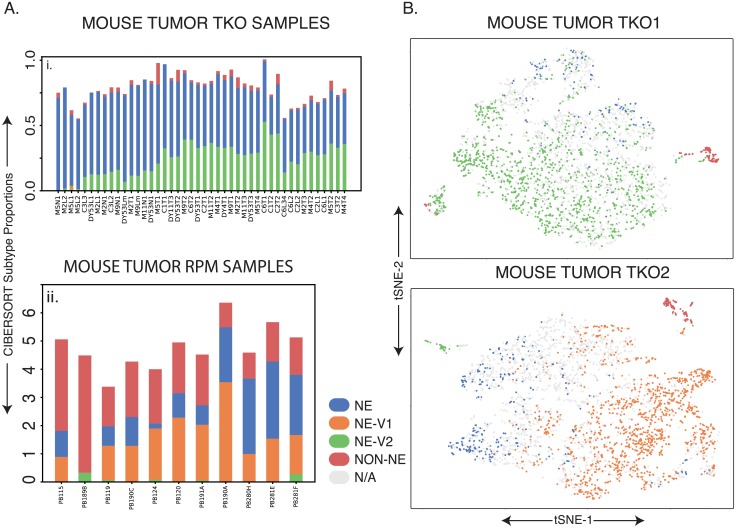
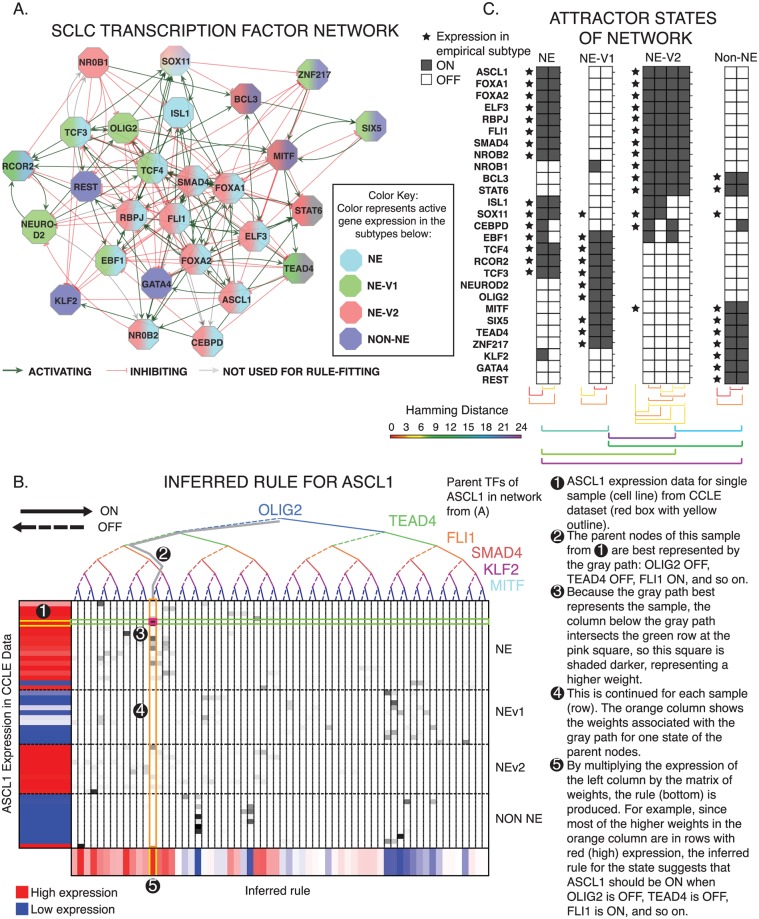
Adopting a systems approach, we devise a general workflow to define actionable subtypes in human cancers. Applied to small cell lung cancer (SCLC), the workflow identifies four subtypes based on global gene expression patterns and ontologies. Three correspond to known subtypes (SCLC-A, SCLC-N, and SCLC-Y), while the fourth is a previously undescribed ASCL1+ neuroendocrine variant (NEv2, or SCLC-A2). Tumor deconvolution with subtype gene signatures shows that all of the subtypes are detectable in varying proportions in human and mouse tumors. To understand how multiple stable subtypes can arise within a tumor, we infer a network of transcription factors and develop BooleaBayes, a minimally-constrained Boolean rule-fitting approach. In silico perturbations of the network identify master regulators and destabilizers of its attractors. Specific to NEv2, BooleaBayes predicts ELF3 and NR0B1 as master regulators of the subtype, and TCF3 as a master destabilizer. Since the four subtypes exhibit differential drug sensitivity, with NEv2 consistently least sensitive, these findings may lead to actionable therapeutic strategies that consider SCLC intratumoral heterogeneity. Our systems-level approach should generalize to other cancer types.
采用系统方法,我们设计了一个通用工作流程来定义人类癌症中的可操作亚型。将该工作流程应用于小细胞肺癌 (SCLC),根据全局基因表达模式和本体论,确定了四个亚型。其中三个对应于已知的亚型(SCLC-A、SCLC-N 和 SCLC-Y),而第四个是以前未描述的 ASCL1+神经内分泌变体(NEv2 或 SCLC-A2)。使用亚型基因特征进行肿瘤去卷积表明,所有亚型都可以在不同比例的人类和小鼠肿瘤中检测到。为了了解一个肿瘤内如何产生多个稳定的亚型,我们推断了一个转录因子网络,并开发了 BooleaBayes,这是一种最小约束的布尔规则拟合方法。对网络的计算扰动确定了其吸引子的主调控因子和失稳因子。对于 NEv2,BooleaBayes 预测 ELF3 和 NR0B1 是该亚型的主调控因子,而 TCF3 是主失稳因子。由于这四个亚型表现出不同的药物敏感性,其中 NEv2 始终最不敏感,这些发现可能会导致针对考虑 SCLC 肿瘤内异质性的可操作治疗策略。我们的系统级方法应该可以推广到其他癌症类型。