Huang Ming-Jian, Zhao Jing-Yu, Xu Jia-Jia, Li Jing, Zhuang Yi-Fu, Zhang Xiao-Ling
Department of Orthopedic Surgery, Xinhua Hospital, School of Medicine, Shanghai Jiao Tong University, Shanghai 200092, China.
The Key Laboratory of Stem Cell Biology, Institute of Health Sciences, Shanghai Jiao Tong University School of Medicine (SJTUSM) & Shanghai Institutes for Biological Sciences (SIBS), Chinese Academy of Sciences (CAS), Shanghai 200031, China.
Mol Ther Nucleic Acids. 2019 Dec 6;18:533-545. doi: 10.1016/j.omtn.2019.08.027. Epub 2019 Sep 18.
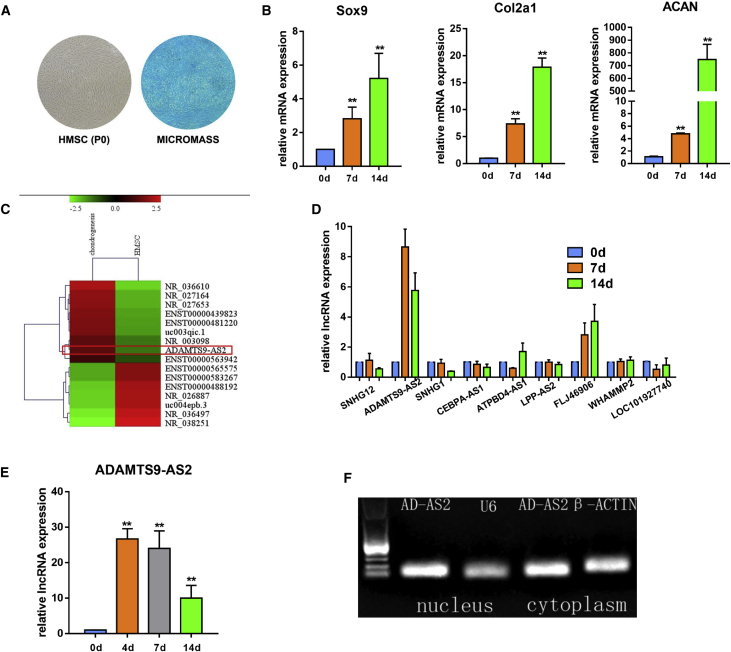
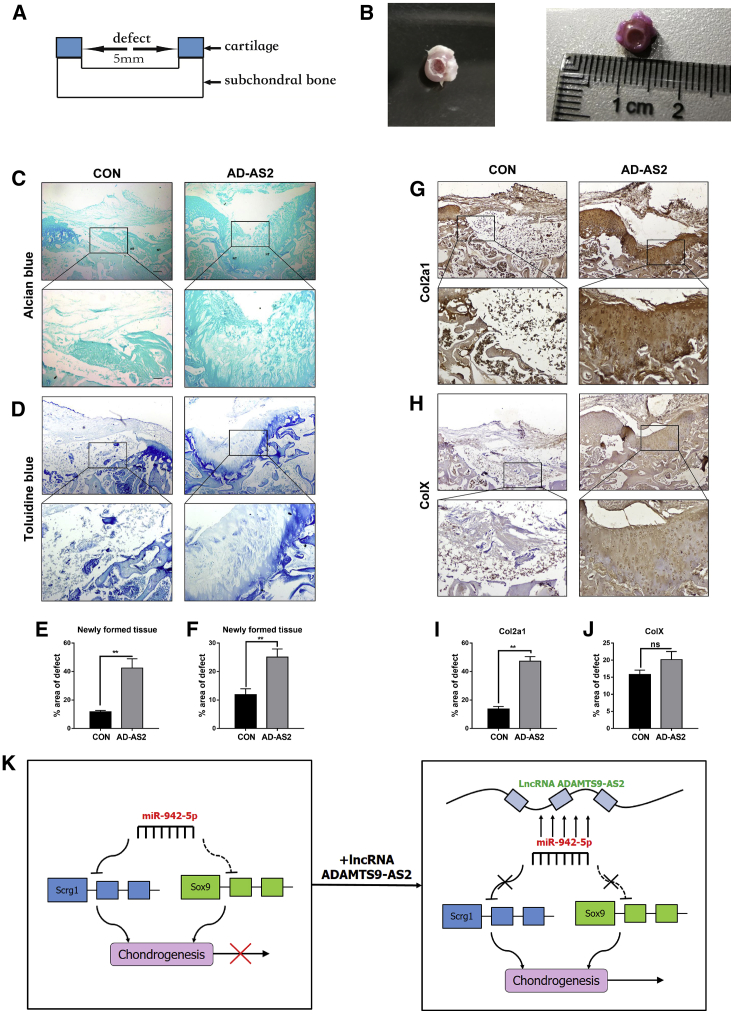
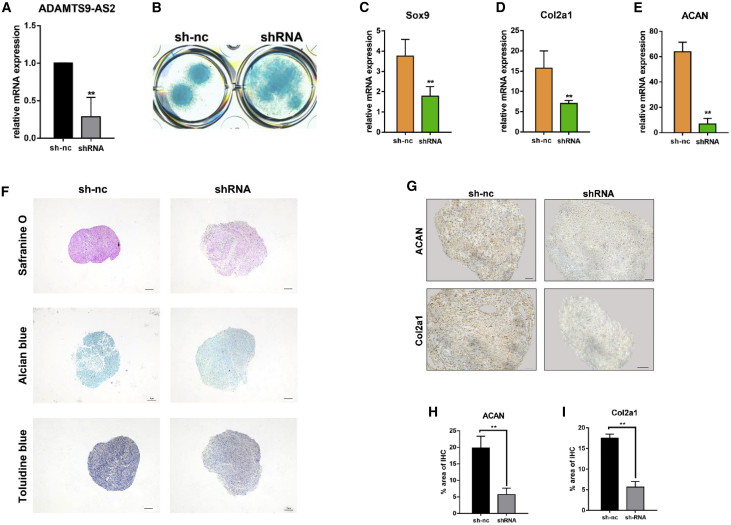
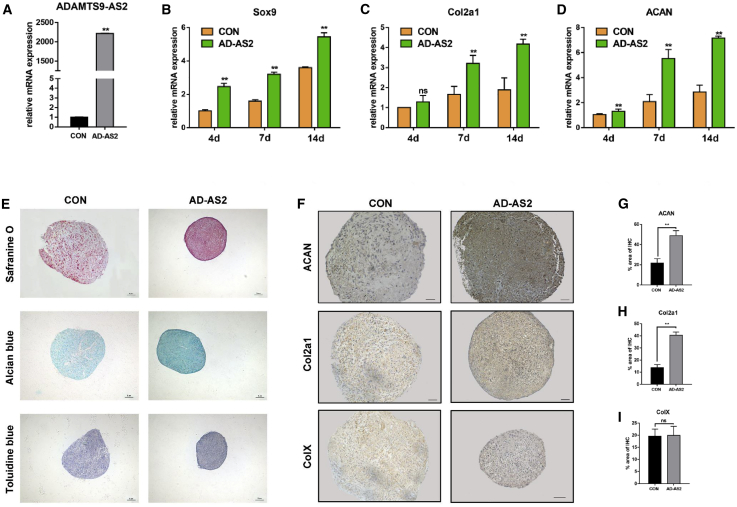
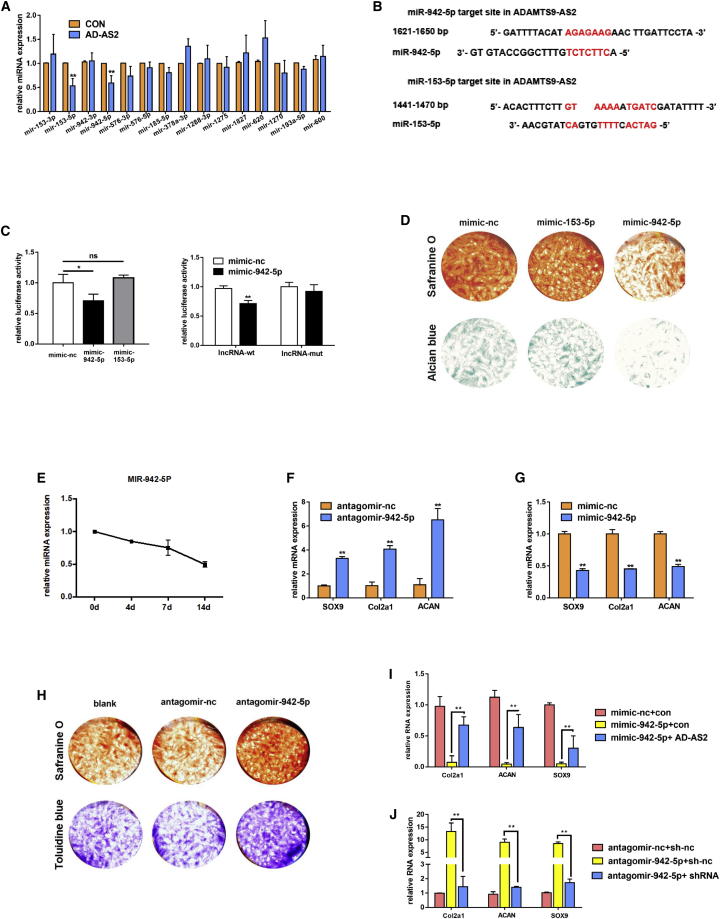
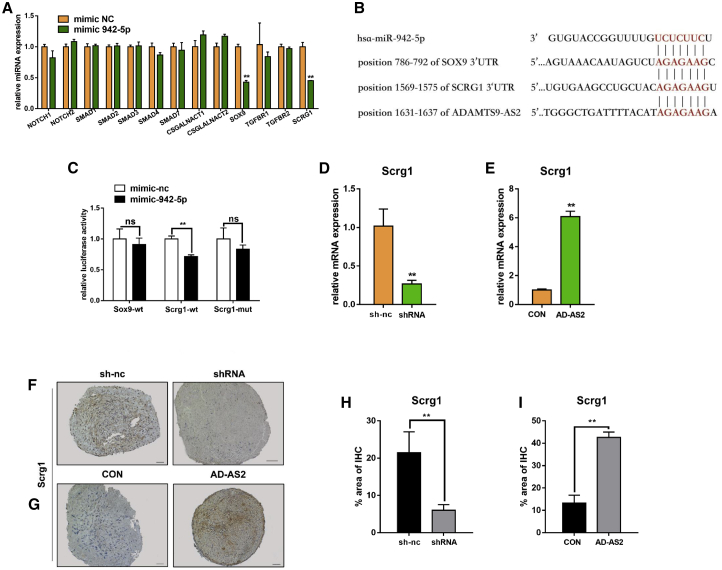
Long noncoding RNAs (lncRNAs) have emerged as key regulators of cell differentiation and development. However, potential roles for lncRNAs in chondrogenic differentiation have remained poorly understood. Here we identify lncRNA ADAMTS9 antisense RNA 2, ADAMTS9-AS2, which controls the chondrogenic differentiation by acting as a competing endogenous RNA (ceRNA) in human mesenchymal stem cells (hMSCs). We screen out ADAMTS9-AS2 of undifferentiated and differentiated cells during chondrogenic differentiation by microarrays. Suppression or overexpression of lncRNA ADAMTS9-AS2 correlates with inhibition and promotion of hMSC chondrogenic differentiation, respectively. We find that ADAMTS9-AS2 can sponge miR-942-5p to regulate the expression of Scrg1, a transcription factor promoting chondrogenic gene expression. Finally, we confirm the function of ADAMTS9-AS2 to cartilage repair in the absence of transforming growth factor β (TGF-β) in vivo. In conclusion, ADAMTS9-AS2 plays an important role in chondrogenic differentiation as a ceRNA, so that it can be regarded as a therapy target for cartilage repair.
长链非编码RNA(lncRNAs)已成为细胞分化和发育的关键调节因子。然而,lncRNAs在软骨形成分化中的潜在作用仍知之甚少。在这里,我们鉴定了lncRNA ADAMTS9反义RNA 2(ADAMTS9-AS2),它在人间充质干细胞(hMSCs)中作为竞争性内源RNA(ceRNA)发挥作用,从而控制软骨形成分化。我们通过微阵列筛选出软骨形成分化过程中未分化和分化细胞中的ADAMTS9-AS2。lncRNA ADAMTS9-AS2的抑制或过表达分别与hMSC软骨形成分化的抑制和促进相关。我们发现ADAMTS9-AS2可以吸附miR-942-5p来调节Scrg1的表达,Scrg1是一种促进软骨形成基因表达的转录因子。最后,我们在体内证实了ADAMTS9-AS2在缺乏转化生长因子β(TGF-β)的情况下对软骨修复的作用。总之,ADAMTS9-AS2作为ceRNA在软骨形成分化中起重要作用,因此可被视为软骨修复的治疗靶点。