He Jian-Ying, Cheng Min, Ye Jia-Lian, Peng Chuan-Hua, Chen Jian, Luo Bin, Zhang Xian-Yu, Fu Qiang
Orthopedics Department, JiangXi Provinvcial People's Hospital, The First Affiliated Hospital of Nanchang Medical College, Nanchang, 330006, Jiangxi Province, PR China.
Orthopedics Department, People's Hospital of Poyang County, Shangrao, 333100, Jiangxi Province, PR China.
Regen Ther. 2022 Mar 29;20:41-50. doi: 10.1016/j.reth.2022.02.002. eCollection 2022 Jun.
The functional roles and mechanism of the XIST in osteoarthritis and the chondrogenic differentiation of BMSCs were clarified.
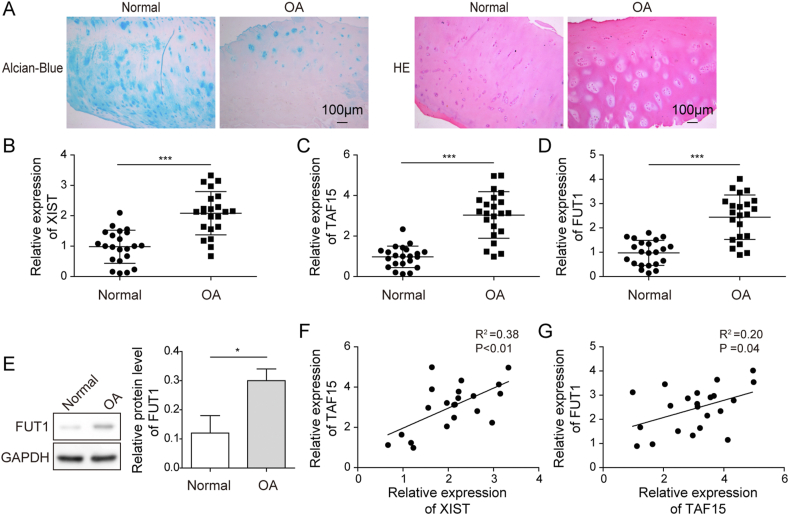
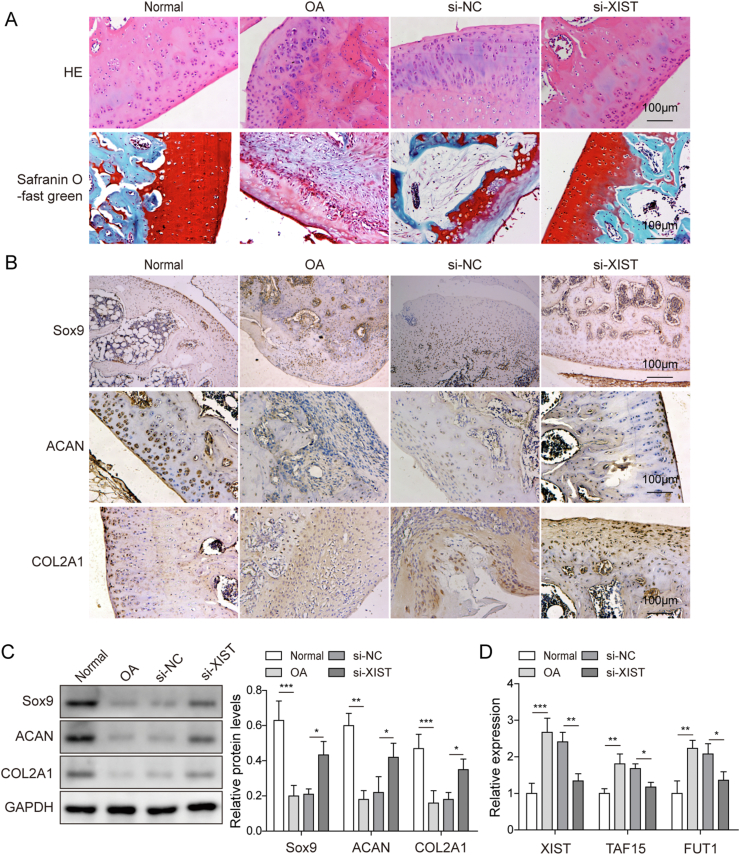
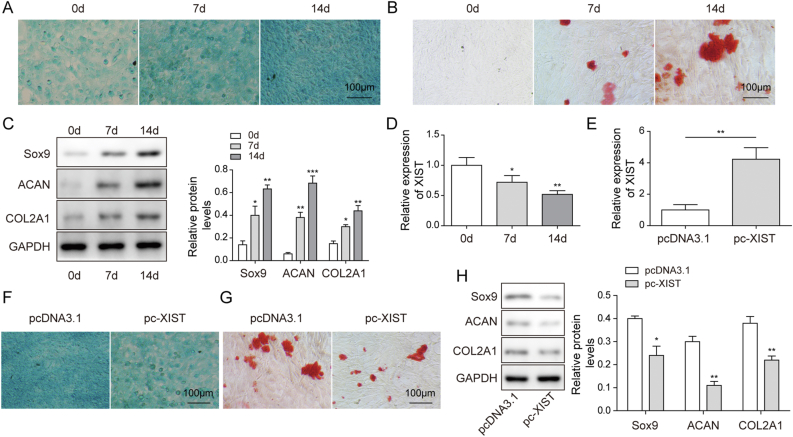
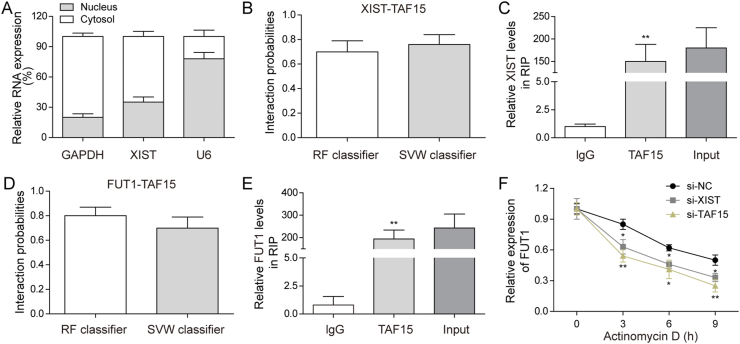
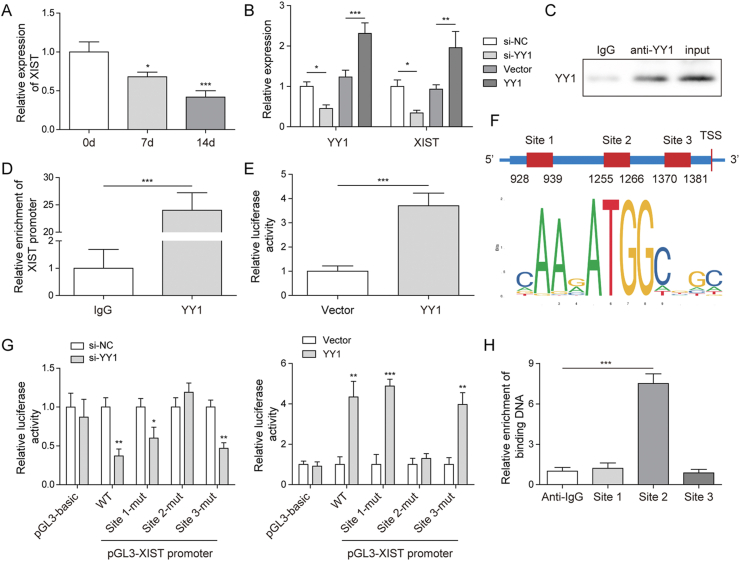
The expression levels of XIST, TAF15, FUT1 and YY1 were detected through quantitative RT-PCR. The protein expression of Sox9, ACAN, COL2A1 and FUT1 were detected by western blot and immunohistochemistry. The damage of cartilage tissue was detected by HE staining, and Safranin O-fast green. Alcian-Blue and Alizarin red S staining were performed to evaluate BMSCs chondrogenic differentiation. The relationship between XIST and TAF15, XIST and TAF15 were analyzed by RNA immunoprecipitation assay. Luciferase reporter assays and chromatin immunoprecipitation were performed to detect the interaction relationship between XIST and YY1. In addition, osteoarthritis mice were built to assess the function of XIST .
The levels of XIST, TAF15 and FUT1 were upregulated in cartilage tissues from osteoarthritis patient. The level of XIST was decreased in BMSCs during chondrogenic differentiation. XIST overexpression inhibited the chondrogenic differentiation of BMSCs. Moreover, silencing of FUT1 reversed the effects of XIST overexpression on BMSCs chondrogenic differentiation. Mechanistically, in BMSCs, YY1 induced the expression of XIST in BMSCs, and XIST regulated FUT1 mRNA stability through targeting TAF15. Furthermore, silencing of XIST alleviated the symptoms of cartilage injury in OA mice.
Taken together, these results suggested that YY1 induced XIST was closely related to the chondrogenic differentiation of BMSCs and the progression of osteoarthritis by TAF15/FUT1 axis, and may be a new OA therapeutic target.
阐明了XIST在骨关节炎及骨髓间充质干细胞(BMSCs)成软骨分化中的功能作用及机制。
通过定量逆转录聚合酶链反应(qRT-PCR)检测XIST、TAF15、FUT1和YY1的表达水平。采用蛋白质免疫印迹法和免疫组织化学法检测Sox9、ACAN、COL2A1和FUT1的蛋白表达。通过苏木精-伊红(HE)染色检测软骨组织损伤情况,并用番红O-固绿染色、阿尔辛蓝染色和茜素红S染色评估BMSCs的成软骨分化。通过RNA免疫沉淀试验分析XIST与TAF15、XIST与TAF15之间的关系。进行荧光素酶报告基因检测和染色质免疫沉淀以检测XIST与YY1之间的相互作用关系。此外,构建骨关节炎小鼠模型以评估XIST的功能。
骨关节炎患者软骨组织中XIST、TAF15和FUT1水平上调。BMSCs成软骨分化过程中XIST水平降低。XIST过表达抑制BMSCs的成软骨分化。此外,FUT1沉默可逆转XIST过表达对BMSCs成软骨分化的影响。机制上,在BMSCs中,YY1诱导XIST的表达,且XIST通过靶向TAF15调节FUT1 mRNA稳定性。此外,XIST沉默可减轻骨关节炎小鼠的软骨损伤症状。
综上所述,这些结果表明YY1诱导的XIST通过TAF15/FUT1轴与BMSCs的成软骨分化及骨关节炎进展密切相关,可能是骨关节炎治疗的新靶点。