Department of Otolaryngology, Inha University, College of Medicine, Incheon, Republic of Korea.
Department of Nuclear Medicine, National Cancer Center, Goyang, Republic of Korea.
Sci Rep. 2019 Oct 31;9(1):15752. doi: 10.1038/s41598-019-51775-9.
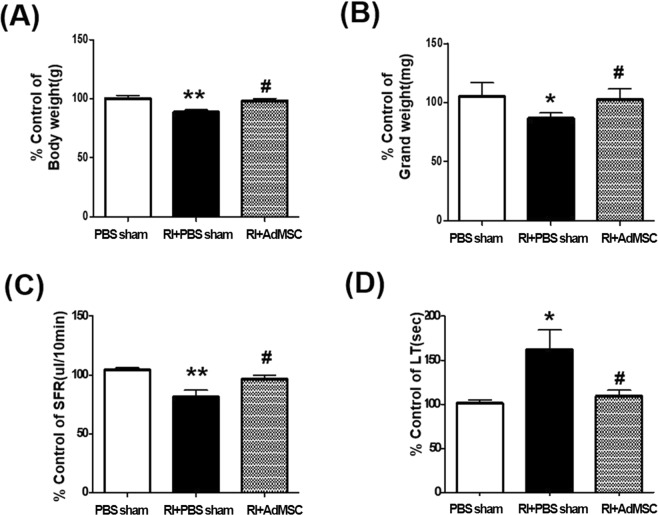
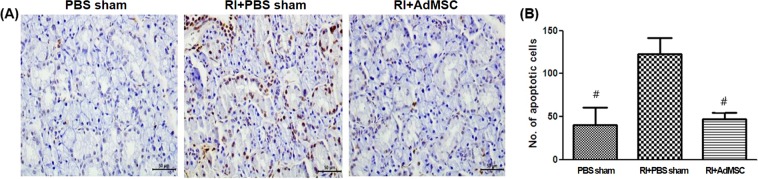
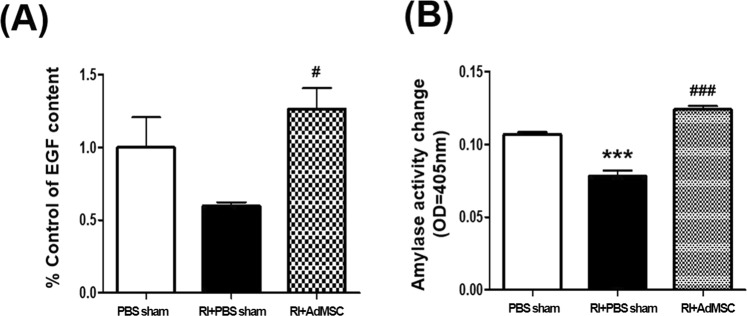
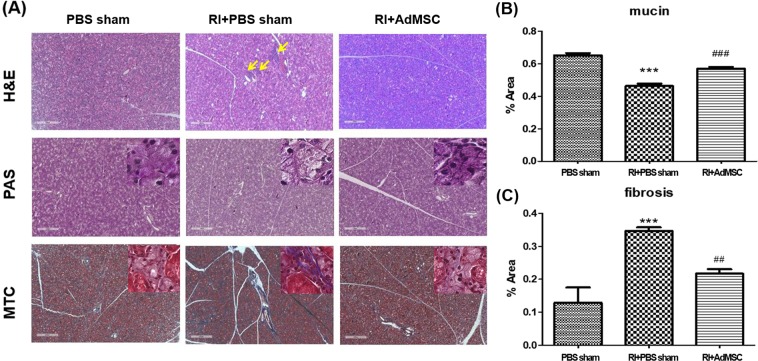
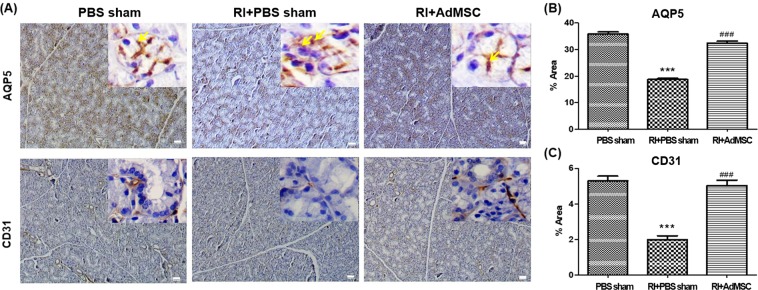
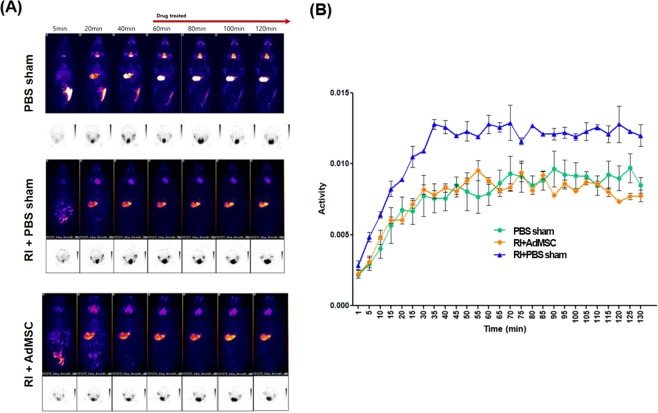
After radioiodine (RI) therapy, patients with thyroid cancer frequently suffer from painful salivary gland (SG) swelling, xerostomia, taste alterations, and oral infections. This study was aimed to determine whether adipose-derived mesenchymal stem cells (AdMSCs) might restore RI-induced SG dysfunction in a murine model. Forty -five mice were divided into three groups; a PBS sham group, a RI+ PBS sham group (0.01 mCi/g mouse, orally), and an RI+AdMSCs (1 × 10 cells/150 uL, intraglandular injection on experimental day 28) treated group. At 16 weeks after RI treatment, body weights, SG weight, salivary flow rates (SFRs), and salivary lag times were measured. Morphologic and histologic examinations and immunohistochemistry (IHC) were performed and the activities of amylase and EGF in saliva were also measured. Changes in salivary Tc pertechnetate excretion were followed by SPECT and TUNEL assays were performed. The body and SG weights were similar in the AdMSCs and sham groups. Hematoxylin and eosin staining revealed the AdMSCs group had more mucin-containing acini than the RI group. Furthermore, AdMSCs treatment resulted in tissue remodeling and elevated expressions of epithelial (AQP5) and endothelial (CD31) markers, and increased SFRs. The activities of amylase and EGF were higher in the AdMSCs group than in the RI treated group. Tc pertechnetate excretions were similar in the AdMSCs and sham group. Also, TUNEL positive apoptotic cell numbers were less in the AdMSCs group than in the RI group. Local delivery of AdMSCs might regenerate SG damage induced by RI.
放射性碘(RI)治疗后,甲状腺癌患者常出现唾液腺(SG)肿痛、口干、味觉改变和口腔感染等症状。本研究旨在确定脂肪间充质干细胞(AdMSCs)是否可能恢复放射性碘诱导的 SG 功能障碍的小鼠模型。将 45 只小鼠分为三组;PBS 假手术组、RI+PBS 假手术组(0.01 mCi/g 小鼠,口服)和 RI+AdMSCs(1×10 细胞/150μL,实验第 28 天腮腺内注射)治疗组。RI 治疗后 16 周,测量体重、SG 重量、唾液流率(SFR)和唾液滞后时间。进行形态学和组织学检查以及免疫组织化学(IHC),并测量唾液中淀粉酶和 EGF 的活性。通过 SPECT 跟踪唾液 Tc 高锝酸盐排泄变化,并进行 TUNEL 检测。AdMSCs 组和假手术组的体重和 SG 重量相似。苏木精和伊红染色显示 AdMSCs 组比 RI 组含有更多的粘蛋白。此外,AdMSCs 治疗导致组织重塑,上皮(AQP5)和内皮(CD31)标志物表达增加,并增加 SFR。AdMSCs 组的淀粉酶和 EGF 活性高于 RI 治疗组。AdMSCs 组和假手术组的 Tc 高锝酸盐排泄相似。此外,AdMSCs 组的 TUNEL 阳性凋亡细胞数低于 RI 组。AdMSCs 的局部递送可能会再生 RI 诱导的 SG 损伤。