Institute of Dermatology, Huashan Hospital, Fudan University, 12 Wulumuqi Zhong Road, Jing'an District, Shanghai, 200040, China.
Department of Dermatology, The First Affiliated Hospital, Anhui Medical University, 81 Meishan Road, Hefei, 230032, China.
Arch Dermatol Res. 2020 Sep;312(7):513-525. doi: 10.1007/s00403-019-02000-0. Epub 2019 Nov 1.
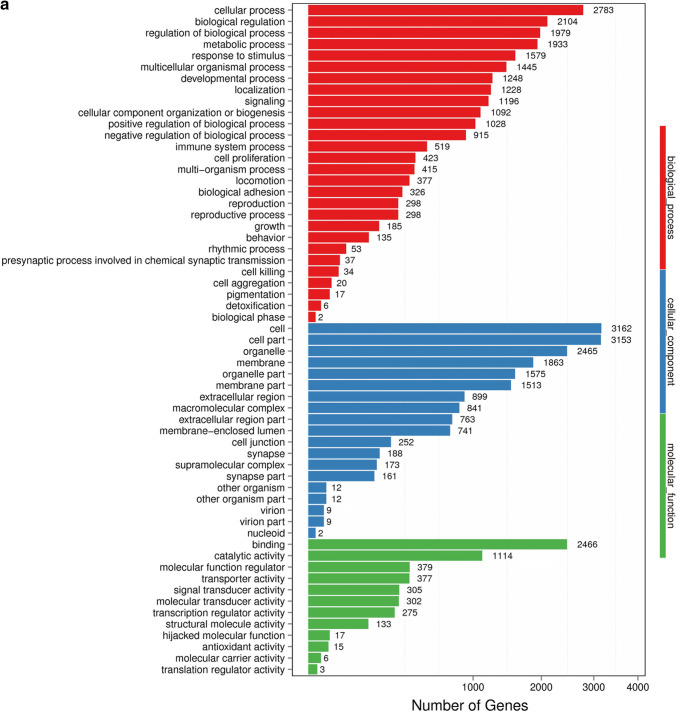
Cutaneous T cell lymphoma (CTCL) is a rare but potentially devastating primary cutaneous lymphoma. CTCL is characterized by localization of neoplastic T lymphocytes to the skin, with mycosis fungoides (MF) and its leukemic form, Sézary syndrome (SS) being the most common variants. Thymocyte selection-associated high-mobility group box (TOX) gene has been found to be highly expressed in MF and SS. It is reported that higher expression levels of TOX in patients will increase risks of disease progression and poor prognosis. However, the molecular events leading to these abnormalities have not been well understood. To better understand the molecular mechanism underlying TOX-mediated differentially expressed genes (DEGs) in CTCL, and to identify DEGs pathways triggered after knockdown of TOX gene in the CTCL cell line Hut78, we employed two shRNA-mediated lentiviruses to knock down TOX gene in the skin lymphoma cell line HuT78. RNA sequencing (RNAseq) analysis was applied to analyze DEGs, DEGs GO and their corresponding pathways. Knockdown of TOX can induce upregulation of 547 genes and downregulation of 649 genes, respectively. HOXC9 was the most significant downregulated gene. Most DEGs are enriched in malignancies and relate to the Wnt and mTOR signaling pathways, and therefore they can regulate cellular processes and induce different biological regulation. Transcriptome analysis of DEGs after knockdown of TOX in our study provides insights into the mechanism of TOX in CTCL and suggests candidate targets for therapy of CTCL.
皮肤 T 细胞淋巴瘤 (CTCL) 是一种罕见但潜在致命的原发性皮肤淋巴瘤。CTCL 的特征是肿瘤性 T 淋巴细胞定位于皮肤,蕈样真菌病 (MF) 和其白血病形式,塞扎里综合征 (SS) 是最常见的变体。胸腺细胞选择相关的高迁移率族框 (TOX) 基因已被发现在 MF 和 SS 中高度表达。据报道,患者 TOX 表达水平越高,疾病进展和预后不良的风险就越高。然而,导致这些异常的分子事件尚未得到很好的理解。为了更好地了解 TOX 介导的 CTCL 中差异表达基因 (DEGs) 的分子机制,并确定在 CTCL 细胞系 Hut78 中敲低 TOX 基因后触发的 DEGs 途径,我们使用两种 shRNA 介导的慢病毒在皮肤淋巴瘤细胞系 HuT78 中敲低 TOX 基因。采用 RNA 测序 (RNAseq) 分析来分析 DEGs、DEGs GO 及其相应途径。敲低 TOX 可分别诱导 547 个基因上调和 649 个基因下调。HOXC9 是下调最显著的基因。大多数 DEGs 富集在恶性肿瘤中,与 Wnt 和 mTOR 信号通路有关,因此它们可以调节细胞过程并诱导不同的生物学调节。本研究中敲低 TOX 后 DEGs 的转录组分析为 CTCL 中 TOX 的作用机制提供了深入了解,并为 CTCL 的治疗提供了候选靶点。