Department of Urology, Simulation Innovation Laboratory, Univeristy of Rochester Medical Center, 601 Elmwood Ave, Rochester, NY, 14642, USA.
Department of Biomedical Engineering, Hajim School of Engineering, University of Rochester, 500 Joseph C. Wilson Blvd, Rochester, NY, 14611, USA.
World J Urol. 2020 Jul;38(7):1631-1641. doi: 10.1007/s00345-019-02989-z. Epub 2019 Nov 2.
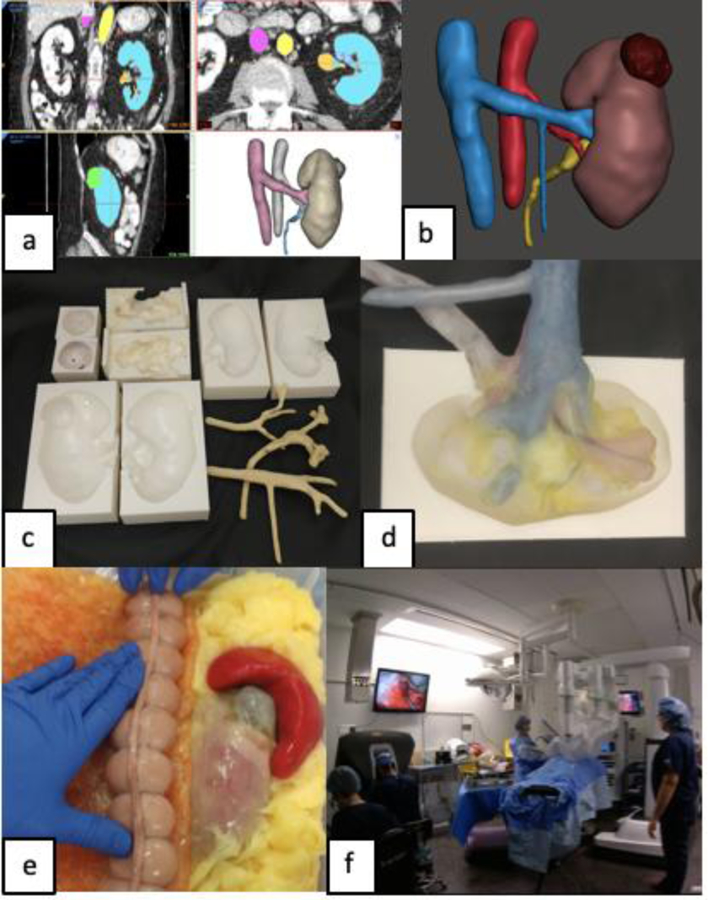
There is a scarcity of high-fidelity, life-like, standardized and anatomically correct polymer-based kidney models for robot-assisted partial nephrectomy (RAPN) simulation training. The purpose of this technical report is to present mechanical and functional testing data as evidence for utilizing a perfused hydrogel kidney model created utilizing 3D printed injection casts for RAPN simulation and training.
Anatomically correct, tumor-laden kidney models were created from 3D-printed casts designed from a patient's CT scan and injected with poly-vinyl alcohol (PVA). A variety of testing methods quantified Young's modulus in addition to comparing the functional effects of bleeding and suturing among fresh porcine kidneys and various formulations of PVA kidneys.
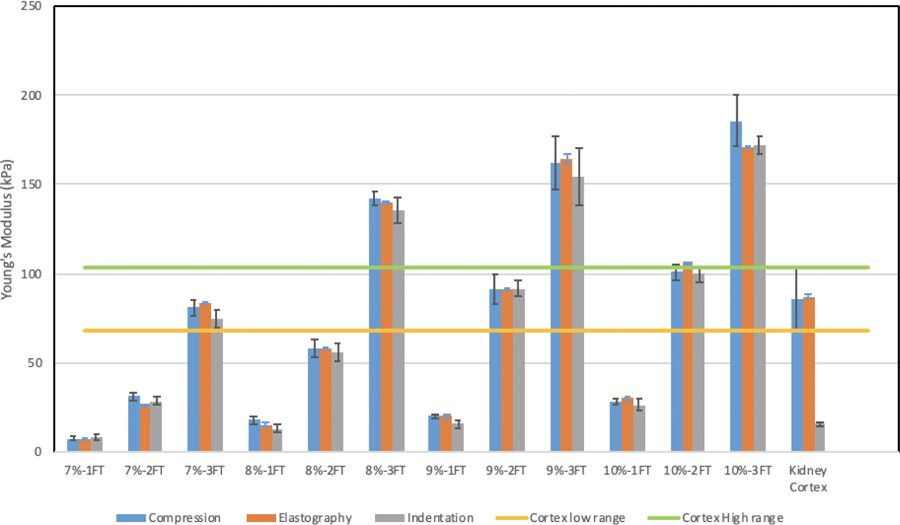
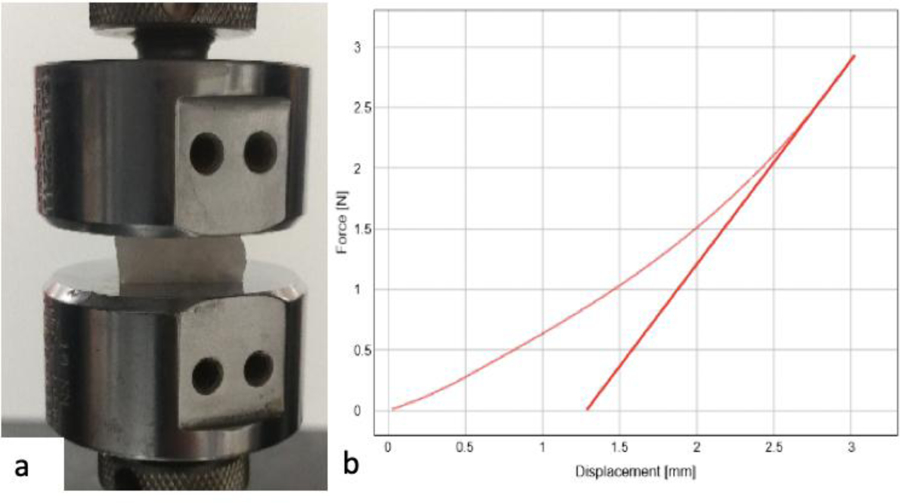
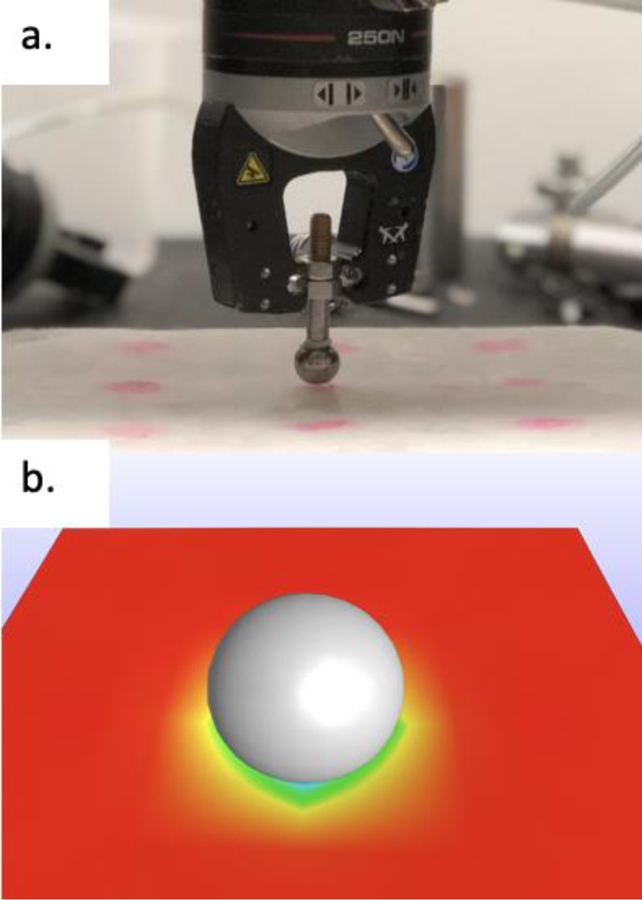
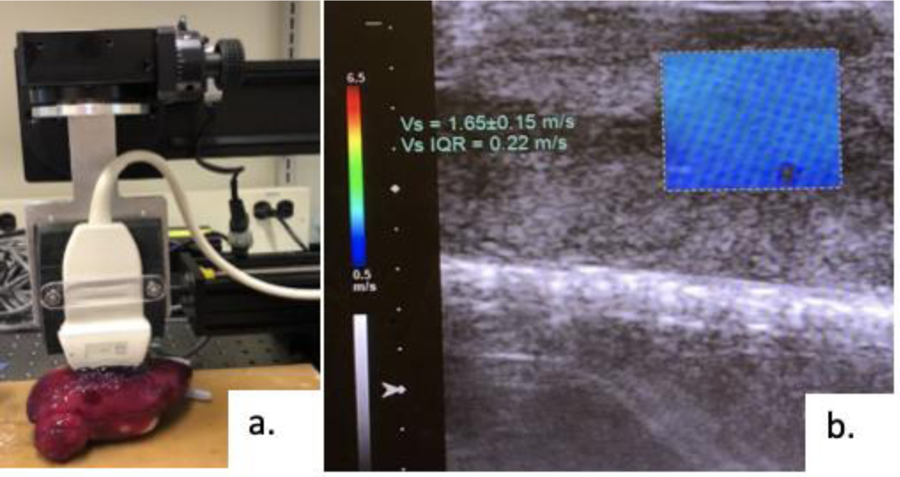
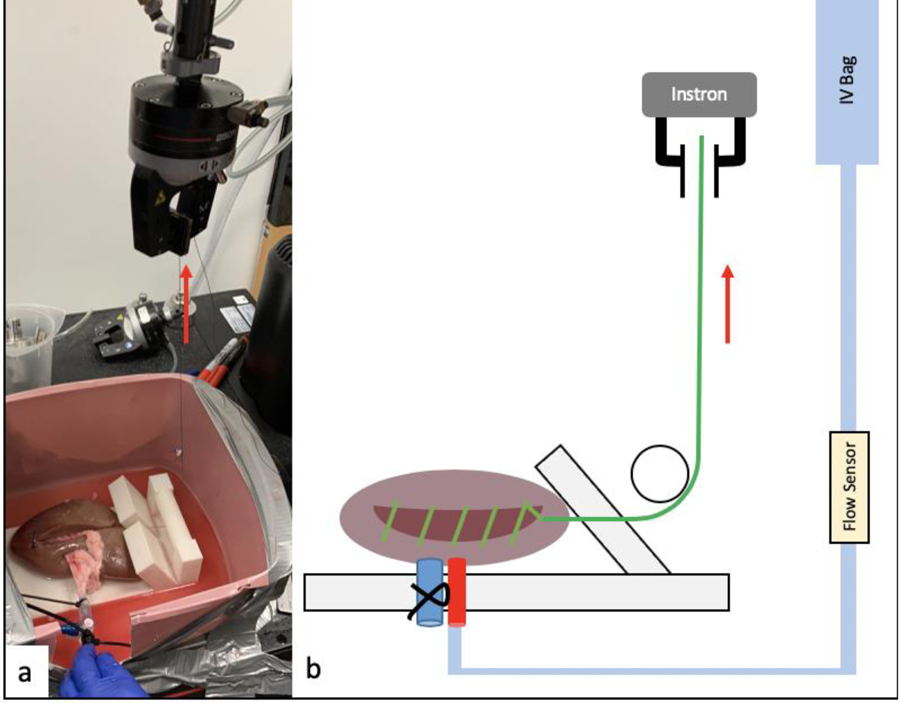
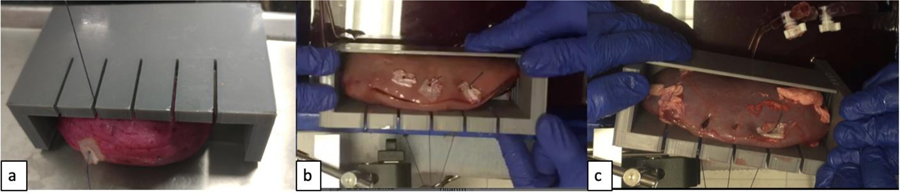
7% PVA at three freeze-thaw cycles (7%-3FT) was found to be the formula that best replicates the mechanical properties of fresh porcine kidney tissue, where mean(± SD) values of Young's modulus of porcine tissue vs 7%-3FT samples were calculated to be 85.97(± 35) kPa vs 80.97(± 9.05) kPa, 15.7(± 1.6) kPa vs 74.56(± 10) kPa and 87.46(± 2.97) kPa vs 83.4(± 0.7) kPa for unconfined compression, indentation and elastography testing, respectively. No significant difference was seen in mean suture tension during renorrhaphy necessary to achieve observable hemostasis and capsular violation during a simulated perfusion at 120 mmHg.
This is the first study to utilize extensive material testing analyses to determine the mechanical and functional properties of a perfused, inanimate simulation platform for RAPN, fabricated using a combination of image segmentation, 3D printing and PVA casting.
用于机器人辅助部分肾切除术 (RAPN) 模拟培训的高保真、逼真、标准化和解剖正确的聚合物肾脏模型稀缺。本技术报告的目的是提供机械和功能测试数据,作为利用通过 3D 打印注模创建的灌注水凝胶肾脏模型进行 RAPN 模拟和培训的证据。
从患者的 CT 扫描设计的 3D 打印铸件中创建了具有解剖学准确性的肿瘤肾脏模型,并注入聚乙烯醇 (PVA)。各种测试方法量化了杨氏模量,此外还比较了新鲜猪肾和不同 PVA 肾脏配方之间的出血和缝合的功能影响。
发现经过三个冷冻-解冻循环的 7% PVA(7%-3FT)是复制新鲜猪肾组织机械性能的最佳配方,其中猪组织与 7%-3FT 样本的杨氏模量平均值(±标准差)分别计算为 85.97(±35) kPa 与 80.97(±9.05) kPa、15.7(±1.6) kPa 与 74.56(±10) kPa 和 87.46(±2.97) kPa 与 83.4(±0.7) kPa,用于无约束压缩、压痕和弹性成像测试。在模拟灌注下以 120mmHg 实现可观察止血和包膜侵犯所需的肾缝合张力的平均值没有显着差异。
这是第一项使用广泛的材料测试分析来确定使用图像分割、3D 打印和 PVA 铸造相结合制造的灌注、无生命的 RAPN 模拟平台的机械和功能特性的研究。