Bazzari Amjad H, Parri H Rheinallt
School of Life and Health Sciences, Aston University, Birmingham B4 7ET, UK.
Brain Sci. 2019 Oct 31;9(11):300. doi: 10.3390/brainsci9110300.
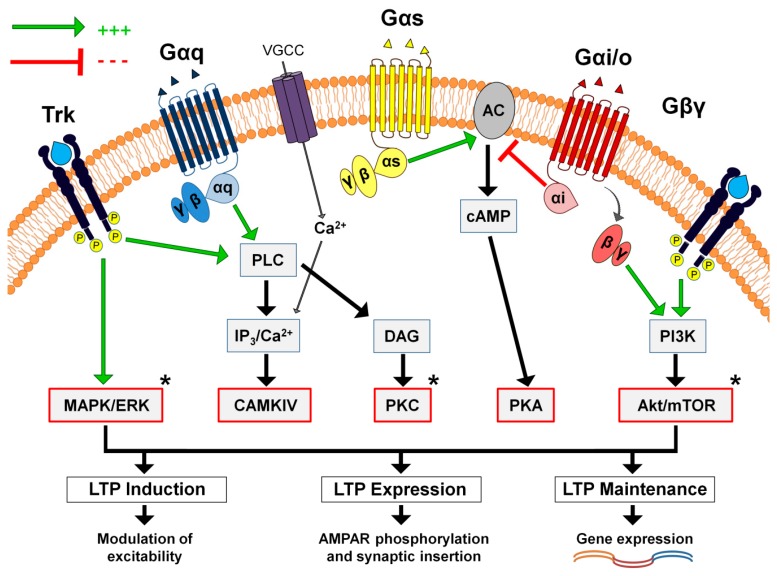
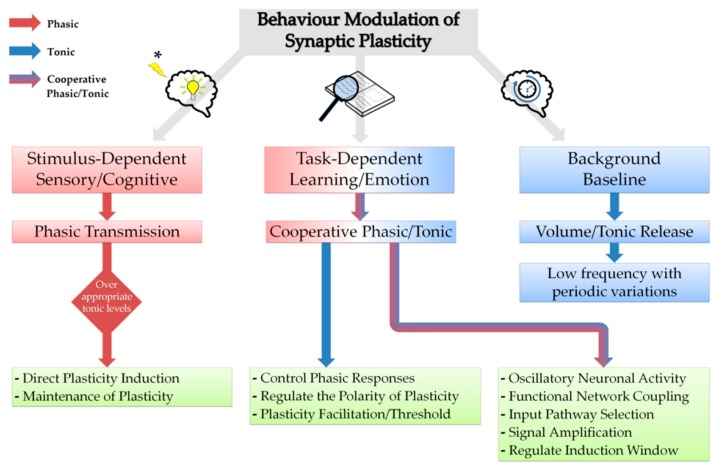
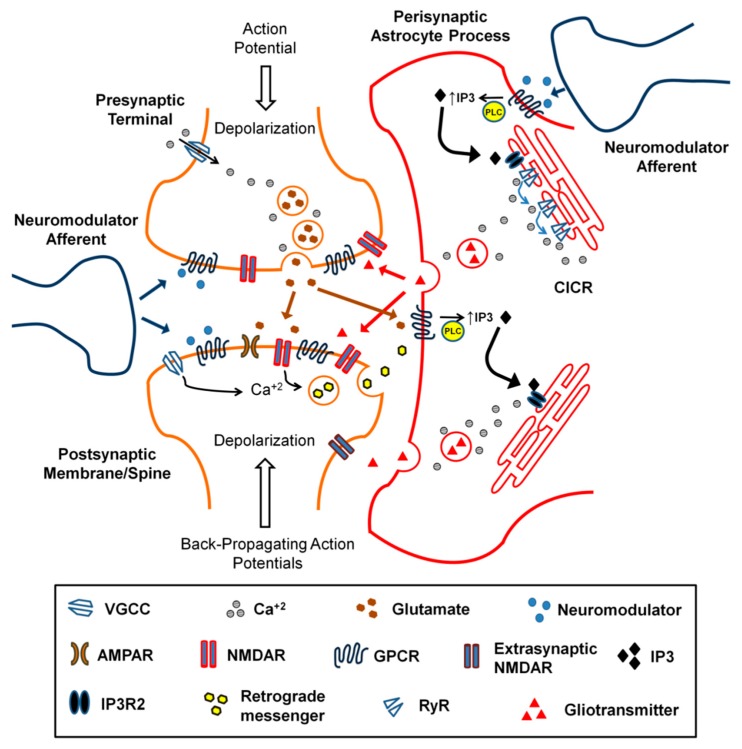
The molecular pathways underlying the induction and maintenance of long-term synaptic plasticity have been extensively investigated revealing various mechanisms by which neurons control their synaptic strength. The dynamic nature of neuronal connections combined with plasticity-mediated long-lasting structural and functional alterations provide valuable insights into neuronal encoding processes as molecular substrates of not only learning and memory but potentially other sensory, motor and behavioural functions that reflect previous experience. However, one key element receiving little attention in the study of synaptic plasticity is the role of neuromodulators, which are known to orchestrate neuronal activity on brain-wide, network and synaptic scales. We aim to review current evidence on the mechanisms by which certain modulators, namely dopamine, acetylcholine, noradrenaline and serotonin, control synaptic plasticity induction through corresponding metabotropic receptors in a pathway-specific manner. Lastly, we propose that neuromodulators control plasticity outcomes through steering glutamatergic transmission, thereby gating its induction and maintenance.
长期突触可塑性的诱导和维持背后的分子途径已得到广泛研究,揭示了神经元控制其突触强度的各种机制。神经元连接的动态性质与可塑性介导的长期结构和功能改变相结合,为神经元编码过程提供了有价值的见解,这些过程不仅是学习和记忆的分子基础,还可能是反映先前经验的其他感觉、运动和行为功能的分子基础。然而,在突触可塑性研究中很少受到关注的一个关键因素是神经调质的作用,已知神经调质可在全脑、网络和突触水平上协调神经元活动。我们旨在综述当前的证据,即某些调质,即多巴胺、乙酰胆碱、去甲肾上腺素和5-羟色胺,如何通过相应的代谢型受体以途径特异性方式控制突触可塑性的诱导。最后,我们提出神经调质通过引导谷氨酸能传递来控制可塑性结果,从而控制其诱导和维持。