Vieira Thais Dutra, Pioger Charles, Frank Florent, Saithna Adnan, Cavaignac Etienne, Thaunat Mathieu, Sonnery-Cottet Bertrand
Centre Orthopédique Santy, FIFA Medical Center of Excellence, Groupe Ramsay, Générale de Santé, Hôpital Privé Jean Mermoz, Lyon, France.
Advanced Orthopaedics and Sports Medicine, Kansas City, Kansas, U.S.A.
Arthrosc Tech. 2019 Sep 11;8(9):e987-e991. doi: 10.1016/j.eats.2019.05.008. eCollection 2019 Sep.
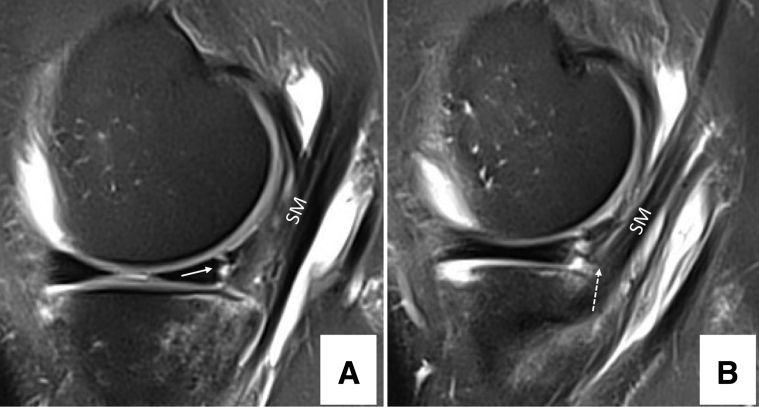
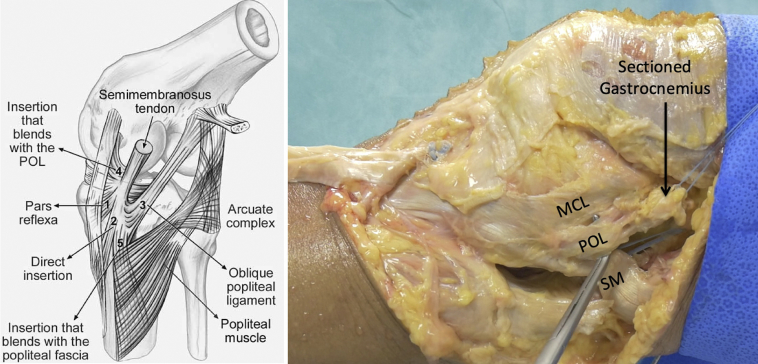
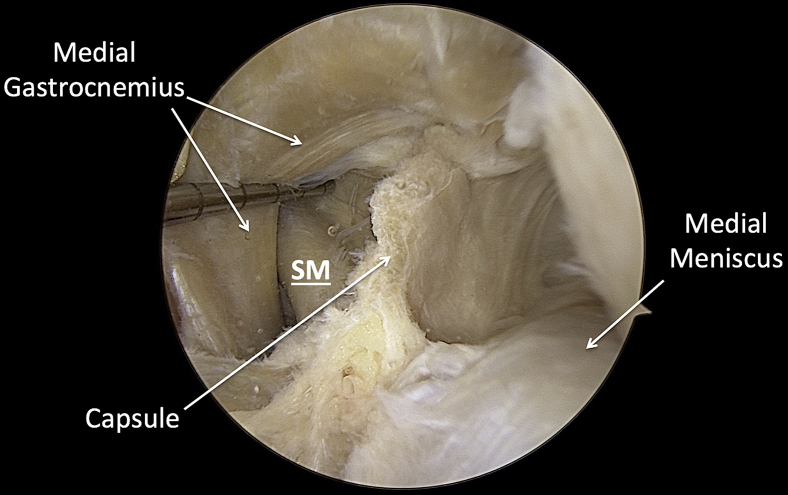
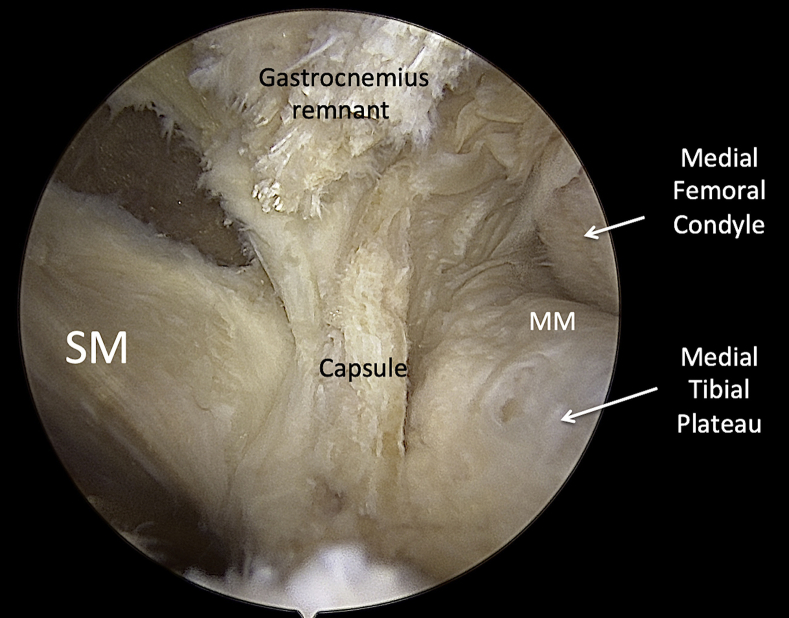
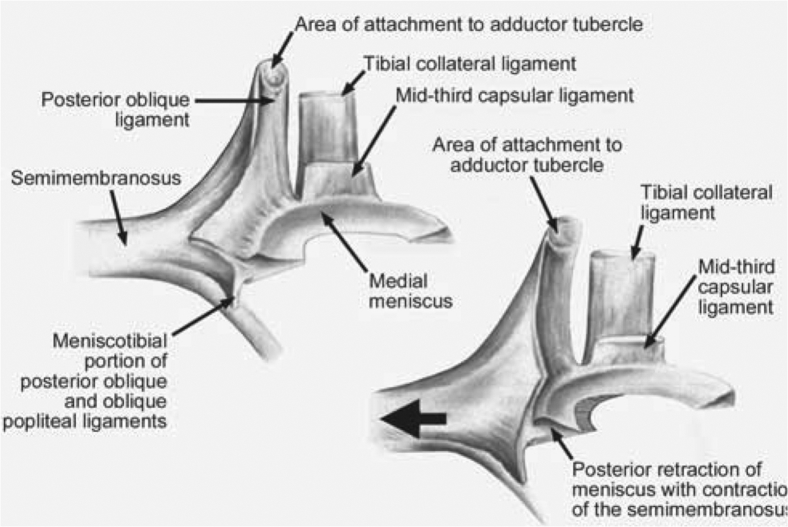
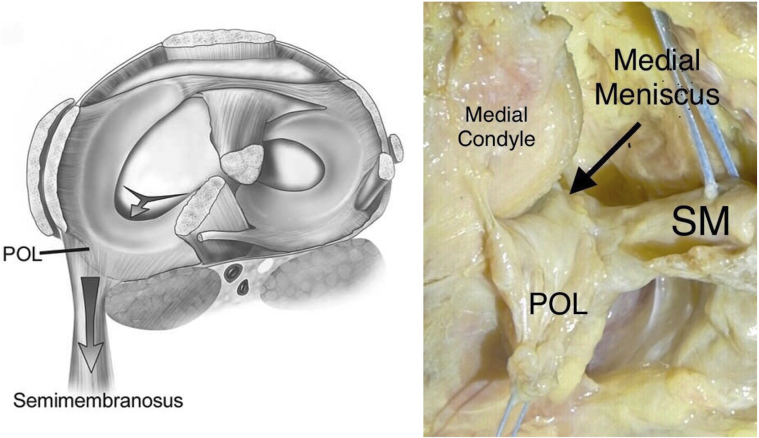
Ramp lesions are increasingly recognized as a hallmark of posteromedial knee instability. Although the precise mechanisms through which these lesions occur is not completely understood, the distal semimembranosus complex has been implicated in their pathogenesis due to its attachment to the posterior horn of the medial meniscus (PHMM). Arthroscopic dissection of the distal semimembranosus tendon, and the application of traction to it, results in posterior translation of the PHMM and stretching of the meniscocapsular region. This demonstrates a mechanism through which ramp lesions can occur. Furthermore, the subsequent open dissection highlights the complex anatomical relationships of the distal semimembranosus tendon complex, particularly its tensioning effect on the posterior oblique ligament. The clinical relevance of this is that when a ramp lesion occurs, it is likely to be part of a spectrum of posteromedial injury and it should be considered a hallmark of posteromedial instability rather than an isolated meniscocapsular injury.
斜坡损伤越来越被认为是膝关节后内侧不稳定的一个标志。尽管这些损伤发生的确切机制尚未完全明确,但由于其附着于内侧半月板后角(PHMM),半膜肌复合体远端被认为与它们的发病机制有关。关节镜下对半膜肌远端肌腱进行解剖,并对其施加牵引力,会导致PHMM向后移位以及半月板-关节囊区域的拉伸。这展示了斜坡损伤可能发生的一种机制。此外,随后的开放解剖突出了半膜肌远端肌腱复合体复杂的解剖关系,尤其是其对后斜韧带的张紧作用。这在临床上的意义在于,当发生斜坡损伤时,它很可能是后内侧损伤谱系的一部分,应被视为后内侧不稳定的一个标志,而非孤立的半月板-关节囊损伤。